East Africa’s iconic snow peaks face imminent extinction
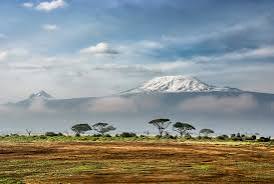
AFRICA: EAST Africa’s iconic equatorial glaciers across three mountain peaks in Kenya, Uganda, and Tanzania will soon disappear entirely, with new climate assessments predicting total extinction within three to five years.
According to the 2025 State of the Climate in Africa report, ice coverage on Mount Kenya Africa’s second-highest peak has plummeted by 96 per cent over the past 115 years. The rapid retreat highlights a broader, unprecedented ecological shift affecting Mount Kilimanjaro in northern Tanzania and the Rwenzori Mountains situated on the border between Uganda and the Democratic Republic of Congo.
Rainer Prinz, a climate scientist specializing in glacierclimate relationships, warns that the current rate of ice loss falls completely outside natural historical variations. “
During the past decade, we recorded a 40 to 60 per cent loss in East Africa’s total glacier area meaning nearly half of the continent’s equatorial ice melted in just ten years,” Prinz explains, adding that while these glaciers may be as old as 10,000 years, the physical ice itself is considerably younger and rapidly disappearing.
Contrary to popular belief, these high-altitude glaciers do not act as regional water towers or major reservoirs for surrounding populations.
Prinz points out that the ice bodies are geographically too small to have a significant effect on downstream river systems.
Furthermore, a large portion of the ice loss occurs not through direct melting, but through sublimation a process where extreme dry air at high mountain altitudes converts solid ice directly into atmospheric vapor without producing liquid runoff.
On Mount Kenya, total glacier area measured approximately 69,000 square meters in 2022, holding roughly 500,000 cubic meters of ice.
If that entire volume were melted at once and distributed evenly across the mountain, the resulting water would equal no more than a single heavy rainfall event.
The true water towers of East Africa, scientists emphasize, are its montane forests rather than its summit ice caps.
Instead, the primary value of these tropical glaciers lies in their scientific importance as atmospheric indicators.
Functioning as natural instruments, glaciers translate complex, short-term weather patterns into long-term climate signals.
Located 5,000 to 6,000 meters above sea level in the mid-tropical troposphere, they provide vital data about atmospheric conditions in a highaltitude zone where traditional weather measurements are extremely scarce.
Research into these climate signals shows that the centurylong recession of East African glaciers is driven primarily by a steady decline in annual snowfall rather than direct temperature increases.
This drop in precipitation is triggered by shifting sea surface temperature patterns in the Indian Ocean caused by global warming. Warmer and colder ocean surface pockets alter atmospheric currents, reducing the transport of moist air masses toward East Africa.
Consequently, the lack of fresh white snow cover leaves bare, darker ice exposed to sunlight, lowering solar reflectivity and absorbing more solar energy, which further accelerates the retreat.
ASO READ: Six to represent Tanzania at Miss Tourism East Africa finals
The total disappearance of these glaciers will trigger significant ecological, economic, and cultural consequences across the region. Unique high-mountain ecosystems will be disrupted as specialized micro-organisms and algae lose their natural habitats.
At the same time, loweraltitude plant and animal species will migrate higher up the slopes, placing severe competitive pressure on the niche environments of summit areas. Economically and visually, East Africa will lose its signature white mountain tops.
While seasonal snow will still fall on the high peaks occasionally, permanent ice caps shining in the distance will be gone, impacting mountain tourism and eliminating rare tropical glacier research sites that exist in only a few other places globally, such as the South American Andes and Indonesia.
The loss also carries a profound, often overlooked spiritual impact for local communities. For generations, indigenous societies have viewed these icy summits as sacred dwellings for spirits or deities.
The permanent loss of the ice raises deep cultural and spiritual questions about the human disruption of these sacred landscapes. In theory, the retreat process is physically reversible; an estimated 40 per cent increase in annual snowfall could return Mount Kenya’s glacier mass to equilibrium.
However, under current global climate trajectories, there is no realistic prospect of saving East Africa’s glaciers. Even under wetter future scenarios, atmospheric temperatures will remain too warm for permanent snow to accumulate on the mountain tops, leaving the region set to shed its ancient ice caps for good.