Digital platform opens new path for girls
DAR ES SALAAM: WHEN the school bell rings and the classroom empties, learning often ends there. For thousands of girls who have taken part in Msichana Initiative’s One Girl Plus programme, however, the questions do not necessarily stop when the session is over.
What are my strengths? What do I want to become? How do I speak with confidence? Where can I turn when I need information? Now, those questions can follow a girl home.
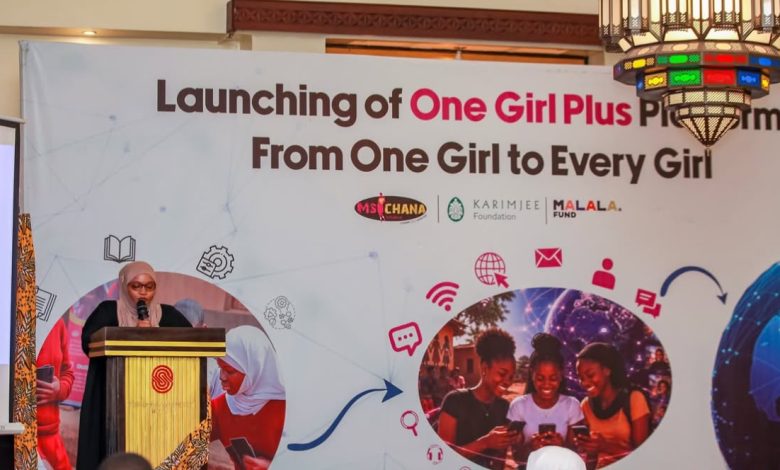
Msichana Initiative recently launched the One Girl Plus Digital Platform to expand girls’ access to knowledge and life skills, giving them the flexibility to keep learning through technology beyond traditional face-to-face sessions.
The Platform is designed to give girls a way to keep learning beyond the walls of classrooms and community spaces — using technology to put knowledge, games and a safe space for questions within closer reach,” said Consolatha Chikoti, the Msichana Innitiative Executive Director.
It is a significant shift for a programme that for more than four years has relied largely on face-to-face interaction to reach girls aged 10 to 25.
More than 10,000 girls have taken part in One Girl Plus, learning through games, stories, discussions and encounters with women who serve as role models. But the experience also revealed something simple, girls wanted more.
They wanted more time to ask questions. More opportunities to discuss issues affecting their lives. More chances to return to what they had learned.
“We listened to the girls. They taught us that their desire to learn does not end when our session ends,” said Ms Chikoti.
The digital platform is the organisation’s answer. “Technology gives us an opportunity to take this experience to many more girls,” Ms Chikoti said.
A new doorway to learning At its heart, One Girl Plus remains built around in three ideas; knowing yourself, believing in yourself and setting goals (‘Kujitambua’, ‘Kujiamini’ and ‘Kujiwekea Malengo’).
She said the new platform takes those ideas into the digital world. Ms Chikoti said girls can access interactive educational games, life-skills lessons and age-appropriate information in Kiswahili.
“An artificial-intelligence chatbot also gives them a place to ask questions and seek information in a more private and accessible way,” she noted.
For a teenager who may hesitate to raise a question in front of classmates, that can matter. For a girl who lives far from where One Girl Plus sessions are held, it can matter even more.
And for a younger girl still trying to understand who she is and what she can become, having somewhere to explore those questions may be the beginning of something bigger.
The digital divide is a development concern The promise of the platform comes against a broader concern from the Ministry of Education, Science and Technology, girls who are excluded from the digital world risk being excluded from an increasing share of educational and economic opportunities.
Felister Mapunda, representing the ministry, said digital skills are no longer a luxury but a basic necessity. “If the girl child does not have the opportunity to participate in the digital world, the gap between her and opportunities in an increasingly digital society will continue to widen,” she said.
Ms Mapunda said the ministry is promoting science and technology, digital innovation and more inclusive and flexible approaches to education to respond to the changing needs of learners.
She said educating and supporting girls has benefits that extend beyond the individual, strengthening families, communities and future generations.
“A girl who has education and skills has the ability to make the right decisions and protect herself,” she said.
That concern gives greater urgency to initiatives such as One Girl Plus Digital, particularly as technology becomes increasingly central to how young people learn, communicate and prepare for work.
But access to technology alone is not enough. Girls also need the confidence and skills to use it meaningfully.
That is where the experiences of girls who have taken part in One Girl Plus become important. Jenifa Toji a form three student at Makongo Juu Secondary School is among the girls who have experienced the programme’s approach to learning and personal development.
“One Girl Plus gives girls and young women a chance to learn from one another, exchange experiences and advocate for our rights,” she said.
Girls experiences pointed to an important reality, giving them information is only part of the task. They also need confidence to use it.
Beyond the screen Yet Msichana Initiative is careful not to present technology as a substitute for people. The conversations that happen faceto-face, the relationships formed with mentors and peers, and the safe environments created during One Girl Plus sessions remain central to the programme.
The digital platform is intended to extend thet experience, not replace it. “A girl can leave a session and continue learning. She can return to a game or lesson later. She can explore a question that came to mind after the discussion ended.
“In that sense, the platform changes the rhythm of learning,” the Executive said adding it makes it less dependent on a particular day, classroom or facilitator being present. She said for Msichana Initiative, this is particularly important because girls do not grow up in identical circumstances.
Ms Chikoti said some face long journeys to school. Others encounter social expectations that limit their ambitions. Some lack supportive spaces where they can openly discuss issues affecting their lives. Msichana Initiative says cultural practices and social attitudes can still reinforce the idea that girls are less capable or less valuable than boys, undermining confidence even when girls have the ability to excel.
Technology cannot solve all of those problems, but it can create another door. Closing the distance That idea is also at the heart of the partnership between Msichana Initiative and Karimjee Foundation, which is supporting the digital platform.
The foundation has previously supported One Girl One Bike, a programme that provides bicycles to girls facing long journeys between home and school.
The connection between the two initiatives is striking. One Girl One Bike seeks to shorten the physical distance between a girl and her classroom.
One Girl Plus Digital seeks to shorten the distance between a girl and knowledge. Caren Rowland, a Karimjee Foundation representative, said the organisation believes a girl’s location or circumstances should not determine the opportunities available to her.
“We believe every girl should have the opportunity to learn and reach her full potential without being limited by the distance or circumstances from which she comes,” she said.
For the foundation, supporting the digital platform is part of investing in solutions that reach girls where they are. But the digital journey also comes with its own barriers.
A platform cannot help a girl who cannot access a device. Connectivity can be expensive or unreliable. Digital spaces must also be safe, particularly for young users.
That means the success of One Girl Plus Digital will depend not only on the quality of its content, but also on whether girls can actually reach it and use it safely.
ALSO READ: Improved value chain, digital platform boost Tanzania’s fish exports
A wider horizon For Msichana Initiative, the launch of One Girl Plus Digital is therefore less about putting an existing programme onto a screen and more about rethinking how girls can access opportunity.
The organisation wants to reach beyond the limitations of geography and time while preserving the human relationships that have made One Girl Plus effective.
The next stage will require cooperation among government, civil society, technology companies, development partners and the private sector to improve access to devices, connectivity and safe digital spaces.
But the ambition begins with something much smaller and more personal. A girl with a question. A girl who wants to know more.
A girl who has an idea but is not yet confident enough to say it aloud. For her, the significance of One Girl Plus Digital may not be measured by the number of users on a platform or the number of lessons completed.
It may be the moment she finds an answer to a question she was afraid to ask. It may be the confidence to speak up. It may be the courage to set a goal that once seemed too far away.
And it may be the realisation that where she comes from does not have to determine how far she can go. The classroom may still have walls. But for the girls One Girl Plus hopes to reach, learning no longer has to stop at the door.