German diplomat backs Zanzibar’s push to attract global investors
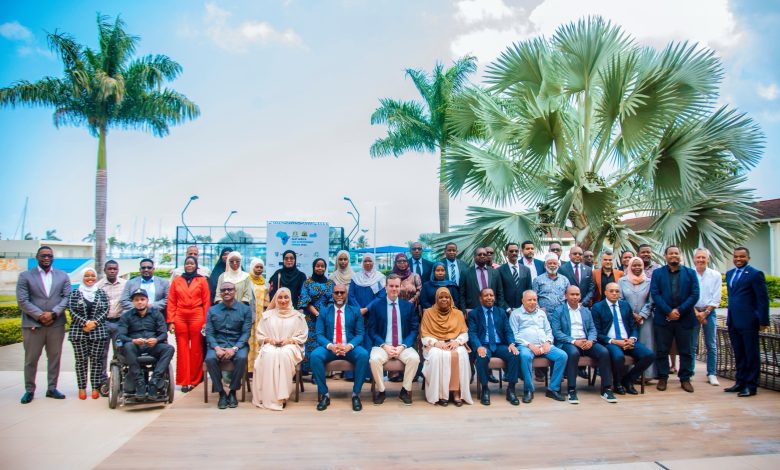
ZANZIBAR: THE Deputy Head of Mission at the German Embassy in Tanzania, Maximilian Müller, has called on the government to create a conducive investment environment that will attract international investors and strengthen their confidence to establish businesses in Zanzibar.
“Investment needs opportunity, but investment also needs confidence,” Müller said while speaking at the recent Invest. EAC Zanzibar edition.
He said that as Zanzibar positions itself as an attractive destination for regional and international investors, the government should continue improving the investment environment to build greater confidence among investors.
Mr Müller noted that Zanzibar has the potential to leverage its strategic location, natural assets and emerging economic sectors to drive long-term economic growth.
He stressed that creating a stable, predictable and investor-friendly environment would be crucial to unlocking the island’s investment potential and attracting more international capital.Mr Müller said the challenge facing governments was not simply to identify investment opportunities, but to create the conditions under which businesses would have the confidence to put capital at risk and plan for the long term.
He said: “Governments have a critical role in establishing sound, transparent and predictable policy frameworks, while development cooperation can help strengthen infrastructure, innovation and skills.”
He said investors take risks, deploy capital, create employment and introduce new technologies and business models. The quality and predictability of the investment environment therefore becomes central to whether opportunity translates into actual investment.
ALSO READ: Tanzania unveils competitive awards project to boost diary industry
“Companies need predictable and transparent rules. They need efficient administration and infrastructure. They need access to energy, finance and skilled workers. They also need to know that an investment made today can still be planned with confidence five or 10 years from now,” he said.
He added: “If we want to attract more private capital from Germany, from Europe, or from elsewhere, we also have to listen carefully to businesses about the practical obstacles they face.”
The message comes as Zanzibar seeks to widen its investment proposition beyond its established tourism base, with opportunities emerging across agribusiness, manufacturing, transport and logistics, ICT, renewable energy and the blue economy.
Five Investment Frontiers
Invest. EAC is seeking to move the investment conversation beyond broad promotion towards specific opportunities capable of attracting capital, technology and strategic partnerships.
The Zanzibar edition is built around five priority areas: digital economy and artificial intelligence; tourism and logistics; health and pharmaceuticals; critical raw materials and carbon credits; and agribusiness and trade.

The sectors reflect a wider transformation taking place across East Africa as governments seek to deepen regional value chains, accelerate digitalisation, strengthen healthcare systems, expand sustainable tourism and mobilise new sources of climate and trade finance.
The Permanent Secretary in the Zanzibar’s Ministry of Trade and Industrial Development, Dr Habiba Hassan Omar, highlighted the importance of strengthening private-sector participation and enabling Zanzibar businesses to capture opportunities emerging from regional and continental integration.
The ambition is increasingly moving beyond market access.
For Zanzibar enterprises to compete effectively, access to markets must be matched by finance, infrastructure, skills, appropriate standards and a predictable regulatory environment.
“That is where investment promotion becomes more than attracting foreign capital. It also becomes about building stronger domestic businesses capable of participating in regional and global value chains,” she said.
Zanzibar’s regional advantage
Zanzibar’s investment proposition is also larger than the size of its domestic market.
Its position in the Indian Ocean, combined with its place within Tanzania and the East African Community, offers the potential to connect businesses and production networks across the region with international markets.
The Executive Director of the East African Business Council, Ahmed Farah described Zanzibar as a potential gateway to a regional market of more than 330 million people.
“Zanzibar represents much more than a tourism destination. It is a gateway to investment, trade, innovation and partnerships across the Indian Ocean and the wider East African region,” Farah said.
From opportunity to bankable projects
For businesses, regional integration must deliver practical commercial benefits. Companies need to source inputs competitively, move goods efficiently across borders, establish operations without unnecessary regulatory delays and access affordable and predictable financing.
High costs of doing business, taxation issues, non-tariff barriers, differences in standards and regulations, logistics costs, limited access to finance and policy uncertainty remain among the obstacles capable of delaying investment decisions.
ALSO READ: Hosting 153rd IPU Assembly: What Tanzania stands to gain now and for years to come
Farah urged the private sector to move beyond identifying those constraints and work with governments to develop practical, evidence-based solutions.
The blue economy bet
The blue economy presents another potentially significant investment frontier. Fisheries, aquaculture, marine tourism, maritime transport, renewable energy and biotechnology could generate new economic opportunities while creating employment and strengthening coastal communities.
The challenge is to scale these sectors without compromising the natural resources on which they depend.
For Zanzibar, where tourism, fisheries and coastal ecosystems are closely interconnected, environmental sustainability is not separate from economic development. It is part of the investment proposition itself.