Green technology, smarter systems drive Dar Port transformation
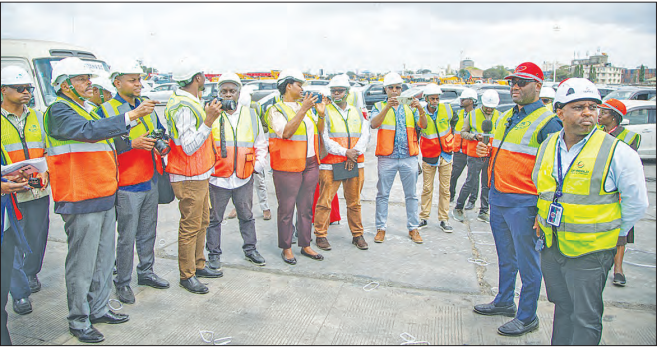
DAR ES SALAAM: THE transformation of the Port of Dar es Salaam is increasingly taking an environmental dimension, with the adoption of hybrid cargo-handling equipment significantly reducing fuel consumption, while improving operational efficiency.
During a tour of the facility by editors on Thursday, Port Director Abed Gallus said modern equipment being introduced was not only increasing productivity but also helping reduce the port’s carbon footprint. Pointing to one of the newer grey machines operating in the container yard, Mr Gallus said the equipment uses hybrid technology, combining fuel and electricity to power its operations.
He said older machines could consume an average of about 480 litres of fuel over 24 hours, while the newer hybrid equipment uses approximately 21 litres over the same period, under the stated operating conditions. The dramatic reduction in fuel consumption, he said, was expected to lower carbon emissions while reducing operational costs.
“The world is now moving towards reducing carbon emissions, and ports are also expected to contribute to this effort,” Mr Gallus said, explaining that investment in modern technology was helping Dar es Salaam Port become both more efficient and environmentally sustainable.
ALSO READ: Young women changing face of male dominated careers
The adoption of such equipment is part of broader efforts to modernise port operations as cargo volumes continue to rise. Another important improvement is the increased use of direct delivery, particularly for bulk cargo. Under the system, cargo is discharged directly from a vessel onto a customer’s truck and immediately removed from the port, eliminating the need for the cargo to occupy valuable storage space for extended periods. Mr Gallus said the approach was critical because a port should primarily facilitate the movement of cargo rather than function as a longterm storage facility.
“The cargo should stay in the port for the shortest possible time while the customer completes the necessary procedures,” he said.
The system is supported by the Tanzania Revenue Authority’s pre-arrival declaration arrangement, which allows importers to begin customs and tax procedures before their vessels arrive. Once the manifest is submitted, the importer can obtain a tax assessment, make the required payment and complete clearance procedures in advance. When the vessel berths, cargo can therefore be discharged and removed immediately.
The system is particularly useful for bulk commodities such as fertiliser and some steel products. For hazardous cargo, including ammonium nitrate and sulphur, direct removal is even more important because of the safety and infrastructure requirements associated with such materials.
The faster movement of cargo also means that valuable port space can be made available for other vessels and consignments. Further efficiency gains are expected from the introduction of modern bulk cargo-handling technology through investments associated with DP World.
Some of the equipment currently used to handle bulk cargo relies on older technology, including hopper systems. Mr Gallus said plans to introduce conveyor-belt technology would significantly improve the speed at which commodities such as wheat and fertiliser are discharged from vessels.
The new system will enable cargo to be extracted directly from vessel holds and transported mechanically to receiving facilities, reducing the need for slower handling processes. Currently, a vessel carrying about 50,000 tonnes of bulk cargo can take between six and seven days to complete its operations. With the new technology, the same vessel could potentially be handled in approximately two days.
The reduction in handling time would significantly increase berth productivity, allowing another vessel to be received much sooner. This means that increased port capacity will not depend solely on constructing new berths; improving the speed at which existing infrastructure is used can also allow the port to handle more trade. Alongside technology and infrastructure, enhanced security is another key component of the port’s transformation.
ALSO READ: Rapid diagnostics bring innovation closer to Tanzanian patients
Mr Gallus said incidents of theft had declined significantly following the installation of surveillance systems and strengthening of cargocontrol procedures. CCTV cameras have been installed at strategic locations throughout the port to monitor operations and cargo movement.
Security measures also extend beyond the port to Inland Container Depots (ICDs), where cargo is transferred for collection or onward distribution. According to Mr Gallus, cargo moving from the port to ICDs is monitored throughout the transportation chain, while ICDs are required under the relevant regulatory framework to maintain CCTV surveillance.
When consignments are removed from vessels, operators verify the cargo loaded onto trucks before handing it over for onward transportation. The system creates greater accountability at each stage of the logistics chain and reduces the possibility of cargo being tampered with, removed or otherwise compromised.
Mr Gallus said stronger security was contributing to increased confidence among customers using the port. The improvements in infrastructure and vesselhandling capacity are also enabling Dar es Salaam Port to handle significantly larger quantities of cargo without a corresponding increase in the number of vessels.
The port can now accommodate deeper-draft vessels, allowing larger ships carrying greater volumes to call at Dar es Salaam. Mr Gallus explained that, in the past, a customer with about 60,000 tonnes of cargo might have needed two vessels to transport the shipment. Today, the same consignment can potentially be transported by a single larger vessel. This reduces the number of vessel calls required to move the same volume of cargo and makes operations more efficient for both customers and the port authority.
The port handled approximately 33.7 million tonnes of cargo during the previous year, including about 14.7 million tonnes of overseas cargo, while handling approximately 977 vessels. The significantly faster growth in cargo volumes compared with vessel numbers demonstrates the impact of deeper berths, improved infrastructure and larger vessel capacity.
In addition, coastal shipping and trade between mainland Tanzania and the islands have expanded, including cargo flows between Tanzania, Zanzibar, the Comoros and other Indian Ocean islands. The growth reflects increasing economic activity and the role of improved port services in facilitating trade between the mainland and the islands.
The developments at Dar es Salaam Port point to a broader shift in the way the facility is being modernised. The focus is no longer simply on handling more cargo, but on handling it faster, more securely, at lower cost and with a smaller environmental footprint.
From hybrid equipment that dramatically reduces fuel consumption, to direct delivery systems that free storage space, modern bulk-handling technology that promises shorter vessel turnaround times, and stronger security systems that protect cargo, the changes are aimed at improving the entire logistics chain.
For Tanzania and neighbouring countries that rely on Dar es Salaam as a major trade gateway, the benefits could extend well beyond the port. Faster vessel turnaround, larger cargo loads per vessel, lower fuel consumption, reduced cargo risks and improved movement of goods can all contribute to lower logistics costs and greater competitiveness.
As investment in technology and infrastructure continues, Dar es Salaam Port is increasingly positioning itself not merely as a facility for receiving and dispatching cargo, but as a modern, efficient and environmentally conscious regional logistics hub.