Tanzania’s digital education transformation begins with the teacher

ARUSHA: TANZANIA’s journey towards a digitally enabled education system is gaining new momentum as teachers are increasingly equipped with the knowledge, skills and confidence needed to integrate technology into teaching, learning and assessment.
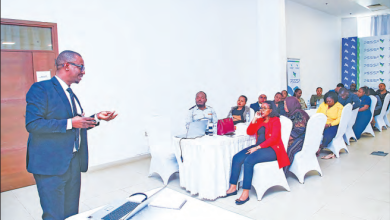
The direction was vividly demonstrated in Arusha during a four-day ICT training programme that brought together government secondary school teachers from Arusha City and Arusha District, giving them practical experience in digital tools, artificial intelligence, digital content, learner assessment, school data management and open educational resources.
Held from September 1 to 4, 2026, the programme was implemented under the ICT Transforming Education in Africa – Phase III Project, supported through the Korean Funds-in-Trust (KFIT), in collaboration with UNESCO, the Ministry of Education, Science and Technology (MoEST), the Tanzania Institute of Education (TIE) and the Prime Minister’s Office – Regional Administration and Local Government (PMO-RALG).
The training reflects the Government’s commitment to strengthening education through technology while building a teaching workforce equipped to respond to the changing needs of learners and the demands of a modern, knowledge-based economy.
At the heart of the programme was the ICT Competency Standards for Teachers in Tanzania (ICT-CSTT), a framework providing teachers with a structured pathway for progressively developing their digital competencies. According to UNESCO Education Sector Project Coordinator Gabriela Lucas, the ICT-CSTT comprises 15 modules covering Beginner, Intermediate and Advanced levels.
The Arusha training focused on the Beginner and Intermediate levels, covering 10 modules, while also introducing teachers to the five Advanced-level modules. The significance of the programme therefore went beyond teaching teachers how to operate digital devices. It was about enabling them to understand how technology can strengthen professional practice and improve the learning experience.
One of the important lessons emerged from the session on school records and data, led by TIE Curriculum Developer – ICT Phorosia Makhanda. She guided teachers to view school records not simply as information that is stored, but as valuable evidence that can support teaching, learner support, accountability and informed decision-making.
Attendance records, continuous assessment results, examination performance, registration information and other school records can provide teachers and school leaders with important information about learner progress. When such information is properly organised and analysed, teachers can identify learning patterns, understand areas requiring greater attention and plan appropriate teaching interventions.
This gives school data a direct connection to classroom practice. A teacher can use learner performance information to understand whether students are progressing, identify areas requiring reinforcement and make informed decisions about teaching.
The message from the session was clear: good data can become good educational decisions when teachers have the skills to use it effectively. The same principle was demonstrated through practical sessions on digital assessment using platforms such as Kahoot and Google Forms.
Teachers experienced how familiar classroom activities such as asking questions, giving exercises and checking understanding can be transformed into interactive digital experiences. Kahoot generated considerable enthusiasm among participants because it showed how assessment can become engaging while giving teachers immediate information about learners’ responses.
The experience demonstrated how digital assessment can support formative learning by providing information that can guide subsequent classroom activities. For the teachers, this was not simply about learning a new application. It was about developing a new understanding of how technology can support assessment, participation and timely feedback.
The programme also transformed the way teachers looked at lesson preparation. During practical sessions led by Dr Lucian Ngezei of the University of Dodoma, teachers were introduced to Microsoft PowerPoint and WPS Office and shown how ordinary lesson notes can be developed into structured digital presentations. Using topics such as Photosynthesis, trainers demonstrated how teachers can organise learning objectives, key concepts, illustrations, conditions, applications and summaries into visual learning materials.
ALSO READ: Govt decentralises cement production
The emphasis was on simplicity, clarity and purposeful presentation. The lesson was particularly relevant to an education system that increasingly emphasises competencies, where learners are expected not only to acquire knowledge but also to apply it, analyse information, create solutions and develop problem-solving skills.
Digital presentation skills therefore give teachers another avenue through which they can make lessons more visual, structured and engaging. The transformation continued on the third day when teachers were introduced to the Open Public School (OPS) platform developed by TIE.
The practical session, facilitated by Jonas Meyan from Monduli Teachers College, enabled teachers to explore the platform and its educational resources, including images, videos, 3D content and animations. More importantly, teachers were encouraged to think beyond simply accessing a digital platform.
The key professional question became: How can this resource support my learners and strengthen my lesson? This approach places pedagogy at the centre of technology use.
Digital platforms can complement classroom teaching by giving teachers access to additional learning materials, supporting explanations, encouraging exploration and creating opportunities for greater learner participation. The training also addressed one of the most rapidly developing areas in education Artificial Intelligence (AI).
Rather than presenting AI as a substitute for the teacher, the training positioned it as a tool that can support professional work when used responsibly. Dr Ngezei reminded teachers that AI-generated information must be examined carefully because technology can produce inaccurate information.
Teachers were encouraged to use their own knowledge, critical thinking and professional judgement when working with AI. This means that the digitally capable teacher is not simply someone who knows how to generate information using AI.
It is a professional who knows how to ask meaningful questions, provide context, verify information and determine whether the resulting material is appropriate for learners. The training consequently reinforced an important principle: as technology becomes more powerful, the teacher’s professional judgement becomes even more important. For UNESCO, the wider objective is to establish a sustainable culture of technology-enabled teaching and continuous professional development.
Lucas explained that UNESCO aspires to see teachers equipped to use ICT effectively for teaching and learning, with the ICTCSTT providing a structured framework for continuous development. The approach is also designed to extend the benefits of training beyond the teachers who participate directly.
Through the cascade training model, trained teachers are expected to return to their schools and share their knowledge and skills with colleagues. This gives participating teachers an important role as multipliers of knowledge within their schools, departments and professional communities.
A teacher who learns how to use digital assessment can support another teacher. A teacher who learns how to develop digital content can share that knowledge with colleagues. A teacher who understands how to use learner data can encourage evidence-based decision-making within the school.
In this way, a four-day training programme can contribute to a wider culture of continuous professional learning. The process is further supported through the TIE Teachers Continuous Professional Development Learning Management System (TCPD LMS), linked to the Government’s MEWAKA system, providing a platform through which teachers can continue accessing learning materials and developing their competencies beyond face-to-face training.
For UNESCO Head of Education Sector at the Dar es Salaam Office, Dr Faith Shayo, teachers remain at the centre of education transformation because they are the professionals who translate educational innovations and technologies into actual classroom experiences. Her message reinforces the central role of the teacher in Tanzania’s digital education agenda: technology gains its educational value when it is guided by a teacher who understands the curriculum, the learner and the purpose of learning.
The programme therefore represents an important intersection between Government education policy, teacher professional development, digital technology and classroom practice. Under the leadership of the Ministry of Education, Science and Technology, Tanzania continues to advance education reforms that place competence development, technology, innovation and human capital at the heart of national development.
The ICT-CSTT training complements this broader direction by equipping teachers to participate meaningfully in an increasingly digital education environment. It also connects with the aspirations of Tanzania Development Vision 2050, particularly the development of human capital, science, technology, innovation and digital capabilities. For Tanzania to prepare young people who can participate confidently in a technologydriven economy, teachers must themselves possess the competencies required to guide those learners.
This is where the significance of the Arusha training becomes particularly important. The participating teachers are returning to their schools not merely with knowledge of particular digital applications, but with new perspectives on how technology can support their professional responsibilities.
They have explored how assessment can generate useful evidence, how school records can support decision-making, how digital resources can enrich lessons, how AI can support professional work when critically evaluated and how continuous professional development can become part of their everyday practice.
The experience also demonstrates the importance of connecting digital skills with the direction of Tanzania’s evolving education system. A competence-oriented curriculum requires teachers who can facilitate participation, creativity, practical learning, critical thinking and problem-solving.
ALSO READ: HESLB: Note reasons for deadline extension
Digital tools can provide additional ways of supporting these objectives when they are selected and used with clear educational purpose. This is why the transformation taking place is ultimately about much more than technology.
It is about the teacher. It is about equipping the teacher with the competence and confidence to create richer learning experiences, make informed decisions, use evidence, access quality resources and guide learners through an increasingly digital world. It is also about creating a professional culture in which teachers continue learning from one another.
Through the cascade approach and digital professional development platforms, the knowledge gained in Arusha is expected to move beyond the training room into schools, classrooms, departments and wider professional communities.
And at the centre of this entire investment is the learner: the learner who receives a clearer explanation through digital content; the learner whose learning needs can be identified through assessment and data; the learner who participates more actively in classroom activities; the learner who gains access to richer educational resources; and the learner who develops the digital and problem-solving competencies needed for the future.
For Tanzania, therefore, digital transformation in education is not simply about computers, applications or Artificial Intelligence. It is about building the human capacity required to give these technologies educational purpose.
Through the leadership of the Government of Tanzania, particularly the Ministry of Education, Science and Technology and in collaboration with UNESCO and other education stakeholders, teachers are being equipped with the competencies needed to advance technology-enabled teaching and learning.
The knowledge gained through the Arusha training is expected to continue spreading through schools and professional learning platforms, strengthening teachers’ capacity to support the implementation of Tanzania’s evolving education agenda and the aspirations of Tanzania Development Vision 2050.
At the heart of this journey remains the teacher confident, competent and prepared to use technology to create meaningful learning experiences. Tanzania’s digital education future will be built through a strong partnership between Government commitment, teacher competence and responsible use of technology ensuring that every digital innovation ultimately serves one purpose: empowering the learner to learn, create, innovate and contribute to national development.