

WB backing puts Tanzania’s PPP ambitions to the test
DAR ES SALAAM: TANZANIA’S drive to use Public-Private Partnerships (PPPs) to finance development is gaining another layer of international backing, with the World Bank supporting the preparation of projects that could eventually bring private capital into key sectors of the economy.
The support comes at a time when questions are occasionally raised about Tanzania’s ability to attract international capital and maintain strong relationships with global development partners. But the evidence from the country’s PPP programme presents a more nuanced picture.
The World Bank has continued to provide financial and technical support to Tanzania’s Public-Private Partnership Centre (PPP Centre), helping government institutions prepare projects in natural gas distribution, urban markets, transport infrastructure and solar energy.
Under the third phase of the Tanzania PPP Support Programme, the Bank supported preparations for the proposed Natural Gas Distribution Project in Dar es Salaam, the redevelopment of Ilala Market, the Uyole Bus Stand in Mbeya and solar power projects in Same-Kilimanjaro, Manyoni-Singida and Zuzu-Dodoma.
The significance of the programme goes beyond the individual projects. For a country pursuing ambitious development targets under Vision 2050, PPPs could become an important way of bringing together public priorities and private capital, expertise and technology.
But before investors put money into a project, governments must demonstrate that the opportunity is commercially and technically sound. That is where the World Bank-backed preparation work becomes important. From ideas to investment opportunities Tanzania has no shortage of infrastructure needs.
The challenge is turning those needs into projects that investors can understand, finance and ultimately build. A government may identify the need for a new market, bus terminal, power plant or gas network.
An investor, however, wants to know how much the project will cost, who will use it, how revenue will be generated, what risks exist, who carries those risks and what happens if circumstances change. A feasibility study is designed to answer many of those questions.
The July 2025 progress report of the PPP Centre shows that work under the World Bank-supported programme initially faced difficulties, including delays in allocating and approving financial resources. Some planned stakeholder consultations and site visits could not therefore be completed.
By November, however, the PPP Centre reported that it had conducted the planned visits and engaged with the Tanzania Petroleum Development Corporation (TPDC), Tanzania Electric Supply Company (TANESCO), Dar es Salaam City Council and Mbeya City Council.
That progression illustrates an important aspect of PPPs that is sometimes overlooked: Preparing a project can take considerable time before a private investor is even invited to consider it.
The World Bank’s involvement therefore represents more than funding. It provides technical assistance at the stage when government projects are being tested for their commercial and financial viability.
Ilala Market: More than a construction project
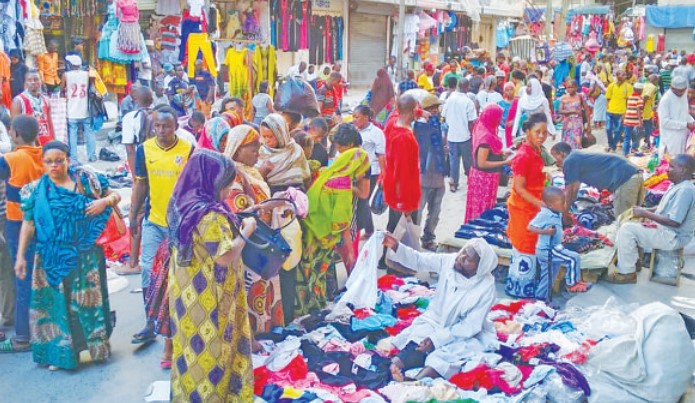
The proposed redevelopment of Ilala Market offers a clear example. In October, 2025, the Dar es Salaam City Council confirmed its intention to develop and modernise the market through a PPP arrangement.
ALSO READ: Making Dira 2050 everyone’s story
The council said the existing market had deteriorating infrastructure and conditions that were becoming less attractive to customers. It plans to prepare designs for a modern market and undertake a feasibility study with support from the World Bank.
At first glance, the project may appear to be simply about replacing an ageing market. But its economic implications could be broader.
A well-designed market can provide better trading conditions, attract more customers, improve the organisation of businesses and potentially increase revenue for the local authority. For a private investor, however, the key question is whether such a project can generate sufficient and predictable revenue to justify the investment.
That is why the feasibility stage matters. The World Bank-supported process can help determine whether the proposed development is commercially viable, what investment is required and how responsibilities and risks should be divided between the public and private sectors.
Uyole and the changing face of Mbeya
The proposed Uyole Bus Stand in Mbeya highlights another challenge: Infrastructure struggling to keep pace with urban growth.
In its September 2025 letter to the PPP Centre, Mbeya City Council said the Uyole area was expanding and attracting more people, while buses were dropping passengers along roadsides. The council warned that the situation posed risks to people and property.
The project had already reached the pre-feasibility stage, meaning the next step was a full feasibility study. Mbeya City Council subsequently confirmed that it was prepared to use a PPP arrangement and receive World Bank support for the feasibility study.
The project illustrates how PPPs can potentially connect public infrastructure needs with private-sector investment. But the model has to work for both sides. The city needs a facility that improves safety and transport services. A private partner needs a commercially viable project with predictable revenues and clearly defined risks. Finding that balance is one of the most important purposes of project preparation.
Solar power could be the bigger opportunity The proposed solar projects in Same-Kilimanjaro, Manyoni-Singida and ZuzuDodoma could have implications extending beyond the individual locations. Tanzania’s economic transformation will require more reliable electricity to support industries, businesses, digital services and growing communities.
Private investment could help expand generation capacity and reduce pressure on public resources. But energy projects are capital-intensive and usually involve long-term contracts. Investors therefore need confidence in regulation, tariffs, payment arrangements, demand and the financial strength of public institutions involved in the projects. A carefully prepared business case can help answer those questions before a project reaches the market.
ALSO READ: Tanzania turns economic diplomacy into business opportunities at FACIM 2026
The November 2025 PPP Centre report also provides a reminder that World Bank support does not automatically translate into a PPP. Dar es Salaam and Mbeya had expressed commitment to their respective projects, while TPDC and TANESCO were still undecided about proceeding with the selected projects under the PPP framework.
That is not necessarily a weakness. It shows that PPP decisions require government institutions to examine whether the model is appropriate before asking private investors to commit their capital.
What the World Bank relationship tells us
The broader significance of the programme lies in Tanzania’s continuing engagement with one of the world’s major multilateral development institutions.
There are often discussions about a country’s diplomatic standing and whether international relationships are strong enough to support foreign investment. But international economic relationships are also built through practical cooperation.
A World Bank team working with Tanzanian institutions on project preparation, feasibility studies and investment structures represents one form of such cooperation. It does not mean that every Tanzanian PPP will succeed, nor does World Bank involvement guarantee that private investors will eventually finance the projects.
But continued technical and financial support indicates that Tanzania remains engaged with an important part of the international development-finance system. The more important question, therefore, may not be whether Tanzania can attract international attention, but whether it can turn that cooperation into projects that deliver results.
PPP and Vision 2050
The issue becomes even more important as Tanzania implements its Development Vision 2050. The country wants to expand infrastructure, strengthen energy supply, improve urban services, increase productivity and create more opportunities for its growing population.
Those ambitions will require substantial investment. Government revenue and borrowing will remain important sources of financing, but they are unlikely to be the only answer. PPPs can provide another channel by allowing private investors to participate in infrastructure that serves public objectives.
However, PPPs should not be viewed as free money for government. Poorly designed partnerships can create long-term financial obligations for the state. A project may also fail to attract investors if its commercial assumptions are unrealistic or if risks are allocated in ways that the private sector cannot accept.

Thank you for sharing this informative and helpful article. The structure is clear and the information is practical. I appreciate your dedication to quality content.
I appreciate the useful information provided on this website. The article explains the topic clearly and adds real value. Thank you for producing such meaningful content.