The story behind Imbeju and Kizimkazi festivals
DAR ES SALAAM: A FESTIVAL or concert is easy to understand from the audience’s perspective.
There is a stage, music, food, crowds, sponsors and, eventually, the lights go out. But for the organisations behind such events, the calculation rarely ends with what happens during those few hours or days.
Increasingly, an event is becoming a platform for something much larger: Shaping perceptions, creating relationships, promoting destinations, strengthening brands and generating economic activity beyond the venue.
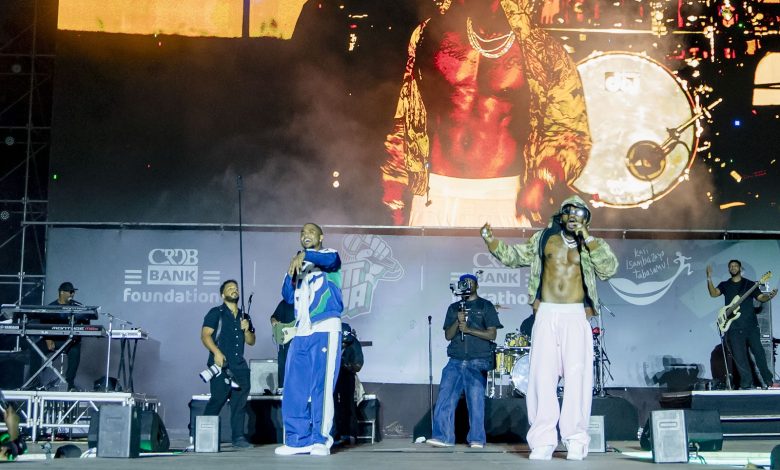
That is what makes the recent Kizimkazi Festival in Zanzibar and CRDB’s IMBEJU Sauti Moja concert in Dar es Salaam particularly interesting.
They are very different events, but both raise the same question: What exactly are organisations trying to achieve when they invest in large public events?
IMBEJU brought American singer Trey Songz to Dar es Salaam and offered audiences different levels of access, from ordinary tickets to premium and VVIP packages.
But a major bank putting its name and resources behind a large-scale entertainment event is doing more than selling music. It is buying attention, association and relevance. The organisation behind the event benefits from something wider than ticket sales.
Its brand becomes associated with the experience and reaches an audience that may be younger and more socially active than those reached through conventional corporate communication.
The value therefore includes brand recognition, customer relationships, youth engagement and association with entrepreneurship, community and social impact.
Kizimkazi presents a different version of the same strategy. Here, the principal asset being promoted is not a corporate brand but a destination.
The festival placed culture, tourism, investment and development in the same space. Projects and investment opportunities were brought into the festival narrative, while the event attracted visitors, officials, businesses and the media.
That matters because destinations are not built by advertising alone. They are built through experience.
A visitor who travels to Kizimkazi for a festival needs transport, accommodation and food, may visit other attractions and may buy local products.
A potential investor may also see a place differently after experiencing it rather than simply reading about it. This is where the wider economic story begins.
The financial value of an event is often discussed in terms of ticket sales and sponsorship. Yet much of the activity takes place outside the organiser’s accounts. Hotels receive bookings. Restaurants serve more customers.
Taxi operators get more trips. Security companies, caterers, printers, decorators, sound companies and other suppliers receive contracts. Retailers sell more products.
Temporary workers earn income. Media organisations produce content and influencers generate exposure.
None of these transactions necessarily appears as festival revenue. Collectively, however, they form the event’s economic spillover.
Edinburgh’s festivals are central to its identity and economy, contributing an estimated 407 million British pounds (GBP) to the local economy, supporting 8,500 jobs and generating about 2.7 billion British pounds in annual visitor spending. Singapore has taken a strategic approach to major events.
Since its inception, the Singapore Grand Prix has attracted over 720,000 international visitors and generated about 2.2 billion US dollars in tourism receipts, making it a key part of the country’s tourism strategy. Dubai applies a similar model through the Dubai Shopping Festival, linking retail, hospitality, travel and financial services to drive wider economic activity.
Saudi Arabia has expanded the concept through Riyadh Season, which recorded 14 million visitors by early 2026. The 2024 season involved 4,200 contracts with 2,100 companies, 95 per cent of them local.
Cape Town offers another example, with three major events generating about R2 billion in direct and indirect economic benefits, including destination-marketing value. This highlights that events generate value not only through spending, but also through global exposure and reputation.
That is perhaps the most important lesson for Tanzania. An event can create value that does not show up immediately as income.
A successful festival can strengthen a destination’s reputation, deepen relationships between businesses and government, give local enterprises access to new customers, attract media attention and create opportunities for future investment.
ALSO READ: Trey Songz: US RnB superstar jets in Dar for the CRDB IMBEJU concert
There is also a relationship economy around major events. Investors meet officials. Sponsors meet consumers. Businesses meet suppliers.
Entrepreneurs meet potential partners. International performers and organisations establish new relationships with Tanzanian institutions. Some of those contacts may produce commercial activity months or years later.
A successful international event can also change how a country, city or organisation is perceived.
It can demonstrate that a market can attract major entertainment, host international talent and support sophisticated events and supply chains. That matters for tourism, business confidence and international positioning.
This is why global cities compete for major sporting, cultural and entertainment events. They are competing not only for visitors, but also for the image that travels with them.
The question Tanzania now faces is whether these wider effects are being deliberately designed and measured, or whether they are simply occurring as a by-product of holding events.
If an event is treated purely as entertainment, success may be measured by attendance, ticket sales and audience reaction. If it is treated as a strategic platform, the questions become broader: How many hotel rooms were occupied because of the event? How much did visitors spend?
How many local businesses supplied it? How much international exposure did the destination receive?
How many investors were reached? What happened to those relationships afterwards? Those are the measurements that turn an event from a spectacle into an economic instrument.
Kizimkazi and IMBEJU are therefore interesting not because they should be judged as competing festivals, but because they reveal two approaches to the same emerging idea.
Kizimkazi uses culture and entertainment to strengthen the identity of a destination and create a platform around tourism and investment. IMBEJU uses entertainment to strengthen a corporate identity while connecting the brand with youth, social impact and economic participation.
The visible product is the festival. The less visible product is attention. Behind that attention lies a network of businesses, relationships, perceptions and future opportunities.
The most important question, therefore, may not be how successful these events were on the night. It may be what they make possible afterwards.
The real agenda behind Tanzania’s growing festival culture may be much larger than entertainment.
The question is whether the country can deliberately turn events into platforms for tourism, investment, business development, branding and international positioning and measure the value created beyond the stage. The lights eventually go out.
The economic and strategic effects do not necessarily end with them.