Futa Delete Kabisa campaign: The day three words found a nation

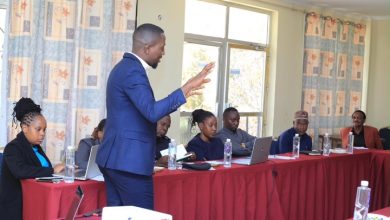
TANZANIA: ON the morning of 31 July 2013, there was an unmistakable sense that something unusual was about to happen at the Tanzania Communications Regulatory Authority (TCRA). Journalists had gathered early. Television cameras were already in position. Guests continued to stream into the venue while officials made the final preparations.
Behind the scenes, there was the familiar tension that accompanies every major public launch, the quiet checking of microphones, the last review of speeches and the final confirmation that every detail was in place. Yet none of us present could have imagined that, before the day ended, three ordinary words would begin a journey that would eventually become part of Tanzania’s everyday vocabulary.
Then came the moment that transformed an ordinary launch into something memorable. The audience rose to the powerful voices of Mrisho Mpoto and Banana Zorro as they performed the campaign’s signature song. It was energetic, simple and impossible to ignore. The words echoed across the hall with a rhythm that instantly drew people in. Journalists reached for their cameras. Guests joined the chorus almost instinctively. What had begun as a communication campaign suddenly felt like a national conversation waiting to happen.
Soon afterwards, the then Director General of TCRA, Professor John Nkoma, addressed the gathering with a message that was both timely and visionary. He reminded the audience that communication technologies had brought enormous opportunities for development, innovation and freedom of expression, but those opportunities carried an equally important responsibility.
The campaign, he explained, was not about limiting communication; it was about encouraging Tanzanians to communicate responsibly. Looking around the room that morning, it was difficult not to feel a sense of accomplishment. Months of preparation had finally come together. Yet, as I listened to the speeches and watched the audience respond to the message, my thoughts drifted back to where the story had really begun. The public was witnessing the launch of a campaign. I was remembering a meeting where none of us yet knew what the campaign would eventually become. Only weeks earlier, the atmosphere had been very different.
During the time, Tanzania was experiencing one of the most significant communication revolutions in its history. Mobile phones had become part of everyday life. Internet access was expanding rapidly and social media was changing how people interacted with one another. For the first time, millions of ordinary citizens had the ability to publish opinions, photographs and videos instantly to audiences far beyond their immediate communities. It was an exciting period for communication professionals because technology was opening opportunities that had never existed before. But with those opportunities came challenges that were becoming increasingly difficult to ignore.
Reports of online insults, abusive language, bullying, misinformation and irresponsible digital behaviour were becoming more frequent. Communication platforms that had been created to connect people were, in some cases, being used to humiliate, intimidate and spread harmful content. Technology had advanced far more quickly than society’s understanding of how to use it responsibly. The issue was no longer about telecommunications infrastructure or internet connectivity. It had become a question of human behaviour. That growing concern eventually found its way onto the agenda of a TCRA Management meeting.
The discussion that followed was thoughtful, honest and, at times, challenging. Around the table sat professionals from different disciplines, each bringing a unique perspective on the changing communications landscape. There was broad agreement that Tanzania was entering a new digital era, but there was equal concern that freedom to communicate was increasingly being accompanied by behaviour that undermined respect, privacy and responsibility.
The question confronting management was not whether action was necessary. Everyone agreed that it was. The real question was what kind of intervention could genuinely influence behaviour. Would regulation alone be enough, or did the country first need a national conversation?
As the meeting progressed, another important realisation began to emerge. Laws and regulations could establish boundaries, but they could not, by themselves, change attitudes. Sustainable behavioural change requires something more powerful than enforcement. It requires understanding. People are far more likely to change when they appreciate why change matters than when they simply fear punishment. By the time the meeting concluded, one thing had become clear.
Communication had to become part of the solution. Management provided the strategic direction. The responsibility for transforming that direction into a national campaign now rested with those of us entrusted with communication. For many people, the meeting would have marked the end of the discussion. For our communication team, it marked the beginning.
The conversations continued long after everyone had left the boardroom. We challenged one another’s assumptions, debated different approaches and explored how ordinary Tanzanians were interacting with emerging digital platforms. More importantly, we asked ourselves a simple but difficult question: What kind of message could genuinely influence behaviour instead of simply attracting attention? We were determined not to produce another campaign that people would forget within weeks.
We wanted something that would live beyond posters, newspaper advertisements and radio spots. We wanted a message that people would repeat naturally in homes, classrooms, workplaces and, ironically, on the very social media platforms whose responsible use we were promoting.
Finding that message proved far more difficult than we had expected. Many possible slogans looked impressive on paper but quickly lost their appeal when spoken aloud. Some sounded too technical. Others reflected the language of regulators rather than the language of ordinary citizens. A few were creative but lacked the simplicity needed to travel from one conversation to another.
Every time we believed we had found the answer, another discussion exposed its weaknesses. Gradually, however, those unsuccessful attempts taught us an important lesson. The campaign would never succeed if it sounded like TCRA speaking to the public. It had to sound like Tanzanians speaking to one another. That shift in thinking changed everything. Instead of asking ourselves what message the institution wanted to deliver, we began asking a different question: If someone realised they had just posted something harmful, what would they naturally say to themselves? Suddenly, the conversation became much simpler.
The answer was not hidden in technical language or complicated explanations. It lay in three ordinary words that everyone already understood. They were direct. They were conversational. They invited action rather than fear. The more we repeated them, the more convinced we became that we had found something special. Futa. Delete. Kabisa. Simple enough for a child to remember. Strong enough for an entire nation to adopt.
ALSO READ: TCRA ups support for mathematics, digital clubs
When the concept was presented to Professor John Nkoma, the then Director General of TCRA, he immediately recognised its potential. He understood that this was far more than a slogan. It was a behavioural message wrapped in everyday language. Rather than lecturing citizens, it invited them to pause, reflect and take responsibility for their own actions before harm was done.
His support gave the campaign not only executive endorsement but also strategic direction. From that moment, what had begun as an idea discussed around a table became a national communication initiative ready to meet the public. Little did we know that those three simple words were about to travel far beyond the launch hall and become one of Tanzania’s most recognised public communication campaigns.
Yet every campaign has two lives. The first is the journey of creating it. The second is what happens after it is released into the hands of the public. Next week, in Part II, I will take readers beyond the launch of Futa Delete Kabisa to explore how the campaign spread across the country, the leadership philosophy that guided Professor John Nkoma, the unforgettable role of Mrisho Mpoto and Banana Zorro’s signature song.
I will explain how three simple words became part of everyday language and why the campaign later provided a powerful communication foundation when Tanzania implemented the Cybercrimes Act, 2015. It is a story about far more than a slogan. It is a story about how strategic communication, visionary leadership and public education can shape national behaviour long before enforcement begins.