‘Creative industry key to economic growth’
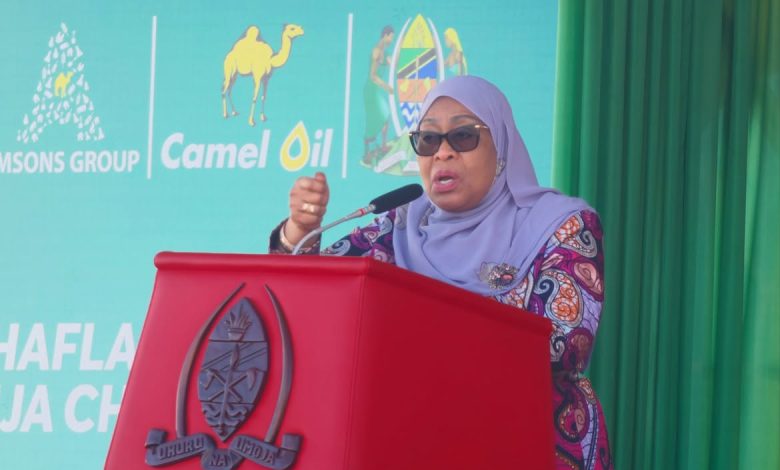
ZANZIBAR: PRESIDENT Samia Suluhu Hassan has described the creative industry as a vital economic driver for Tanzania’s youths and a powerful tool for promoting the country’s culture, tourism and identity globally.
The creative industry refers to economic sectors based on individual creativity, skill and talent that generate and exploit intellectual property. It bridges art, culture, business and technology to produce goods and services ranging from film and music to software and design.
The President made the remarks recently at a photography exhibition and auction featuring photographs taken during the Kizimkazi Festival 2026, organised by the Mwanamke Initiative Foundation (MIF) in collaboration with ‘We Are Better Africans (WABA)’, a boutique African creative agency.
The event brought together government and private-sector leaders, photographers, young creatives and other stakeholders in the arts sector, showcasing images depicting Zanzibar’s landscapes, cultural traditions, tourism activities, livelihoods and the blue economy.
Part of the proceeds from the auction will support clean-energy initiatives and the empowerment of women and youths.
President Samia said photography had the potential to promote Tanzania’s culture, arts and tourism while creating new economic opportunities for young people.
She said the quality of the photographs demonstrated that Tanzanian photographers possessed the talent and creativity to produce work capable of attracting international attention.
“When you take photographs like these of our country and sell them, you are marketing your country, you are promoting Zanzibar and Tanzania. People from outside will get to know the beauty we have within our country,” she said.
The President said photographs could add greater value to the tourism industry if more opportunities were created for photographers to display and sell their work directly to tourists.
She noted that Zanzibar’s tourism sector had continued to grow, with the Isles receiving nearly one million tourists last year, compared with more than 700,000 in 2024, an increase of 24.5 per cent.
She said the rise in visitor numbers should not be reflected only in tourism statistics but should also generate opportunities across the wider tourism value chain, particularly for young people in creative fields.
“If this exhibition was held in a tourism area and all these photographs were displayed, they could generate a lot of money,” she said.
President Samia said photography could therefore provide young people with a source of income while simultaneously marketing Tanzania to international visitors.
She cited “Makachu” performers at Forodhani in Zanzibar as another example of how creativity could support livelihoods while promoting the country.
The President said she visited the performers after arriving in Zanzibar and was impressed by their innovative performances, including diving into the sea while carrying banners conveying different messages about the country.
She said their creativity had made them recognisable to tourists while promoting Zanzibar. “If you go to Europe today and mention Makachu, tourists who have visited Zanzibar know that Makachu is associated with Forodhani in Zanzibar,” she said.
President Samia said such initiatives demonstrate that creative work could become a powerful form of destination marketing when young people develop unique ways of presenting their talents.
She also commended the photographers for using Information and Communication Technology (ICT) to produce high-quality images, including underwater photographs captured using sophisticated equipment.
She urged young people to use technology responsibly to promote Tanzania’s culture, tourism and natural attractions while safeguarding the country’s values and traditions.
ALSO READ: Government, seed industry urge maize farmers to verify seeds before planting
The President, however, cautioned that talent and creativity alone were insufficient, urging young photographers to pursue continuous learning and professional development.
“Creativity alone is not enough. Keep learning more and more,” she said, encouraging young creatives to acquire advanced technical and professional skills.
She said the government would continue creating a supportive policy, legal and economic environment for young people in the creative sector.
“Banks and financial institutions are here. We will enable you to do even greater things than what you have achieved today,” she said.
MIF Chairperson Wanu Hafidh Ameir said more than 200 young photographers participated in the initiative, with 15 selected for the exhibition and 10 photographs eventually displayed and auctioned.
She described the exhibition as a platform for celebrating Tanzania’s cultural heritage while creating opportunities for young people and promoting environmental conservation.