

Zambia, F4E sign a deal to facilitate country’s school feeding programme
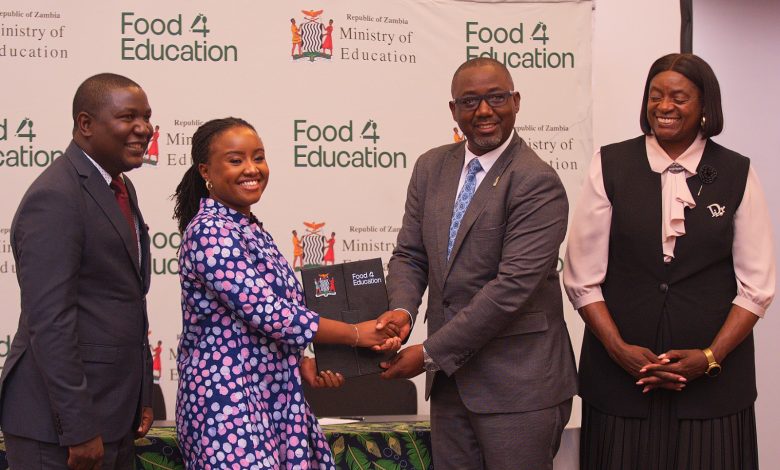
LUSAKA: ZAMBIA’S Ministry of Education and Food4Education (F4E) have signed a Memorandum of Understanding (MoU) aimed at strengthening the country’s national school feeding programme for public primary school learners.
The programme currently benefits 4.6 million students across 8,193 schools, with the government targeting expansion to reach 5.6 million learners by the end of 2026.
The agreement establishes a long-term technical partnership in which Food4Education will support the Ministry of Education in five key areas: policy and institutional coordination; programme design and implementation systems; the use of data, digital technologies and innovation; budgeting, financing and efficient resource management; as well as infrastructure and equipment development.
The partnership is intended to help Zambia build a sustainable, government-led school nutrition system that contributes to improved education outcomes, better child nutrition, stronger local agriculture and economic growth.
“Universal school feeding is an investment in the future of our children and the development of our national economy. This partnership with Food4Education will help us strengthen systems that ensure this investment delivers lasting results for Zambia,” said Dr Kelvin Mambwe, Zambia’s Senior Permanent Secretary for Education Services.
Across Africa, malnutrition among children contributes to economic losses of up to 16.5percent of GDP annually. However, studies show that every 1 US dollar invested in school feeding programmes can generate up to 20 US dollars in social and economic returns. While two-thirds of African governments have already allocated dedicated budgets for school feeding, the current challenge is no longer whether countries should invest, but how they can design and implement effective programmes at scale. Strong systems that are adapted to local contexts are critical to turning commitments into measurable outcomes.
“Zambia is demonstrating an example that the entire continent can learn from. By investing its own resources and engaging multiple government ministries to serve its children, the country is building a school feeding programme as a key pillar of economic development—one that supports agriculture, creates decent employment, builds human capital and drives economic growth. Food4Education is here to support the efforts already initiated by Zambia’s leadership and help accelerate the growth of a school nutrition-driven economy across Africa,” said Wawira Njiru, Founder and Chief Executive Officer of Food4Education.
ALSO READ: Tanzania, Sweden deepen education ties
A well-managed, government-led school feeding programme delivers benefits beyond providing meals to students. It connects smallholder farmers to reliable markets, increases employment and income opportunities across the food value chain—particularly for women and young people—strengthens local food systems and promotes the use of digital technologies in public service delivery.
The partnership aims to demonstrate how African governments can build, finance and operate sustainable public systems at scale, using school nutrition as a strategic investment in human development and economic transformation.

References:
Lollybet App https://board-en.drakensang.com/proxy.php?link=https://lollybet.com.de
References:
Lollybet Mobile Casino http://clients1.google.com.fj/url?q=https://lollybet.com.de
References:
%random_anchor_text% http://5577.f3322.net/
References:
Holland Casino App https://sexstories.app/
References:
Da Vinci’s Casino Bonus ohne Einzahlung http://proxy.nowhereincoming.net/
References:
Candy96 Casino mobile employmentabroad.com
References:
Candy96 login talenthubsol.com
References:
Candy96 Casino new player bonus toutsurlemali.ml