Zero Tariffs: The larger test for China-Africa cooperation lies in capacity building
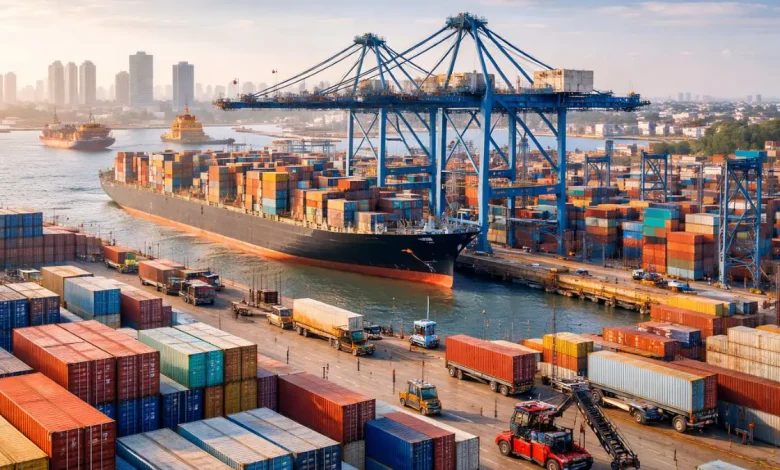
BEIJING: AMID profound adjustments in the global trade landscape and an accelerating technological revolution and industrial transformation, China-Africa economic and trade relations are entering a new lens of observation.
Since May 1, China has fully implemented zero-tariff treatment for all 53 African countries that have established diplomatic relations with it, marking a crucial step in building a China-Africa community with a shared future.
This initiative reflects China’s pragmatic commitment to supporting Africa’s integration into the global economy and promoting common development, while also offering African countries a new opportunity to deeply participate in the Chinese market.
China-Africa economic and trade relations have long been regarded as one of the most dynamic in the world. However, many African economies still rely primarily on the export of primary goods, facing challenges such as capacity gaps, trade deficits, inadequate infrastructure, and weak compliance capabilities with standards and regulations.
The true value of zerotariff treatment, therefore, lies not merely in allowing more African products into China, but in whether it can propel the continent’s industrialisation, product value addition and ascent up the global value chain. For African farmers and small enterprises, increased exports mean higher incomes; for countries with large agricultural populations, expanding agricultural exports and diversifying export markets can also improve income distribution and help farmers boost output and earnings.
However, this depends on African nations upgrading their production capacity and ensuring compliance, production volumes, quality standards and supply stability.
Against this backdrop, the seminar titled “Zero-Tariff: A New Channel and New Journey for the All-Weather China-Africa Community with a Shared Future in the New Era” was held in Beijing on May 22. Discussions covered a range of topics, including the new opportunities and shared vision of the China-Africa community with a shared future, customs facilitation, the integration of production, trade and investment and the mutual reinforcement of people-to-people and cultural exchanges with the zero-tariff policy.
Willy Bett, Kenyan Ambassador to China, emphasised that China-Africa cooperation is built on a foundation of mutual trust and respect. The expansion of zero-tariff treatment reflects an open and inclusive concept of trade and enables African countries to see opportunities for deeper participation in the Chinese market.
The Institute of African Studies at Hunan University likewise noted that the shortterm trade creation and trade diversion effects brought by zero-tariff policy may lead to rapid growth for cost-sensitive products. In the medium term, the policy could drive the coordinated upgrading of trade and industry and spur the gradual transfer of processing industries to Africa. Over the long term, it could help forge a new pattern of dual-circulation between China and Africa and tighten the connection of economic cycles within both sides.
Meanwhile, an advisor to South Africa’s Minister of Trade, Industry and Competition offered a perspective from the African Continental Free Trade Agreement: Africa needs to strengthen the effectiveness of its regional agreements, harmonise customs procedures and standards and make full use of the free trade area.
Africa does not lack policy visions; it lacks the integrated, systemic capability to bring together policy, infrastructure, finance and industry. If internal trade bottlenecks are not removed, the cost of logistics, cumbersome customs procedures, and certification obstacles may keep African products out of the market even if they enjoy zero-tariff treatment.
Discussions on customs facilitation at the seminar addressed this challenge. The China’s General Administration of Customs has formulated uniform rules of origin and supporting management measures and has introduced targeted cumulation rules to lower the threshold for African exports to qualify for preferential treatment.
Key measures, including systems for the issuance of certificates of origin in Africa, one-stop services, enterprise assistance, guidance on advance rulings on origin, integrated access for low-risk products and optimised quarantine access for medium and high-risk products, are all vital links in converting policy benefits into practical conveniences.
Special arrangements such as green lanes at major ports, green channels for the export of African agricultural and food products to China, remote video assessments, countrylevel packaged assessments, and enterprise inventory-based management can help African companies adapt more quickly to Chinese market rules.
Facilitation is only a first step. The ultimate measure of zero-tariff policy lies in whether the actual use of the opportunities it creates can directly contribute to poverty reduction, employment, and industrial upgrading. The growth driver that African countries truly need is to shift from trade to export resilience building and to diversify their exports through strategic investment.
The zero-tariff policy is historic and strategic in significance: it lowers barriers and creates opportunities, but translating it into sustained gains requires continued policy support, industrial upgrading, and technological advancement.
In the long term, for local industrial ecosystems in Africa to develop, rules of origin must be clear, transparent, coordinated, easy to operate, and supported by systems for certificates, customs cooperation, and electronic document verification. Different countries have different stages of development, industrial bases, and geographic conditions, so policy implementation must be tailored to each nation’s specific context.
For smaller economies, support for logistics, financial systems, and standards is particularly critical. At a deeper level, zero-tariff policy seeks to drive not just trade growth, but the maintenance and construction of a China-Africa cooperation ecosystem. This demands that China-Africa cooperation move beyond grand narratives and translate into concrete improvements in people’s capacity-building.
Hence, zero-tariff is a starting point, not the finish line. Both China and Africa need not only to share practices and industry standards but also to craft common economic development plans based on mutual respect. China’s opening-up policy has created a new channel for Africa to enter the Chinese market; African countries, in turn, need to turn this channel into a pathway for industrial upgrading, brand enhancement, and sustainable growth.
ALSO READ: China’s global trade strategy offers African nations model
The zero-tariff policy opens a new channel, but what truly determines the journey’s course is whether China and Africa can sustain their efforts across institutional guarantees, flexible modules, technical support, financial mechanisms, logistics corridors, and people-to-people and cultural exchanges. In this sense, zerotariff treatment represents an institutional exploration for both China and Africa as they move toward modernisation.
It responds to the contemporary need for open and inclusive trade and offers a new model for Global South cooperation. Looking ahead, whether China-Africa cooperation can advance toward industrial co-building and capacity symbiosis will decide whether this new channel can truly lead to a steady and far-reaching journey.