Mavunde launches salt plant, signals economic era
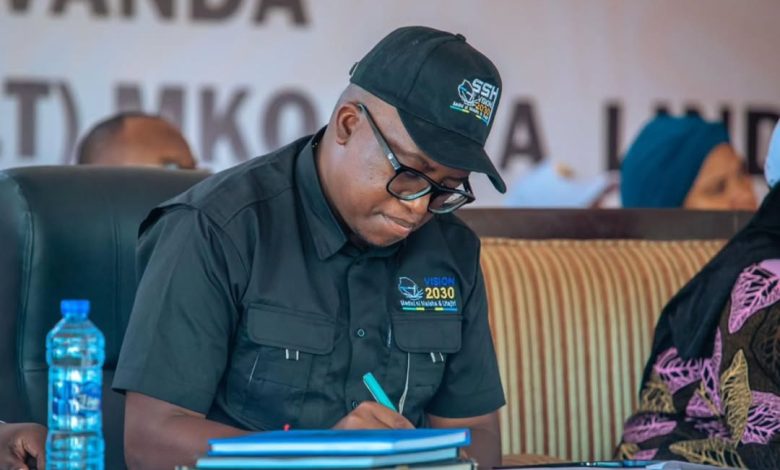
THE Minister for Minerals, Mr Anthony Mavunde, has officially inaugurated the Rafiki Salt Processing Plant, owned by the State Mining Corporation (STAMICO) in Lindi Region, while directing the corporation to explore similar interventions in other salt-producing regions, including Tanga, to address long-standing challenges facing salt producers, particularly market access.
His directive, delivered during the inauguration of the facility at Lingaula in Kilwa District on May 29, 2026, underscored the government’s broader commitment to transforming Tanzania’s salt industry from a fragmented, largely informal sector into a more organised, value-driven and commercially sustainable industry.
For years, salt producers in Lindi, Mtwara and other coastal regions have grappled with a common challenge: producing large quantities of raw salt without a reliable market. Many depended on middlemen, fluctuating prices and uncertain buyers, often forcing them to sell below value or leave stockpiles unsold for extended periods.
According to Minister Mavunde, the project represents the fulfillment of a promise made by President Dr Samia Suluhu Hassan three years ago after receiving complaints from salt producers during her visit to Lindi Region.
“President Dr Samia Suluhu Hassan directed us to resolve the challenge of lack of a reliable market for raw salt produced by small-scale miners, a concern she received during her visit to Lindi Region,” said Mr Mavunde.
“Today we are here to officially announce that we have implemented the President’s directive. STAMICO has brought this plant here to serve as a reliable market for our salt producers and eliminate the long-standing problem of market uncertainty.”
The project is being widely viewed as more than just another processing facility. It is designed to become a guaranteed buyer for producers while creating a structured value chain capable of supporting growth in production, quality improvement and industrial development.
Minister Mavunde said the government’s objective is not only to process locally produced salt but also to reduce dependence on imports.
“We want Tanzanians to use salt produced locally instead of relying on imported salt. On its part, the Government will continue addressing key challenges related to capital, energy and road infrastructure,” he said.
His remarks highlighted a wider policy direction under the government’s industrialisation agenda, which seeks to increase domestic value addition and reduce the export of raw materials.
The minister further instructed STAMICO to study opportunities for establishing similar initiatives in other salt-producing regions, particularly Tanga, where producers face challenges similar to those experienced in Lindi and Mtwara.
For many observers, the inauguration represents a practical example of how government policy can be translated into tangible economic interventions. In a country blessed with abundant salt resources, the irony of importing salt while local producers struggled to secure markets has long been a subject of concern among policymakers and industry stakeholders.
Once fully operational, the facility will process approximately three tonnes of salt per hour. Depending on production levels and operational efficiency, annual processing capacity is projected to range between 15,000 and 25,000 tonnes.
Officials say this capacity will significantly improve market absorption while creating incentives for producers to expand output.
STAMICO Managing Director, CPA Dr Venance Mwasse, described the project as a strategic intervention designed to provide a permanent solution to challenges that have affected salt producers for many years.
He revealed that the construction of the plant will cost approximately 4.5bn/- upon completion, with 3.1bn/- already invested.
Dr Mwasse explained that STAMICO will purchase raw salt directly from producers while also providing processing services, ensuring that producers have both a dependable market and access to improved value-addition opportunities.
“The event today is a continuation of the corporation’s mandate to support miners and provide a permanent, long-term solution to the challenges faced by salt producers in Lindi and Mtwara regions,” he said.
Beyond processing activities, the facility will also function as a demonstration farm, training centre and research hub. Through these components, producers will receive practical and theoretical training on modern salt production techniques, quality improvement measures and value-addition opportunities.
The centre will also support research on salt production technologies and innovations aimed at increasing productivity and competitiveness.
Dr Mwasse noted that the project aligns with STAMICO’s broader role in advancing national development priorities, including industrialisation, mineral beneficiation and the promotion of clean cooking energy.
He outlined several expected benefits, including employment creation, business opportunities, enhanced transportation services, improved product quality and a sustainable market structure for salt producers. Recognising the importance of access to finance, Dr Mwasse called on financial institutions to increase lending to salt producers.
According to him, the establishment of a guaranteed market through the processing plant significantly reduces commercial risk and creates a stronger basis for financial institutions to support producers with credit facilities.
The inauguration ceremony also provided an opportunity for stakeholders to share their perspectives on the future of the industry.
Lindi Regional Commissioner, Ms Zainabu Talek, described the launch as the realization of a long-held dream for salt producers in the region.
She said the project demonstrated the government’s commitment to implementing President Samia Suluhu Hassan’s directives and responding to the needs of local communities.
The Regional Commissioner urged producers to increase output to enable STAMICO to achieve its targeted processing capacity of three tonnes per hour and ensure the long-term sustainability of the facility.
Her appeal reflected a common theme throughout the event: while the government has invested in infrastructure and market solutions, the success of the project will ultimately depend on increased production and active participation by producers.
The strongest endorsement, however, came from the producers themselves.
Tanzania Salt Producers Association (TASPA) Chairperson, Ms Hawa Ghasia, described the plant as a breakthrough for producers in Lindi and Mtwara who have for years struggled with unreliable markets and a lack of processing facilities.
She said the establishment of the Rafiki Salt Processing Plant would finally address one of the industry’s most persistent challenges.
“We consider this plant as ours, not only STAMICO’s,” she said.
Ms Ghasia noted that producers are now motivated to improve both production levels and product quality in order to support the sustainability of the facility and strengthen the competitiveness of Tanzanian salt.
“Salt producers in Lindi and Mtwara have finally been liberated,” she said.
In a lighter moment that drew smiles from attendees, she reflected on the changing relationship between producers and stakeholders.
“We salt producers used to be difficult stakeholders, but now we understand each other,” she remarked.
Vice Chairperson of the Federation of Miners Associations of Tanzania (FEMATA), Mr Victor Tesha, called for greater support to producers through improved technology and infrastructure.
Among the requests presented were access to excavators for constructing embankments in salt fields, introduction of carpet technology, better roads leading to production sites and improved access to water and electricity.
These interventions, he argued, would enable producers to increase output and fully utilise the opportunities created by the new processing facility.
Chairperson of the Parliamentary Standing Committee on Energy and Minerals, Ms Subira Mgalu, praised the Ministry of Minerals for exceeding its revenue collection targets for the 2025/26 financial year.
She reaffirmed Parliament’s commitment to working closely with the ministry to identify and address challenges facing stakeholders in the mining sector.
According to Ms Mgalu, the minerals sector remains a key pillar in the implementation of Tanzania Development Vision 2050 and will continue to play an important role in the country’s economic transformation.
Minister Mavunde handed over agency rights and two containers to women’s groups and SACCOS members from Lindi and Mtwara for the distribution of Rafiki Briquettes, a clean cooking energy product promoted by STAMICO.
The gesture reflected the corporation’s expanding role beyond mining into broader economic empowerment and environmental sustainability programmes.
As celebrations concluded in Lingaula, the significance of the project was clear. The Rafiki Salt Processing Plant is not merely a factory. It is a response to years of appeals from producers, a fulfillment of a presidential commitment, and a practical demonstration of Tanzania’s determination to ensure that value addition takes place within the country.
For thousands of salt producers across the southern coastal regions, it represents something even more important: certainty. After years of producing salt without knowing who would buy it, they now have a guaranteed market, a processing facility, a training centre and a partner in STAMICO.