What a tomato harvest taught me about wealth growing in Africa
NAIROBI: The world feels increasingly unsettled. Geopolitical tensions dominate headlines, trade routes are shifting, development financing is tightening and conversations around food security, debt and economic uncertainty have become commonplace. Across boardrooms and policy
circles, we spend considerable time discussing global shocks and what they mean for Africa’s future.
Yet recently, standing on a piece of land about forty kilometres outside the city watching a tomato harvest unfold, I found myself wondering whether Africa’s future may not lie entirely in the places where we are currently looking.
A year ago, I acquired eight hectares of land outside the city centre. The purchase had very little to do with agriculture. Like many professionals, I viewed it primarily as part of a wealth preservation strategy. Land appreciates over time and provides diversification alongside more liquid investments.
Recently, however, my family challenged ourselves with a different question. How could this asset do more than preserve value and begin creating it?
That is when I met my neighbour, Willy Kibuuka. Willy was harvesting tomatoes.
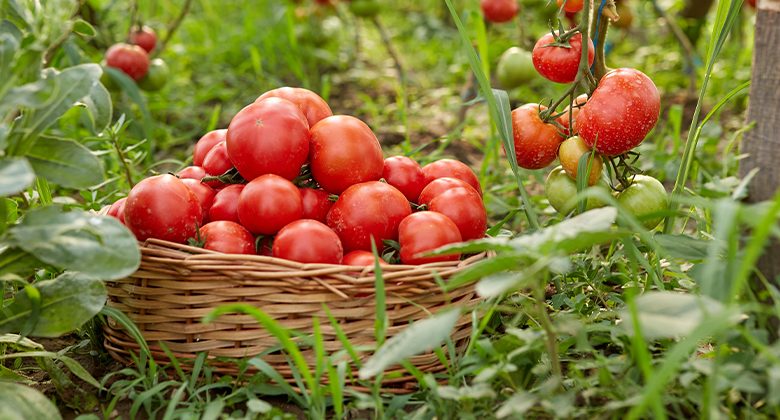
By the time I arrived, his second truck was already being loaded. The first had already left earlier in the day and from the look of the field, there was every indication a third truck could still emerge from the same season.
Standing there, I realised I was not simply looking at a harvest. I was looking at enterprise, cash flow and value emerging quietly from a field.
Each crate was selling for approximately, USD 135. Assuming around sixty crates across the first, second and third truck, Willy had already generated close to USD 8,100, and the season was likely not over.
ALSO READ: Tanzania and Congo seek to revive ties in diplomacy, security, agriculture, energy sectors
What struck me was the simplicity of the operation. There was no visible sophisticated infrastructure, no expensive machinery and none of the markers many of us immediately associate with innovation. Yet here was a young farmer moving product at scale and capturing value from relatively basic production methods.
As we walked the field, I casually asked Willy what the closure of the Strait of Hormuz meant to him. He dismissed it almost immediately, explaining that he had heard about it but considered it distant and of little interest.
I then asked whether prices had increased.
His answer stayed with me.
He simply explained that increases happen and that they are part of doing business. Survival, according to him, comes down to knowing when to harvest and how to price the crop.
I found that response deeply revealing.

While many of us are consumed by geopolitical risk and global uncertainty, Willy was focused on timing, markets and execution because his prosperity depended not on headlines but on
entrepreneurial decisions.
Looking at his field, another issue became evident. Post harvest losses, one of Africa’s most persistent agricultural challenges, had not yet become his story. The trucks were moving, the market was absorbing and value was being captured before value disappeared.
That experience forced an uncomfortable reflection.
What really made Willy different from me?
I had more land, more education, more networks and more access to capital, yet he had done something while I had preserved something.
Behavioural science speaks about the intention action gap, the distance between what people know and what they eventually do. Often the issue is not information, opportunity or capability. The issue is activation.
Perhaps this is where Africa finds itself.
The continent holds nearly sixty percent of the world’s uncultivated arable land, yet we continue speaking about food insecurity and unrealised agricultural potential. Seen differently, that statistic may not simply represent unused land. It may represent one of the
largest intention action gaps in economic development.
Perhaps the same reflection applies at a personal level. Many of us in urban centres own land, understand investment principles and regularly speak about Africa’s promise, while significant portions of those assets remain dormant.
Standing in Willy’s field, watching the second truck load while seeing enough crop still standing to likely fill a third, I realised that what separated us was not resources.
It was behaviour.
I had preserved an asset while he had activated one.
That reflection stayed with me and continued through conversations with friends in the following days. One shared the story of an onion farmer near Nairobi who reportedly failed twice before eventually generating close to USD 30,000 monthly from twelve acres. Another
spoke enthusiastically about export opportunities around banana puree, opening my mind to entirely different value chains.
Again, these were not really stories about onions or bananas.
They were stories about activation.
The more I reflect, the more convinced I become that Africa’s prosperity story is already growing; perhaps our challenge is that we have not told it loudly enough.
This experience also left me with a challenge for my friends in boardrooms and urban centres. How much idle land do we collectively own and how many acres sit untouched while we continue discussing opportunity as though it exists somewhere else?
What if we tested the waters?
Perhaps Africa will stop speaking about potential the day more of us begin showcasing prosperity already being built.
As for me, this experience changed something. The marketer in me is now looking for an agronomist to test the soil on this new asset and increasingly exploring organic farming with an export lens.
Perhaps what I thought was preserved capital was actually dormant enterprise.
And perhaps that is the lesson Africa itself needs to hear.
At a moment when the world feels uncertain, Africa may not need to look far for its next prosperity story because it may already be growing quietly in our fields, waiting not to be discovered but to be activated.
Reflections from the Harvest
Farmers are entrepreneurs because they continuously test, adapt and absorb risk in ways many formal businesses would struggle to sustain.
Prosperity often belongs to those who act before certainty arrives.
Africa’s prosperity story is already growing and our task now is to recognise it, tell it and participate in building it.