Why Ferdinand sees Tanzania’s big sporting moment
WHEN Rio Ferdinand compares Tanzania’s electronic- Standard Gauge Railway to the Eurostar linking London and Paris, it is more than a compliment about transport.
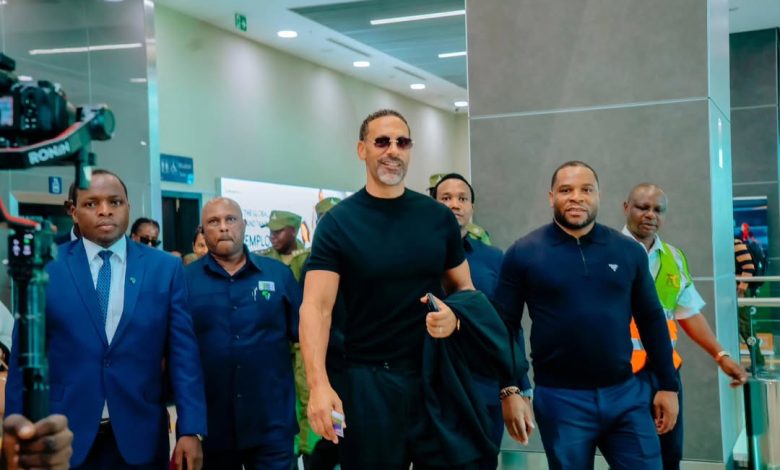
This is recognition that Tanzania is beginning to change international perceptions about what African countries can achieve through ambition, investment and long-term planning. The former England captain and Manchester United defender arrived in Tanzania as a football icon, but his observations touched something much bigger than sport.
His praise for the country’s modern railway, expanding stadium infrastructure and calm social atmosphere reflects a nation positioning itself not only for 2027 Africa Cup of Nations (AFCON) finals, but also for a broader transformation in sports, tourism and economic development. Ferdinand’s visit comes at a crucial moment as Tanzania prepares for the AFCON 2027, which it will co-host alongside Kenya and Uganda.
Across several regions in the country, construction cranes, engineers and planners are working to ensure the tournament becomes a successful continental showcase. Yet, Ferdinand’s most important message may have been his warning against short-term thinking.
“You need to think beyond AFCON and ensure the infrastructure has longevity for future generations and young players,” he said.
That statement captures the challenge facing many countries that host major sporting events. Stadiums can either become symbols of national progress or expensive monuments with little long-term value after the final whistle. The difference lies in planning, management and integration into local communities.
The ongoing construction of the Samia Suluhu Hassan Stadium in Arusha, upgrades at Benjamin Mkapa Stadium in Dar es Salaam, Zanzibar’s New Amaan Complex and the Fumba Stadium project all signal serious intent. But the real success of these projects will depend on what happens after AFCON.
Can these venues become centres for youth academies, community sports, women’s football and talent development? Can they host regional tournaments, concerts and commercial events that sustain economic activity?
Can they help nurture the next generation of Tanzanian footballers capable of competing at the highest levels? These are the questions policymakers must continue asking. Globally, football infrastructure has proven capable of transforming entire communities. In Europe, football academies have become pathways out of poverty for thousands of young people.
Stadium districts generate jobs, attract tourism and stimulate local business growth. Modern sports infrastructure also encourages healthier lifestyles and strengthens national identity.
Africa has often struggled to maximise these opportunities because of inconsistent investment, weak maintenance systems and limited long-term planning. Ferdinand’s comments suggest Tanzania has an opportunity to chart a different course. Equally significant was his reaction to Tanzania’s SGR electric train.
“When I am in England, I often use the Eurostar from London to Paris because it is an unbelievable train service. I do not feel any difference here,” Ferdinand said.
For many Africans, such a comparison carries symbolic weight. For decades, infrastructure conversations involving Africa have often been framed around limitations and deficits. Ferdinand’s remarks challenge that narrative directly.
“People should not think that because it is Africa, things are different,” he added.
That statement may resonate far beyond football circles. Major sporting tournaments today are no longer judged only by what happens inside stadiums. Fans and visitors evaluate transport efficiency, airport systems, hospitality services, security and overall travel experience. In this sense, Tanzania’s investment in modern rail transport could become one of its biggest competitive advantages during AFCON 2027.
Efficient transport links between cities reduce congestion, improve fan mobility and strengthen tourism potential. They also leave behind lasting economic infrastructure long after tournaments end. Ferdinand also highlighted another often-overlooked Tanzanian asset: peace and social stability.
“The warmth, the energy and the vibes here are amazing,” he said. At a time when global tourism increasingly values safety, hospitality and authentic cultural experiences, Tanzania possesses qualities many destinations struggle to offer. Combined with wildlife tourism, beaches, heritage sites and improving infrastructure, AFCON could provide Tanzania with a rare opportunity to reposition itself globally.
ALSO READ: Dodoma Rugby Saba 2026 opens National 7’s Circuit
This is why the tournament must be viewed not simply as a football competition, but as a national branding exercise. Countries like Qatar, South Africa and Morocco have used major sporting events to reshape international perceptions, attract investors and strengthen tourism industries.
Tanzania may not have the financial scale of those nations, but it has something equally important: momentum. The government’s willingness to invest in sports infrastructure reflects growing recognition that sport is no longer merely entertainment. It is now part of economic diplomacy, youth policy and international influence. Football legends like Ferdinand bring visibility.
Their endorsements carry credibility among international audiences. In an era driven by digital media and global branding, such visits matter. Still, Tanzania’s greatest opportunity lies not in celebrity visits, but in building sustainable systems around sport.
That means investing in grassroots coaching, sports science, school competitions, women’s football and youth academies. It means ensuring local clubs have better facilities, stronger governance and improved commercial structures.
It also means connecting sports development to education and employment opportunities for young people. If Tanzania succeeds in doing that, AFCON 2027 could become more than a successful tournament. It could become the foundation for a lasting sporting economy. The real task now is ensuring the momentum does not end when the tournament does.