From direction to destination: The road to Dira 2050
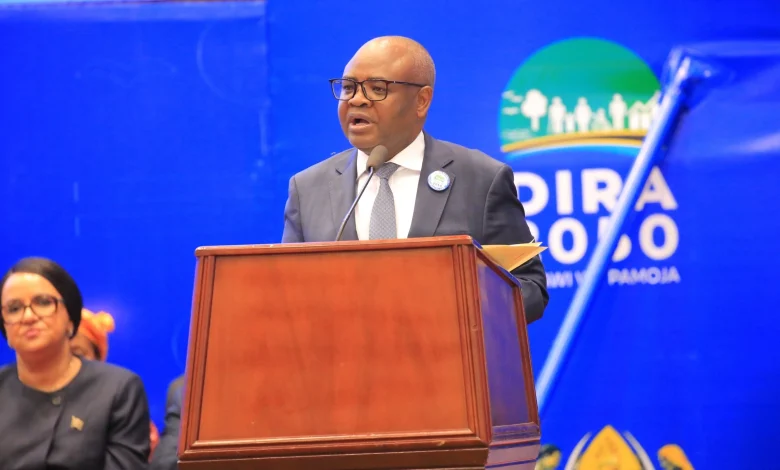
DAR ES SALAAM: I WAS intrigued with the recent interview featuring Minister of State for Planning and Investment, Prof Kitila Mkumbo, as the custodian of Dira 2050.
As Tanzania prepares to transition from the Tanzania Development Vision 2025 (TDV 2025) to the more ambitious Vision 2050 (Dira 2050), it is tempting to equate the articulation of such a bold national vision with the inevitability of its realisation. Yet, as the adage goes, “Direction is not Destination.”
A vision provides a compass, not a guarantee. The journey from aspiration to achievement is fraught with challenges, detours, and the need for relentless recalibration. We want to attain the aspirations Dira 2050 and beyond!
Learning from Development Vision 2025
TDV 2025, set out to transform Tanzania into a middle-income country through agricultural modernisation, industrialisation and technological advancement.
The results are mixed but useful. Tanzania has enjoyed relative peace, macroeconomic stability and steady GDP growth (averaging 6.2 per cent annually). Per capita income more than doubled and inflation was largely contained.
These are significant achievements, rooted in national unity and relatively effective policy implementation. However, Vision 2025 also encountered persistent obstacles.
From underutilisation of science and technology, limited inclusivity, to uneven sectoral progress. The gap between policy direction and developmental destination remains.
As TDV 2025 concludes, not only is the need for a renewed, more ambitious vision clear, so is the need for a more evidence-driven, adaptive and accountable approach.
Vision 2050 as a bold compass
Dira 2050 sets out to make Tanzania a model of resilience, innovation and prosperity by mid-century. The vision is thorough, with industrialisation, a knowledge-based economy, environmental stewardship and social justice.
It rightly emphasises the alignment of sectoral policies, evidence-driven implementation and the embedding of the vision in political and social agendas.
Yet, as Prof Mkumbo candidly acknowledged, the growth under Vision 2025 was no different from yester years, driven by sectors like mining and tourism, which created limited decent jobs and did not sufficiently reduce poverty or inequality.
This experience underscores the gap between setting direction and reaching the intended destination.
Dira 2050 aspires to position Tanzania as an industrialised, knowledge-driven, upper-middle-income country: a one-trillion-dollar economy and a per capita income of 7,000 US dollars.
According to Prof Mkumbo Dira 2050 is built on four pillars: prosperity for all, justice, inclusivity and national self-reliance.
It prioritises transformative sectors, especially agriculture and manufacturing, for their potential to create jobs and add value, directly addressing the shortcomings of TDV 2025.
Amidst arguments that Dira 2050 awareness remains low among the youth (highlighting the challenge of translating high-level policy into grassroots reality), Prof Mkumbo stressed that Dira 2050 is not just a government document but a “vision of the citizens.”
The drafting process, he says, involved extensive consultations, reaching over 1.2 million people, with youth under 35 comprising 78 per cent of the digital respondents. Implementation will be the true test of Dira 2050’s promise.
Prof Kitila Mkumbo emphasises that achieving the Vision’s ambitious goals requires fundamental changes in governance and institutional behaviour.
Central to this transformation is effective decentralisation ie transferring power and resources from the central government to local councils, empowering them to manage and deliver significant projects directly.
Equally important is the establishment of robust accountability systems, with results-based monitoring, evaluation and learning mechanisms, to ensure that Dira 2050 moves beyond aspiration to concrete action.
Recognising the private sector as the primary engine of transformation, Dira 2050 expects it to contribute approximately 70 per cent of the required investment, underscoring the need for dynamic public private partnerships.
Collectively, these reforms are designed to break away from the “business as usual” mentality and ensure that Tanzania’s chosen direction is translated into real, measurable progress.
As with Development Vision 2025, the articulation of direction must not be mistaken for arrival at the destination.
The experience of other developing countries with long-term visions offers both cautionary tales and best practices.
Comparative lessons
Across the developing world, national visions have served as powerful compasses, guiding countries toward ambitious futures.
Yet, the experiences of Malaysia, Kenya and Rwanda reveal that while a clear direction is essential, reaching the intended destination is a far more complex and ongoing journey.
Malaysia’s Vision 2020, launched in 1991, aimed to achieve developed nation status by 2020.
The country made impressive gains in poverty reduction, industrialisation and infrastructure.
However, by 2020, Malaysia had not fully achieved its goal, hindered by political transitions, global shocks and persistent inequality.
The direction was clear, but the destination remained elusive, requiring a new vision, “Shared Prosperity Vision 2030,” to address unfinished business. Kenya’s Vision 2030 set out to transform the country into a newly industrialising, middle income nation.
While Kenya has seen notable progress in ICT, infrastructure and financial inclusion, challenges in governance, corruption and regional disparities have slowed the journey. The vision provided direction, but the destination is still a work in progress.
Rwanda’s Vision 2020 was widely praised for its clarity and strategic focus, contributing to significant progress in health, education and economic growth. However, as the target year approached, gaps remained in some areas, highlighting challenges that still needed to be addressed.
Rwanda responded with Vision 2050, emphasising inclusive growth and human capital; demonstrating the need for adaptive, iterative visioning. These cases underscore a vital lesson: the articulation of a vision is only the starting point.
Achieving the destination demands adaptability, sustained commitment and the willingness to recalibrate as challenges and opportunities emerge along the way.
ALSO READ: Morality key to achieving Dira 2050 goals
The way forward for Tanzania
The journey from vision to reality for Tanzania will hinge on its ability to transform policy into tangible progress.
Dira 2050’s promise of inclusive growth and empowerment must be evident in the everyday lives of all Tanzanians, particularly the youth and marginalised communities.
Achieving this requires not only translating ambitious goals into practical action but also strengthening institutions i.e. fostering robust systems for decentralisation, accountability and meaningful stakeholder engagement.
Ultimately, Tanzania’s path forward will depend on a culture of continuous learning, where strategies are regularly adapted in response to changing circumstances, guided by rigorous evidence and the voices of its citizens.
Only through such commitment can the aspirations of Dira 2050 be fully realised. Indeed, Dira 2050 is an ambitious blueprint, but its realisation depends on transforming it from a static plan into a dynamic national journey.
For this vision to manifest into reality, it must be treated not as a rigid decree, but as a living, breathing journey.
Its longevity requires political continuity, where the vision transcends ideological lines to ensure the destination remains fixed even as administrations shift.
The journey begins with a commitment to the truth of the terrain. Success hinges on evidence-driven implementation via a robust data backed system and routine monitoring, to ensure a clear-eyed view of progress and allow for agility to make mid-course corrections (with pride and not a sense of guilty), to be able to stay on course.
To bridge the gap between the initial direction and the destination, the vision must be woven into the very fabric of the national identity, across parties and manifestos.
Dira 2050 becomes larger than any single ‘awamu’, the destination remains fixed, held steady by a collective sense of accountability.
The success of this vision relies on inclusive stakeholder engagement, where every citizen sees themselves not just as spectators, but as co-owners and co-implementers.
This progress must be fuelled by inclusive ownership, engaging the private sector and citizens as active cocreators.
When every Tanzanian sees their own hopes reflected in the plan, the vision gains the momentum of millions.
The path to 2050 requires a humble and hungry spirit. Tanzania must embrace a culture of continuous learning and adaptation, drawing wisdom from its own milestones and the experiences of its peers globally.
It is an iterative process. In an everchanging world, the ultimate mark of success will be the ability to evolve, ensuring that Dira 2050 remains as relevant on its final day as it was on its first.
A national vision is indispensable; it provides hope, mobilises resources and aligns national efforts. But as Malaysia, Kenya and Rwanda have shown, the articulation of direction is only the beginning.
The real challenge is in the relentless, adaptive and inclusive pursuit of the destination.
For Tanzania, Vision 2050 must be more than a compass; it must be a living, learning journey one that recognises that direction, while necessary, is not destination.
Ultimately, the true measure of Dira 2050’s success will be its tangible impact on the daily lives of individual Tanzanians by fostering opportunity, empowering economic agents and ensuring that prosperity, equity and sustainability are not just national aspirations, but personal realities for every citizen.
To quote the late PM of Ethiopia Meles Zenawi, “If we do not build, we will beg. If we do not think, we will sink. If we do not rise, we will rot”. The best is yet to come to Tanzania, Dira 2050 is the direction not destination.