Commission lays foundation for accountability rooted in justice
DAR ES SALAAM: IN the aftermath of the violence that erupted during and after Tanzania’s October 2025 General Election, the country faced a defining national question: how should a society respond to political unrest without allowing anger, division and retaliation to deepen the crisis further?
For many nations emerging from periods of conflict, the temptation for revenge often becomes powerful.
Public anger, grief and political tensions can create demands for harsh punishment and prolonged blame.
Yet, the report of Tanzania’s Presidential Commission of Inquiry into the violence and breakdown of public order proposed a different path, one centred on justice, accountability, truth and reconciliation rather than vengeance.
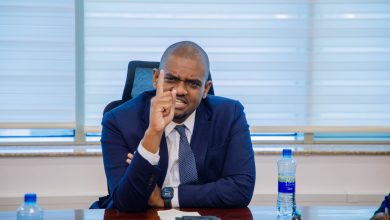
Throughout the presentation of the report, the commission’s chairman, former Chief Justice Mohamed Chande Othman, repeatedly stressed that the inquiry’s purpose was not to inflame divisions but to help the country heal while ensuring accountability was pursued fairly and lawfully.
Rather than encouraging retribution, Justice Chande repeatedly emphasised during the presentation of the report that the commission’s objective was to promote national healing while ensuring that accountability was pursued through fair and lawful processes.
The statement captured the central philosophy behind the commission’s work: accountability should serve the broader national interest of healing and rebuilding trust rather than becoming a tool for political retaliation.
Justice Chande repeatedly emphasised that justice must be guided by facts, evidence and legal principles instead of emotions or political pressure.
According to the report, the commission conducted its work in accordance with internationally recognised standards for commissions of inquiry, including protections for witness confidentiality and procedural fairness.
That approach reflected an effort to ensure that accountability would not become arbitrary or driven by public anger.
In societies recovering from political violence, confidence in fairness and due process is often essential to preventing new grievances from emerging.
In another key remark, Justice Chande underscored how heavily the commission relied on verified evidence in reaching its conclusions.
“The commission relied primarily on diverse evidence and information collected from a wide range of direct and secondary sources,” he said.
The inquiry gathered testimony from victims, witnesses, religious leaders, security officials, experts and ordinary citizens across different parts of the country.
ALSO READ: Why Inquiry Commission was a crucial step in restoring national and economic confidence
According to the report, thousands of Tanzanians participated through public hearings, written submissions, emails, text messages and confidential testimony.
Justice Chande also highlighted the commission’s commitment to inclusiveness during the investigation process.
“There was no one with evidence or views, who willingly wanted to be part of the journey of healing the nation, who was denied the opportunity to reach us,” he said.
The statement reinforced the idea that the search for accountability was intended to be transparent and participatory rather than selective or politically driven.
A major element of the commission’s work involved distinguishing truth from misinformation that circulated widely during the unrest.
The inquiry used forensic experts to analyse photographs, videos and digital material shared online during and after the election period.
Speaking about the process, Justice Chande said: “This methodology enabled the commission to distinguish between authentic and manipulated images.”
He further warned about the dangers of misinformation and manipulated digital content in politically sensitive environments.
“Some of the material was authentic and genuine, while other content was manipulated through artificial intelligence or presented as partial truths,” he said.
Those remarks reflected the commission’s effort to ensure that accountability would be based on verified facts rather than rumours, propaganda or emotionally charged narratives.
At the same time, Justice Chande stressed that the commission never lost sight of the human suffering caused by the violence.
The report documented deaths, injuries, destruction of property and long-term psychological trauma experienced by many citizens.
“The commission recognises that the deaths have left a profound void within families and communities and have significantly affected the nation’s workforce,” he said.
In another emotional section of his address, Justice Chande stressed that the inquiry treated every loss of life with dignity and seriousness.
“The commission did not treat the analysis of fatalities as a mere exercise in numbers or statistics. It placed great value on human life and recognised the dignity every deceased person deserves after death,” he said.
Those comments reflected a broader message running throughout the report: that justice should recognise human pain while avoiding the dangerous cycle of revenge that often follows periods of unrest.
The commission also acknowledged that some individuals involved in the violence had been influenced by deeper political, social and economic frustrations.
The report identified issues including unemployment, economic hardship and political grievances as some of the conditions that contributed to the unrest.
Rather than focusing only on punishment, the inquiry therefore recommended broader reforms aimed at strengthening governance, improving political dialogue and creating more effective systems for addressing citizens’ concerns peacefully.
The report’s approach closely reflected principles associated with transitional justice — the idea that societies recovering from conflict need accountability alongside reconciliation and institutional reform to prevent future crises.
Justice Chande also reminded the nation that many citizens who appeared before the commission believed the violence did not reflect Tanzania’s long-standing values of unity and peace.
“Citizens who appeared before the commission spoke about what happened during and after the October 2025 General Election and acknowledged that such actions do not reflect who we are as Tanzanians by our nature, our values and the teachings of the founders of our nation,” he said.
That observation reinforced the commission’s broader argument that national healing depends on preserving unity and social cohesion rather than deepening hostility.
For Tanzania, the commission’s report has become more than a document investigating a period of political violence.
It represents an attempt to establish a national model of accountability grounded in law, fairness and reconciliation rather than retaliation.
In many parts of the world, societies emerging from unrest struggle to balance justice with stability. Tanzania’s commission argued that the two should not be treated as opposites.
Instead, the report suggested that genuine accountability must seek truth, uphold justice and protect human dignity while also helping society move forward together.
Ultimately, one of the strongest messages emerging from Justice Chande’s address was that lasting peace cannot be built through revenge.
It must be built through truth, fairness, accountability and a shared commitment to national reconciliation.