Casting wider net, Tanzania’s new dawn deep blue
DAR ES SALAAM: FOR decades, Tanzania’s vast maritime potential has been defined by a familiar paradox, rich in resources, yet limited in reach. While the country consistently ranks among Africa’s top fishing nations, according to the FAO, the deeper waters of the Indian Ocean have largely remained the preserve of foreign fleets..
On Saturday, however, the launch of the TAFICO FV01 by President Samia Suluhu Hassan marked a watershed moment for the fishing industry signalling a new era for the nation’s Blue Economy.
The unveiling of this Japanese-built deep-sea vessel at the Kigamboni waterfront is a declaration of economic sovereignty. For years, Tanzania’s Exclusive Economic Zone (EEZ) has been a resource-rich expanse constrained by limited domestic capacity. Licensing foreign vessels brought in revenue, but only a fraction of the value generated from the harvest.
In effect, Tanzania remained a passive beneficiary collecting fees while others reaped the full rewards. The commissioning of TAFICO FV01 begins to change that equation, positioning the country as an active participant in deep-sea fishing. The statistics speak to a sector that has been punching below its weight. While fisheries contribute significantly to the GDP and support over 4 million livelihoods, a staggering 97 per cent of our 376,000 metric tonnes of annual catch comes from small-scale, inland and near-shore marine fishing.
By venturing into the deep sea, Tanzania is finally tapping into high-value stocks that have previously been processed and marketed by foreign entities. President Samia’s vision to link this vessel to a broader system of industrial processing and market access is the “missing link” in our value chain. It is not enough to catch the fish. We must process, package and brand them as Tanzanian products to capture the full economic value.
The commitment to revive the Tanzania Fisheries Corporation (TAFICO) is perhaps the most strategic move in this rollout. A national corporation with the tools to compete on the global stage provides a framework for sustainable resource management. As the first of five planned vessels, the TAFICO FV01 represents the “pilot phase” of a modernised fleet that could transform Tanzania from a regional fishing hub into a global exporter.
With fish currently making up nearly 20 per cent of the country’s animal protein intake, yet consumption sitting at a low 5.6 kg per person annually, the domestic benefits are as vital as the export ones. Increased deep-sea yields could stabilise local prices, improve food security and bolster the health of the 25 per cent of our population that depends on coastal and inland water resources.
ALSO READ: Dr Samia launches Tanzania’s first deep-sea fishing vessel
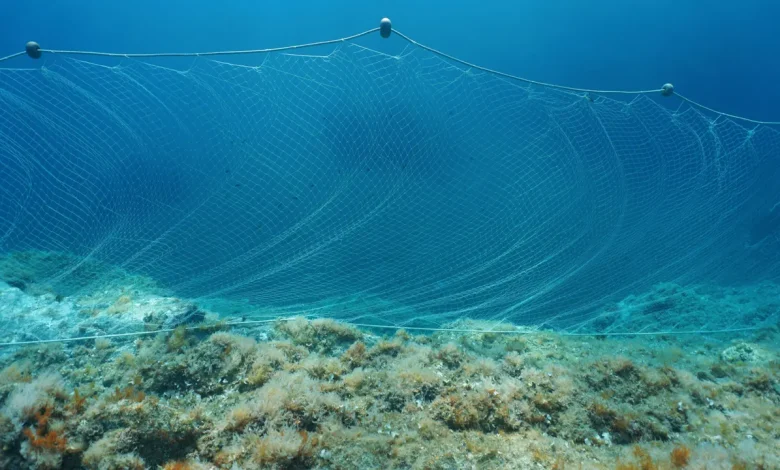
The net has been cast. The challenge now is to sustain momentum, ensure sound management of marine resources and translate ambition into measurable gains. If that happens, the Blue Economy will evolve from policy rhetoric into a genuine engine of growth propelling Tanzania towards a more resilient and industrialised future.