Why reconciliation matters for national unity, growth
DAR ES SALAAM: RECONCILIATION is steadily shedding its image as a distant, abstract ideal and emerging as a powerful, practical force one that anchors stability, nurtures inclusion and paves the way for a more united and prosperous nation.
In a world marked by deepening social, political and economic complexities, the ability of a country to bring together people with different histories, beliefs, interests and grievances is becoming central to its long-term success.
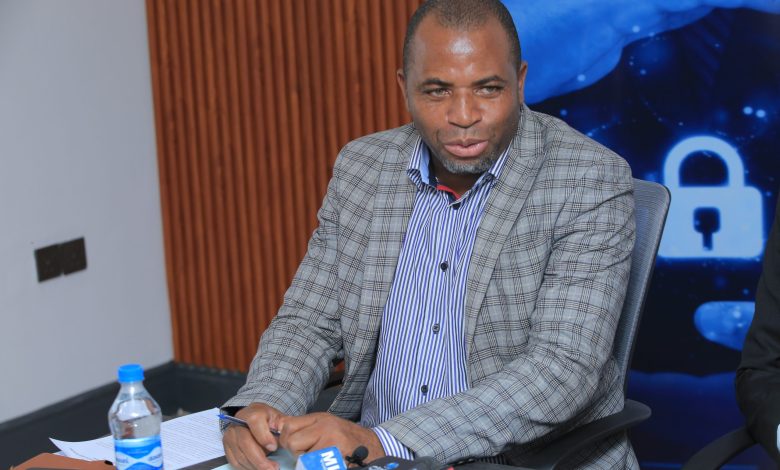
According to the Director of the Union of Tanzania Press Clubs (UTPC), Mr Kenneth Simbaya reconciliation should not be interpreted as the absence of differences or the forced blending of perspectives, instead, it is about creating an environment in which people can move forward together without requiring uniformity.
“Reconciliation is not about pretending that differences do not exist,” Simbaya said, explaining that it is about enabling people with different histories, interests and grievances to work together towards a shared future.
He added: “Without reconciliation, even the best policies will struggle to succeed because mistrust, division and unresolved wounds weaken institutions and public confidence.” This perspective reflects the thinking of Adam Kahane, a globally recognised facilitator and author who has worked on some of the world’s most complex conflicts, including South Africa’s transition from apartheid.
Kahane argues that reconciliation is about facing reality honestly while still searching for a shared path forward, rather than allowing one group to dominate another.
At its core, reconciliation is a prerequisite for national development. No country can build lasting prosperity on a foundation of bitterness, exclusion and mutual fear. Development depends on trust, legitimacy and the willingness of citizens to work across divides.
This connection is clearly articulated in the United Nations Sustainable Development Goals (SDGs), particularly Goal 16, which calls for peaceful and inclusive societies, access to justice and effective, accountable institutions.
The United Nations consistently links trust-building and peaceful transitions to sustainable development, recognising that conflict and division undermine progress across all sectors. In Tanzania, this understanding has increasingly been reflected in governance and public discourse. Under the leadership of President Samia Suluhu Hassan, there have been visible efforts to promote political reconciliation through dialogue between the government and opposition parties.
These initiatives, aimed at restoring trust, expanding democratic space and strengthening national unity, underscore the growing recognition that sustainable development cannot be achieved without inclusive governance and mutual understanding.
Reports and analyses published in the ‘Daily News’ have repeatedly highlighted that national unity and social cohesion are essential for achieving economic growth, improving service delivery and attracting investment. Without trust between citizens and institutions, even well-designed development programmes face resistance or fail to achieve their intended impact.
The moral and practical importance of reconciliation is also reflected in religious teachings that continue to shape the values of millions of people. Mr Simbaya said, in the Bible, the story of Joseph in Genesis 45 demonstrates how reconciliation can transform betrayal into restoration.
He said instead of seeking revenge against his brothers, Joseph chose forgiveness, a decision that ultimately preserved not only his family but also a wider community during a time of famine. Similarly, Mr Simbaya explained that the Qur’an emphasises the value of reconciliation as a preferred path in resolving conflict. Surah An-Nisa (4:128) explicitly states that reconciliation is best, underscoring the idea that peacemaking is both morally superior and socially beneficial.
“These teachings reinforce the understanding that reconciliation is not a sign of weakness, but a form of strength that enables societies to move forward constructively,” he said.
Tanzania itself offers a powerful everyday example of reconciliation in practice. The country has long been recognised for its culture of religious harmony, where Muslims and Christians coexist peacefully and often participate in each other’s social and national events.
This tradition of tolerance and mutual respect reflects a lived experience of reconciliation at community level, demonstrating how diversity can become a source of strength rather than division.
Despite its importance, reconciliation faces significant obstacles, among the most common challenges are deep-rooted mistrust, historical grievances, political polarisation and fear of loss.
In many cases, Mr Simbaya said sections of society feel excluded from decision-making processes, which further fuels resentment and division. Additionally, the tendency for individuals and groups to speak at one another rather than listen to one another makes meaningful dialogue difficult.
Addressing these challenges requires deliberate and sustained effort, Mr Simbaya said that reconciliation cannot be achieved through rhetoric alone.
“We must create spaces where people can speak honestly, listen to each other and confront difficult truths, reconciliation is not passive. It is active work that requires commitment from all sides,” he said.
This idea is reinforced in the Bible, where 2 Corinthians 5:18–19 refers to a ministry of reconciliation, suggesting that restoring relationships is an active responsibility. Likewise, the Qur’an in Surah Aal Imran (3:103) calls on people to hold firmly together and avoid division.
In practical terms, Mr Simbaya said reconciliation efforts must include truth-telling, inclusive dialogue, accountability and reforms that address systemic injustices.
“It is not enough to preach unity, people must also experience fairness, dignity and equal opportunity in their daily lives. These principles align closely with SDG 16, which emphasises justice, inclusion and institutional trust,” he said.
He further said encouraging both citizens and leaders to participate in reconciliation is essential for its success, explaining that people are more likely to engage when they feel that their voices matter, that processes are fair and that outcomes will lead to tangible improvements in their lives.
Mr Simbaya said leadership plays a critical role in setting the tone, noting that leaders must demonstrate humility, restraint and a willingness to listen. He added that citizens should not be treated as passive observers but as active participants in shaping the nation’s future.
“Reconciliation must be experienced in everyday life; it is not just something that happens at the national level. It begins in communities, families and institutions,” he said.
Religious teachings reinforce this shared responsibility. The Bible, in Matthew 5:9, declares, “Blessed are the peacemakers,” framing peacebuilding as a collective calling. Similarly, the Qur’an in Surah Al-Hujurat (49:10) emphasises the importance of making peace between people, highlighting the value of unity and brotherhood.
At the continental level, Agenda 2063, often referred to as “The Africa We Want,” places reconciliation at the heart of Africa’s development aspirations.
The African Union’s blueprint emphasises inclusive development, democratic governance, unity, peace and security, as well as shared prosperity. These aspirations cannot be achieved without strong social cohesion and a commitment to reconciliation.
The benefits of reconciliation are far-reaching and tangible, Mr Simbaya said societies that succeed in building trust and cohesion tend to experience greater stability, stronger institutions and improved economic performance.
He said reduced conflict allows governments to allocate resources more effectively, focusing on development priorities such as education, healthcare, infrastructure and job creation. “Investor confidence is also strengthened in stable environments, leading to increased economic opportunities. At the same time, citizens develop a stronger sense of belonging, which further reinforces national unity,” he said.
Historical and religious narratives provide further insight into these benefits. In the Bible, periods of unity in Israel’s history, such as under the leadership of King David in 2 Samuel 5, are associated with stability and national consolidation. In the Qur’an, Surah Al-Hujurat (49:13) teaches that human diversity exists so that people may know one another, not despise one another. This perspective highlights that diversity is not a threat to nationhood; rather, unmanaged hostility is.
Mr Simbaya said reconciliation also supports a wide range of development goals beyond peace. It contributes to reducing inequalities, as exclusion often fuels conflict.
He said it promotes gender equality, recognising that women play a critical role in peacebuilding and are often disproportionately affected by division.
“It strengthens education systems by embedding values of tolerance, dialogue and civic responsibility. It also enhances partnerships across sectors, bringing together government, civil society, religious institutions, the media and citizens,” he explained.
The role of the media in promoting reconciliation cannot be overstated, Mr Simbaya said, explaining that responsible journalism has the power to shape national narratives, either deepening divisions or fostering unity. In Tanzania, he said the media has increasingly been called upon to promote balanced reporting, amplify voices of coexistence and highlight stories that inspire collective progress.
Mr Simbaya said in this responsibility journalists are not merely observers but active participants in nation-building. Through careful storytelling, the media can help create a shared sense of identity and purpose.
Beyond the media, he said reconciliation can be promoted through education systems, universities, faith institutions and cultural platforms.
“Schools and universities play a critical role in shaping attitudes and values, equipping young people with the skills needed for dialogue, empathy and cooperation,” he said.
He further said religious institutions provide moral guidance and grassroots reach, while civil society organisations facilitate dialogue and ensure that marginalised voices are heard.
This multi-actor approach aligns with both Agenda 2063 and Tanzania Development Vision 2050. The latter outlines a roadmap for building a thriving, inclusive and self-reliant society.
Reconciliation, therefore, is not only a moral issue but also a development capability. A nation cannot become inclusive and selfreliant while sections of its population remain alienated from one another or from state institutions.
Young people have a particularly important role to play in this process. As the largest demographic group in many African countries, including Tanzania, youth have the energy and creativity to challenge inherited divisions and build new patterns of interaction.
Mr Simbaya’s message to youth is clear: Reconciliation is a civic duty. “Every family, school, newsroom and community has a choice,” he says. “We can either deepen divisions or build bridges.”
Scriptural teachings reinforce this call to action. The Bible, in Romans 12:21, urges individuals not to be overcome by evil but to overcome evil with good. Similarly, the Qur’an in Surah Fussilat (41:34) teaches that one should respond to negativity with what is better. These teachings encourage individuals to choose understanding over retaliation and responsibility over resentment.
At a strategic level, reconciliation is deeply interconnected with major development frameworks. It aligns with the United Nations Sustainable Development Goals, particularly SDG 16, which emphasises peace, justice and strong institutions as essential for sustainable progress. It also supports other goals, including reducing inequalities, promoting gender equality, ensuring quality education and strengthening partnerships.
Reconciliation also aligns with Agenda 2063, which envisions a united and prosperous Africa built on democratic governance, peace and shared prosperity. At the national level, it complements Tanzania Development Vision 2050, which emphasises inclusivity, participation and self-reliance as key pillars of development.
These frameworks collectively highlight that reconciliation is not separate from development. It is an integral part of it. Without reconciliation, efforts to achieve economic growth, social progress and institutional effectiveness are likely to face significant challenges.
Mr Simbaya said reconciliation stands out as a strategic national asset that underpins sustainable development. It enables peace, strengthens institutions, promotes inclusion and fosters a sense of shared responsibility among citizens.
ALSO READ: Tanzanians affirm a strong commitment to peace and national unity
He added that reconciliation is not a peripheral concern but one of the deepest foundations of national progress. The convergence of religious teachings, international frameworks and national development strategies all point to the same conclusion: A better future depends on peaceful coexistence, justice, inclusion and collective effort.
In this context, reconciliation is not merely an ideal to aspire to, but a practical and indispensable pathway to building a resilient, inclusive and prosperous nation.