Why budget scrutiny drives national development

DAR ES SALAAM: AS Tanzania pushes forward with the implementation of Dira 2050, a critical but often understated process is gaining prominence and ensuring that public institutions spend not just within limits, but in line with national priorities.
Tanzania’s Dira 2050 (Development Vision 2050) aims to transform the nation into an upper-middle-income economy with a projected $1 trillion GDP and about $7,000 annual per capita income by 2050.
The plan envisions growing the economy from the current estimated $85–95 billion range, requiring sustained high growth of around 10–11 per cent annually to achieve its long-term targets.
Achieving such an ambitious transformation depends heavily on how effectively public institutions translate national priorities into actionable and well-financed plans.
It is at this point that the Office of the Treasury Registrar (OTR), under the leadership of Mr Nehemiah Mchechu, comes into focus. He has consistently emphasised the need for public entities to move beyond routine compliance and embrace performancedriven planning.
Mr Mchechu believes that the success of Dira 2050 will largely depend on how effectively institutions translate strategic plans into bankable, well prioritised budgets.
In his view, budgets must increasingly reflect measurable outcomes, realistic financing strategies and a clear contribution to national development.
“Public institutions must treat budgets as instruments of delivering results, not just annual financial rituals,” he has repeatedly stressed in various forums, noting that discipline in planning and execution will determine whether the country achieves its long-term aspirations.
Scrutiny of public entities’ budgets, Mr Mchechu maintains, is a foundational element of good governance.
It ensures that public resources are used effectively, transparently and in alignment with national development priorities.
He further notes that the process goes beyond figures, requiring a careful assessment of financial plans against government directives, performance indicators and broader economic goals, while also identifying areas where efficiency can be improved and unnecessary costs reduced.
This approach is consistent with global best practice, where governments subject budgets to rigorous scrutiny before they are tabled in Parliament.
In countries such as the United Kingdom, South Africa and India, draft budgets are treated as proposals that undergo detailed review by experts and parliamentary committees to test assumptions, align spending with national priorities and identify gaps before approval.
Such pre-approval scrutiny strengthens fiscal discipline, enhances accountability and ensures that public resources are directed toward measurable development outcomes, an approach increasingly reflected in Tanzania’s ongoing reforms through the OTR.
Against this backdrop of strengthened accountability and results-based planning, the operational phase of the reform is already underway.
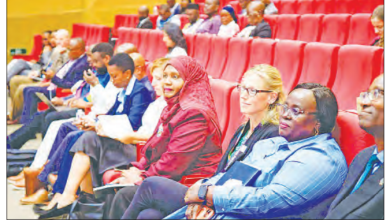
On April 2, 2026, the Office of the OTR convened a team of 50 experts at the Mwalimu Nyerere Leadership School in Kibaha for a multiday exercise to analyse budgets of public institutions and agencies.
Speaking on the exercise, Mr Joseph Mwaisemba, Assistant Director for Evaluation of Non-Commercial Public Entities at the OTR, said the review goes beyond surface-level checks.
It involves a detailed assessment of recurrent and development expenditures, the feasibility of projects, and the financing strategies behind institutional plans, whether through government support or internally generated resources.
“We are undertaking an in-depth budget scrutiny of institutional plans to determine how effectively they contribute to the implementation of Dira 2050 and the broader national development agenda,” he said.
ALSO READ: Yas aligns investments with national development goals
Beyond technical assessment, the exercise reflects a broader shift in government thinking, where emphasis is increasingly placed on the quality of spending rather than the size of allocations.
In a global context, one of the persistent challenges in public institutions is the mismatch between ambition and available resources.
Some entities continue to design plans that are either underfunded or overly dependent on government support, which limits their effectiveness.
As a result, experts have increasingly urged institutions to strengthen internal resource mobilisation, explore innovative revenue streams and improve operational efficiency.
This is particularly significant given the scale of public investments under the oversight of the OTR.
The office supervises 308 institutions, including 252 majority government-owned and 56 minority-owned entities, with a combined investment portfolio of Sh92.3 trillion.
These entities are expected to generate Sh1.8 trillion in non-tax revenue in the 2026/27 financial year, contributing to the government’s projected Sh62 trillion budget. Such figures, Mr Mwaisemba argues, call for stronger accountability mechanisms.
“When you look at the size of public investments, even small inefficiencies translate into significant losses.
That is why scrutiny must be thorough, continuous and focused on results,” he has noted.
The scrutiny process is anchored in the Treasury Registrar Act Cap 370 and the Budget Act Cap 439, which empower the OTR to review plans and budgets of public institutions under its oversight.
Once completed, approved budgets are uploaded into the government’s PlanRep system for quarterly performance tracking.
Mr Mwaisemba said this marks a shift from planning to disciplined execution.
He stressed that weak follow-through has historically undermined public sector performance, making continuous monitoring essential to ensure institutions remain aligned with national priorities.
Building on this concern, he also underscored the importance of stronger collaboration between boards of directors, management and staff, noting that governance cohesion is essential for improved decisionmaking and efficient use of resources.
Top of Form Bottom of Form It is within this broader push to strengthen institutional governance that the reform agenda has moved into its operational phase.
Mr Mwaisemba said the exercise is analytical rather than procedural, focusing on whether institutions are aligning their spending frameworks with both Dira 2050 and the Fourth FiveYear Development Plan.
He emphasised that the performance of each institution will ultimately shape the success of national development efforts.
As Tanzania advances towards its long-term vision, the ongoing budget scrutiny exercise signals a decisive shift in public financial management, where success is no longer measured by the size of allocations, but by the impact delivered to citizens and the economy.