High-rise ambition reshapes Dar es Salaam future economy
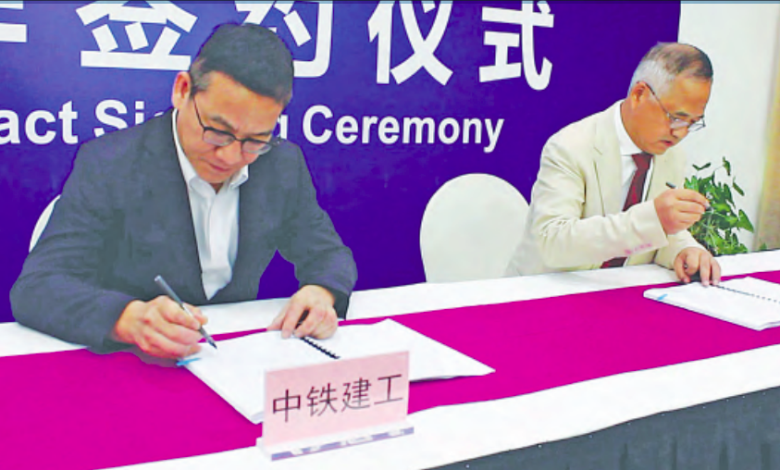
DAR ES SALAAM: A MAJOR construction agreement valued at 48bn/- is set to reshape the skyline of Dar es Salaam, marking another milestone in the country’s rapidly expanding urban landscape.
The deal, signed between CRJE East Africa Ltd and Asiano Global Investment Company Limited, will see the development of a 26-floor mixed-use complex scheduled for completion in June 2028.
Positioned in the city’s central district, the planned structure known as the Keyne Centre Project, will combine residential, commercial and lifestyle facilities within a single vertical development.
Its scale and design reflect broader changes underway in Tanzania’s economic and urban planning priorities, where high-density, multi-purpose developments are becoming increasingly prominent.
The project aligns with the long-term blueprint outlined in Tanzania Vision 2050, which places infrastructure and urban modernisation at the core of national growth strategies.
Authorities have identified construction as a key driver of economic expansion, particularly as cities experience rapid population increases and evolving demands for housing and business space.
Located in a prime urban area, the development is expected to offer immediate access to key commercial zones, transport links and social services.
Its design incorporates residential apartments with elevated views of both the city and the Indian Ocean, alongside office spaces tailored for contemporary business needs.
Plans also include amenities such as leisure facilities and green areas, reflecting a shift toward integrated urban environments. The agreement comes amid a broader surge of investment in Tanzania’s construction sector.
Government-led reforms, ranging from regulatory streamlining to targeted incentives have aimed to attract foreign capital and expertise.
These measures have contributed to steady growth in the sector, supported by parallel investments in transport, logistics and public infrastructure.
Speaking after the signing ceremony, Asiano Global Investment Company Limited Chairman Keping Zhu outlined the company’s long-term involvement in Tanzania, noting that its presence in the country dates back to 2016.
According to Zhu, the company had already secured land and established operational capacity ahead of launching the Keyne Center Project.
He described the development as a large-scale undertaking intended to integrate multiple urban functions within a single location.
The project, he said, is designed to accommodate financial services, trade, tourism, residential living and office use, reflecting the growing complexity of urban economies in East Africa.
Zhu further indicated that the development is expected to influence surrounding property values and stimulate local economic activity.
While such projections remain subject to broader market conditions, large-scale construction projects have historically generated multiplier effects through supply chains, employment and ancillary services.
The employment dimension is one of the project’s most immediate impacts. Thousands of jobs are expected to be created during the construction phase, spanning skilled and unskilled labour.
Once completed, the building’s operations are likely to sustain additional employment across property management, retail, hospitality and maintenance services.
From a design perspective, the project incorporates features increasingly associated with modern high-rise developments.
ALSO READ: Tanzania’s economy maintains a strong growth trajectory from 5.5 to 6.0 per cent
These include energy-efficient systems, dedicated green spaces and facilities intended to support both work and leisure.
Developers have also indicated that environmental considerations will be integrated into the building process, with the aim of reducing its overall carbon footprint.
Such emphasis on sustainability reflects a growing awareness within Tanzania’s construction industry of environmental challenges associated with rapid urbanisation.
As cities expand vertically and horizontally, balancing economic growth with ecological responsibility has become an increasingly important consideration for both policymakers and developers.
Project Manager Jiaan Li of CRJE East Africa Ltd highlighted the technical and operational demands of the undertaking, describing it as a complex project requiring coordination across multiple disciplines.
He noted that the construction team includes professionals with experience in similar large-scale developments, both within and beyond the region.
Li also emphasised the role of collaboration between local stakeholders and international partners.
Such partnerships, he suggested, are critical in transferring technical expertise, improving construction standards and ensuring that projects meet both local regulatory requirements and international benchmarks.
The Keyne Centre Project is expected to be implemented in phases, with different sections of the development becoming operational at various stages.
This phased approach is commonly used in large projects to manage financial risk, maintain construction efficiency and allow for early utilisation of completed sections.
Beyond its immediate footprint, the project reflects broader structural changes within Tanzania’s economy.
Urbanisation is accelerating, driven by demographic shifts and ruralto-urban migration.
As a result, cities like Dar es Salaam are facing increasing pressure to provide adequate housing, office space and infrastructure.
High-rise developments such as the Keyne Centre Project represent one response to these challenges.
By concentrating multiple functions within a single structure, they offer a way to maximise land use in densely populated areas while reducing the need for urban sprawl.
At the same time, the influx of foreign investment into the construction sector underscores Tanzania’s growing integration into regional and global economic networks.
Projects of this scale often involve cross-border financing, international supply chains and diverse stakeholder groups, reflecting the interconnected nature of contemporary development.
The government’s continued focus on infrastructure, including roads, ports and airports has also played a significant role in shaping investor confidence.
Improved connectivity not only facilitates construction logistics but also enhances the long-term viability of commercial and residential developments.
While the Keyne Centre Project has been described as a significant step forward, it also raises questions common to rapidly developing urban environments.
These include issues of affordability, access and the extent to which large-scale developments address the needs of broader populations.
Nevertheless, its potential economic impact remains substantial. Increased business activity, expanded housing options and job creation are among the anticipated outcomes.
The project is also expected to attract attention from regional and international investors, further reinforcing Tanzania’s position as an emerging destination for large-scale development.
CRJE East Africa Ltd, the construction partner in the project, has expanded its operations across several African countries, including Uganda, Zambia, Ghana, Guinea and Nigeria.
Its involvement in the Keyne Centre Project reflects a broader trend of multinational construction firms participating in Africa’s urban transformation.
As groundwork begins, the project stands as a visible indicator of the direction in which Dar es Salaam is heading.
The city, already one of East Africa’s fastest-growing urban centres, continues to evolve in response to economic, demographic and technological shifts.
Whether measured in terms of skyline changes, employment opportunities, or investment flows, developments like the Keyne Centre Project illustrate the scale of ambition shaping Tanzania’s urban future.
As construction progresses toward its 2028 completion target, its impact will likely extend beyond its physical structure, influencing patterns of growth, investment and urban life across the city.