Why public must be wary of disruptive social media activism
NAIROBI: IN today’s digital age, information travels faster than ever before. A single message, video or post can reach thousands, sometimes millions, within minutes. Social media has transformed communication, giving citizens unprecedented access to information and platforms for expression.
Social networks were once seen as a breakthrough spaces where ordinary people could finally be heard, ideas could travel freely and participation in public life was no longer limited to a few. That promise still matters. But to day, it sits alongside a more uneasy reality.
In many societies, these same platforms have become channels for misinformation and propaganda, where halftruths spread quickly and emotions often run ahead of facts. Voices that once struggled to be heard can now be amplified instantly, so can those that mislead, provoke or divide.
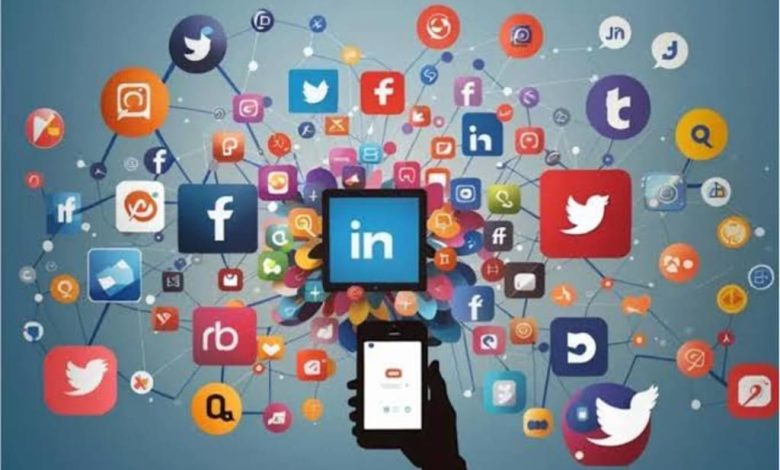
Platforms such as Twitter, Facebook and Google play a powerful role in shaping what people see and believe. For many users, they are not just tools for communication, but the main gateway to news, debate and national conversations. What appears on a screen can influence how people think, what they trust and how they respond to events around them.
This creates a difficult balance. Social media can bring people together, but it can also push them apart. It can inform, but it can just as easily distort. In that space, the line between genuine activism and harmful influence is not always clear.
What was once widely celebrated as a force for openness now carries a more complicated weight. The challenge is no longer just about access or participation, it is about responsibility, judgement and the ability to separate truth from noise in an environment that moves faster than ever.
Yet this same power carries a hidden risk. Across the world and increasingly within Africa, social media has also become a tool for manipulation, incitement and the spread of misinformation, often with real-world consequences.
For Tanzania, a country that has long valued peace, unity and stability, the challenge is not whether to embrace digital platforms, but how to navigate them responsibly.
Recent experiences from the region and beyond offer a clear warning: Unchecked misinformation, provocative messaging and coordinated propaganda can destabilise societies, deepen divisions and, in extreme cases, trigger violence.
Kenya provides one of the most relevant examples. Studies on electoral periods have shown a direct link between social media activity and real-world unrest. Research indicates that fake news and inflammatory messaging circulated online during elections contributed to violence, with such content inciting individuals to participate in unrest and destruction of property.
The scale of influence is striking. One study found that 83.1 per cent of respondents had encountered fake news on social media, while many acknowledged that such content triggered emotional reactions strong enough to translate into physical action.
Social media did not merely reflect tensions, it amplified them.
Further analysis highlights how digital platforms have been used deliberately to mobilise people for unrest. In some cases, users reported being directly encouraged online to join protests, strikes or acts of disruption. This demonstrates how quickly online narratives can cross into offline realities.
The pattern is not unique to Kenya. Across Africa, experts have identified a growing connection between misinformation and instability. A recent assessment noted that countries experiencing conflict often see higher levels of disinformation, which in turn fuels real-life violence.
Even more concerning is the emotional power of such content. Research shows that over 60 per cent of respondents believe social media posts, particularly those involving hate speech or polarising narratives, can trigger violence, largely because they provoke strong emotional reactions.
This emotional dimension is critical. Social media does not simply inform, it influences. It can shape perceptions, reinforce biases and, in some cases, create a sense of urgency or anger that overrides rational judgement.
Global examples further underscore these risks. In the United Kingdom, misinformation circulating online following a tragic incident in 2024 fuelled unrest and attacks on public institutions. False claims spread rapidly across platforms, attracting millions of views and contributing to tensions on the ground.
In Myanmar, a United Nations investigation found that social media platforms played a “determining role” in spreading hate speech that contributed to violence against the Rohingya population, one of the starkest examples of how digital propaganda can escalate into a humanitarian crisis.
These cases differ in context, but they share a common thread: The ability of unverified information and provocative messaging to inflame divisions and destabilise societies.
What makes social media particularly potent is the way it operates. Algorithms prioritise content that generates engagement, often the most emotional, sensational or divisive material. As a result, misleading or inflammatory posts can spread more rapidly than verified information.
In addition, the anonymity of online spaces allows individuals or groups to operate with limited accountability. Coordinated networks sometimes described as propaganda ecosystems, can amplify specific narratives, making them appear more widespread or credible than they actually are.
Research on digital misinformation shows that such campaigns are often not accidental. They are organised, strategic and designed to influence public opinion, sometimes for political or economic gain.
For ordinary users, distinguishing between genuine information and manipulation is increasingly difficult. Messages are often crafted to appear credible, using familiar language, images or references. In some cases, falsehoods are blended with partial truths, making them harder to detect.
The consequences may not always be immediate, but they are cumulative. Repeated exposure to misleading narratives can shape perceptions, influence attitudes and, over time, affect behaviour.
This is where the risk to national stability becomes clear.
When misinformation spreads unchecked, it can erode trust, between citizens, within institutions and across society. It creates a climate of suspicion, where facts are contested and consensus becomes harder to achieve.
In such an environment, even minor issues can escalate, as different groups interpret events through conflicting lenses. This weakens social cohesion and makes constructive dialogue more difficult. For Tanzania, these risks carry particular weight.
The country’s stability has been built on shared values, mutual respect and a long-standing commitment to peaceful coexistence. These are not abstract ideals, they are the foundation of economic progress, social harmony and national identity.
Allowing misinformation and incitement to undermine these foundations would carry real consequences.
Economic activity depends on stability. Investors, both local and international, are sensitive to signs of unrest or uncertainty. Even the perception of instability can slow investment, disrupt markets and delay development.
Socially, the effects can be equally damaging. Divisions amplified online can spill into communities, weakening relationships and eroding trust. Once entrenched, such divisions can take years to repair.
The challenge, therefore, is not to reject social media, but to engage with it responsibly.
This begins with awareness. Not all information online is accurate or reliable. Content, especially that which provokes strong emotions, should be approached with caution.
Verification is essential. Crosschecking information with credible sources can prevent the spread of false narratives