Dar lures pharma, life sciences investors at London forum
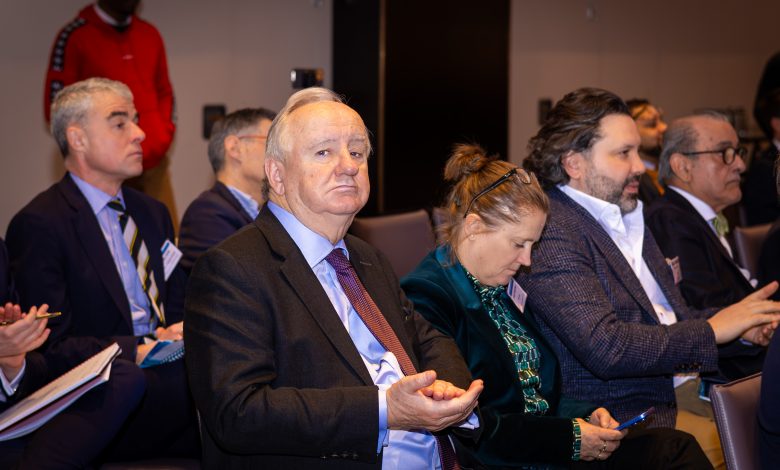
LONDON, UK: The Tanzanian government has reiterated its readiness to partner with credible investors in healthcare and life sciences, as it intensified its international investment outreach at the Tanzania Healthcare and Life Sciences Investment Forum in London today.
In a video message to investors, researchers, development partners, healthcare innovators, academia and private sector leaders gathered at Nobu Hotel London Portman Square, the Minister of Health Mr Mohamed Mchengerwa, said Tanzania now views healthcare and life sciences not only as a social sector but also as a strategic economic pillar tied to national resilience, industrial growth, job creation, technology transfer and regional trade.
The message set the tone for the forum, positioning Tanzania’s healthcare industrialisation agenda at the heart of its long-term development strategy.
“Tanzania is ready to partner with serious investors in healthcare and life sciences,” the Minister said. “We do not want to remain only an end market for imported health products. We want to become a location for manufacturing, partnership, innovation, quality assurance, and regional distribution.”
The Forum, convened on the margins of the UK Global Health Summit, brought together a broad coalition of Tanzanian and international stakeholders to examine concrete opportunities in pharmaceutical manufacturing, medical devices, diagnostics, research collaboration, and health innovation.
The Minister’s message stressed that the COVID-19 pandemic had exposed the risks of overdependence on imported medicines, vaccines, diagnostics, and other essential health products. Tanzania has responded by pursuing a deliberate strategy to strengthen domestic and regional production capacity while creating a more enabling environment for long-term investment.
He highlighted Tanzania’s core advantages, including macroeconomic stability, a reform-oriented investment climate, a population of more than 65 million people, a growing need for quality healthcare products and services, and access to wider regional markets through the East African Community (EAC) and the Southern African Development Community (SADC).
The Minister also outlined Government plans to establish a special pharmaceutical special economic zone of approximately 600 acres, alongside broader cluster development in Bagamoyo and Kibaha, as part of a practical ecosystem for pharmaceutical and health-products manufacturing.
To accelerate progress, the Government has established a Pharmaceutical Investment Acceleration Task Force aimed at improving coordination across institutions and reducing delays in licensing, land access, taxation, product registration, infrastructure support, and other investor-facing procedures.
ALSO READ: Tanzania participates in UK Global Health Summit in London
The keynote message made clear that Tanzania is not seeking obsolete production lines or low-quality supply. Rather, it is pursuing modern, quality-assured manufacturing aligned with international standards, including WHO Good Manufacturing Practice (GMP) and progress toward WHO prequalification.
Opening the Forum, H.E. Ambassador Mbelwa Kairuki, High Commissioner of the United Republic of Tanzania to the United Kingdom, said the event reflected a growing global understanding that the future of healthcare would be shaped by partnership across science, policy, capital, and innovation.
He welcomed the strong Tanzanian delegation, which included representatives from the Ministry of Health, the Tanzania Medicines and Medical Devices Authority (TMDA), the Tanzania Investment and Special Economic Zones Authority (TISEZA), the Medical Stores Department (MSD), universities, research institutions, and the financial sector.
Ambassador Kairuki also highlighted the signing of memoranda of cooperation involving Muhimbili University of Health and Allied Sciences (MUHAS), Oxford University, and Imperial College London, describing these as a concrete sign of the expanding scientific and academic partnership between Tanzania and leading UK institutions.
In a special video message, Professor Mohamed Janabi, WHO Regional Director for Africa, described the opportunity under discussion as one of the most strategically compelling emerging opportunities in African health-sector investment.
He said the restructuring of global supply chains, the repricing of risk, and the search for resilient production platforms were creating a new window for investment in Africa’s healthcare industries.
“The opportunity you are discussing today is strategic, timely, and investable,” Professor Janabi said. “Africa is ready to move from consumption to production.”
During the Forum, TISEZA outlined Tanzania’s investor facilitation framework, including its One-Stop Facilitation Centre, which brings together 16 Government agencies under one coordinated mechanism to assist investors with registration, permits, visas, land, factory location, and related approvals.
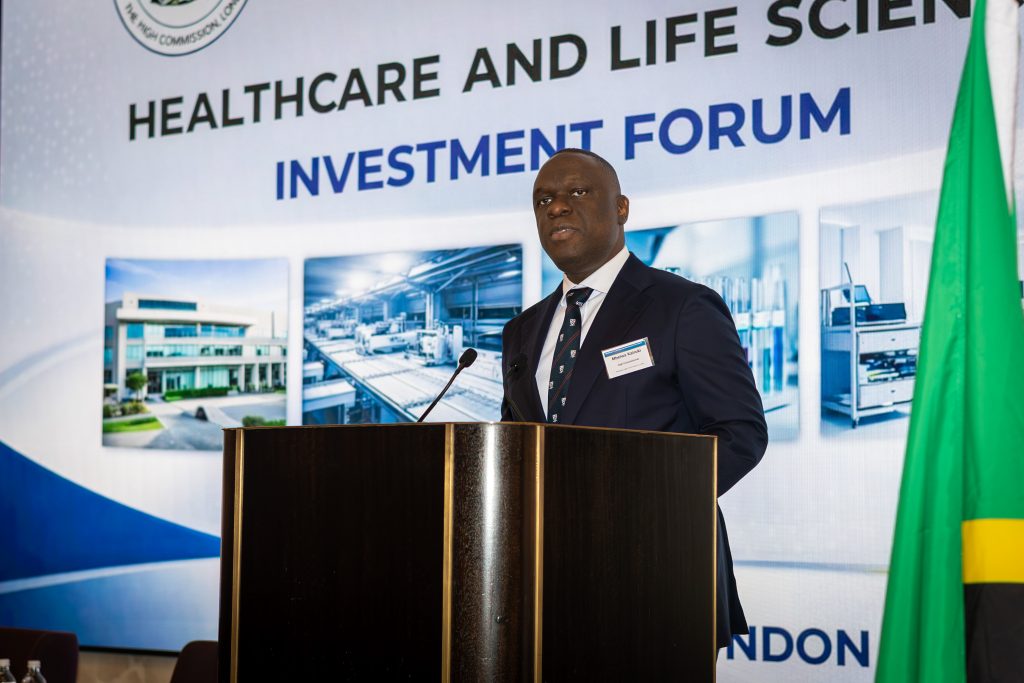
TMDA presented the regulatory environment and identified the scale of Tanzania’s unmet manufacturing demand, noting that the country still imports around 80 percent of medicines, 90 percent of medical devices, and 99 percent of diagnostics. Speakers said these figures reflect not only a supply challenge, but also the scale of commercial opportunity for investors willing to establish long-term operations in Tanzania.
Priority investment areas identified at the Forum included active pharmaceutical ingredients (APIs), biologics, vaccines, anti-cancer medicines, anti-tuberculosis medicines, cardiovascular products, laboratory consumables, gloves, cotton products, packaging, cold-chain systems, and other essential medical supplies.
Panel discussions also highlighted the importance of predictable procurement systems, stronger research and development, specialised training, local banking support, technology transfer, and quality assurance as part of a viable healthcare industrial base.
Representatives from Tanzanian financial institutions, including CRDB Bank, affirmed that the domestic banking sector is ready to support major industrial projects and work with investors on suitable financing and risk-sharing arrangements.
Closing the Forum, the Permanent Secretary in the Ministry of Health Dr Seif Shekalaghe said the event should be understood not as a one-off conversation, but as part of a continuing process of implementation and partnership building.
He said Tanzania is offering investors more than access to a domestic market. It is offering a regional manufacturing platform backed by political commitment, sectoral reform, and institutional coordination.
“There is a conducive environment. There are incentives. There is a market. There is political will. There is commitment. This is a presidential agenda,” he said.
The Government invited investors, research institutions, development finance partners, and private sector actors to continue engaging with Tanzanian authorities and convert the momentum of the London Forum into concrete projects and long-term partnerships.
The Tanzania Healthcare and Life Sciences Investment Forum marked another step in Tanzania’s effort to position healthcare manufacturing and life sciences as strategic pillars of industrialisation, economic transformation, and regional relevance.