INQUIRY COMMISSION: Homegrown solution lauded
DAR ES SALAAM: TANZANIANS have been urged to embrace homegrown reconciliation efforts following the government’s decision to establish a commission of inquiry into the October 29, 2025 incidents, a move widely seen as an important step towards restoring national unity and stability.
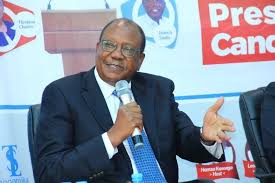
Former Tanganyika Law Society (TLS) President, Dr Edward Hosea, told journalists yesterday that the establishment of the Judge Chande-led Commission of Inquiry reflects Tanzania’s commitment to resolving national challenges through internal mechanisms rather than external intervention.
He said the commission serves as a “bridge” towards national consensus, dialogue and eventual reconciliation, noting that it has already helped ease tensions and restore public confidence as the country awaits its findings.
“This commission is a bridge to addressing what happened on October 29, and dialogue and eventually reconciliation,” Dr Hosea said.
He added that without such a mechanism, the country would risk prolonged uncertainty and deepening divisions, stressing that peace and stability remain the foundation of any nation’s wellbeing.
“Without this bridge, we cannot reach reconciliation. Every country requires security and stability. No leader would accept a situation where a nation is shaken in terms of peace and security, because the security of a country is the peace of its people,” he said.
Dr Hosea commended the President for the initiative, saying it has helped calm citizens while building expectations that the commission’s recommendations will offer a clear path forward.
“I commend the President for forming this commission. Its establishment has helped Tanzanians remain calm and develop hope, waiting to see what recommendations will come out,” he said.
He further said that Tanzania has the capacity to resolve its own challenges, even in the presence of international actors such as the Commonwealth, United Nations or European Union, stressing the importance of domestic solutions.
“Even if external actors come, we, Tanzanians must also show that we have the ability to sit down and resolve our problems. It was important that we formed this commission so that we demonstrate our own capacity to solve our issues,” he said.
Dr Hosea also observed that conflict is a global phenomenon, cautioning against viewing the situation as unique to Tanzania, and urging reliance on local reconciliation mechanisms.
“Conflicts exist everywhere in the world. This is not an isolated case for Tanzania, similar situations have happened elsewhere, including some neighbouring countries. What matters is how we use our own systems to find solutions,” he said.
He rallied support for homegrown approaches, saying the Commission of Inquiry remains the most viable path to healing divisions and strengthening national unity once its report is made public.
Recently, the Independent Commission of Inquiry into the October 29, 2025 incidents has been granted an additional 21 days to complete its work, extending its deadline to April 24th, this year.
In a notice issued by the Commission Chairperson through the government gazette dated April 4th, this year, the appointing authority approved the extension to allow for the completion of key tasks.
These include thorough analysis of collected evidence, reports and public submissions, as well as providing time for forensic experts to conduct detailed examinations.
The extension will also enable the Commission to review newly submitted exhibits, finalise its report for submission to President Samia Suluhu Hassan and prepare translations of the document.
This is the second extension granted to the Commission, following an earlier 42-day extension. The Commission began its work on November 20th, last year, and was initially expected to complete its mandate within 90 days.