Dr Samia lifts the lid on the Presidential Commission for Tax Reforms
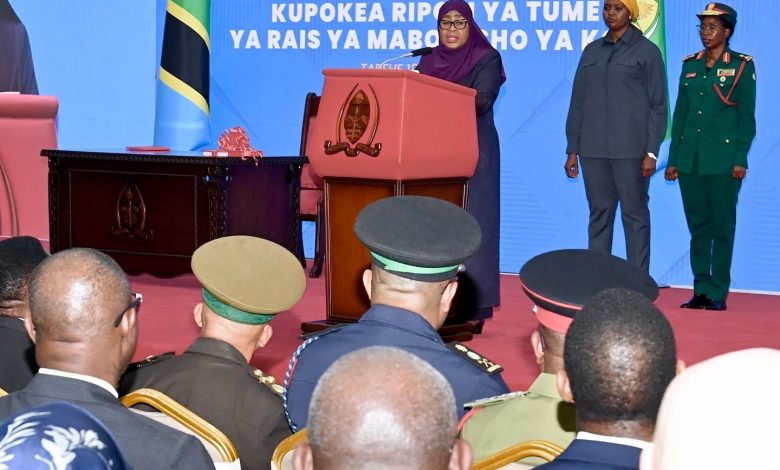
DAR ES SALAAM: President Samia Suluhu Hassan has stated that the decision to establish the Presidential Commission on Tax Reforms was driven by long-standing complaints from citizens, businesspeople, investors, and development stakeholders regarding challenges in the country’s tax system.
Speaking while receiving the commission’s report, President Samia said the main goal of its creation is to conduct a thorough assessment and revitalize the tax system to align with current economic, investment, and business needs. She emphasized that reforms form the foundation for long-term development, and the nation must self-assess and adapt to keep pace with global changes.
“We must remove the layers of tax complaints and start afresh with a better system that meets current needs,” President Samia said.
She noted that the commission, chaired by Ambassador Ombeni Sefue, was established nearly 35 years after the Mtei Commission, which operated from 1989 to 1991 and focused on public revenue, taxation, and government expenditures at the time.
ALSO READ: Mwinyi eyes better tax system after taxpayers’ views
President Samia highlighted that the report was submitted at a critical moment as Tanzania prepares to implement the 2050 Development Vision, which aims to grow the economy to one trillion by that year. She explained that in implementing this vision, the Government is expected to contribute approximately 22 percent, the private sector and other stakeholders 70 percent, and public institutions 8 percent, underscoring the importance of creating a tax-friendly environment that promotes investment and business growth.
Furthermore, she emphasized the need to adjust policies, laws, and tax administration systems to match ongoing economic, technological, and political changes globally. She added that the world is currently experiencing intense economic and technological competition, along with shifts in international business strategies, including the trend of countries relocating production closer to their markets, making it imperative for Tanzania to prepare and remain competitive.