EASTRIP project to boost renewable energy skills in EAC

ARUSHA: DEPUTY Minister for Education, Science and Technology, Ms Wanu Hafidh Ameir, has assured that the East Africa Regional Skills Transformation and Integration Project (EASTRIP) will continue to serve as a catalyst for development among East African Community (EAC) member states, particularly through the promotion of renewable energy technologies.
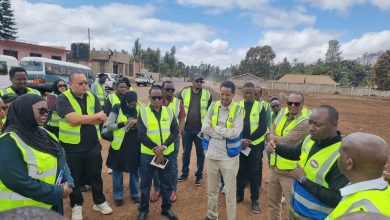
The deputy minister was speaking over the weekend during an official visit to the Kikuletwa Campus in Hai District, Kilimanjaro Region, where she inspected the progress of construction of the Kikuletwa Power Project and various government-funded buildings implemented under the EASTRIP programme.
She said the hydropower plant under construction will provide students with handson practical skills, a move expected to strengthen the country’s energy sector.
The Deputy Minister added that the project is part of the government’s broader strategy to promote renewable energy and urged students enrolled in technical and vocational programmes to take advantage of renewable energy courses to enhance their employment prospects both locally and internationally.
“This project is addressing several education-related challenges, including the implementation of new curricula and increased enrolment of female students in technical courses. The government will continue to improve this institution to ensure students in various programmes have access to a conducive learning environment,” she said.
Ms Ameir acknowledged challenges related to road infrastructure within the campus and pledged government support to ensure completion of the road network to enhance the institution’s outlook and accessibility.
She also directed the Arusha Technical College (ATC) to keep pace with technological changes by ensuring instructors receive both short- and long-term training, locally and abroad.
She noted that the solar energy centre at the campus is expected to stimulate innovation and technological advancement in renewable energy.
On his part, ATC Principal, Professor Musa Chacha, said the Kikuletwa power plant has a generation capacity of 1.65 megawatts, commending the government for its commitment to developing the Kikuletwa Campus into a centre of excellence for technical training.
He said the project has reached 83.43 per cent completion and is expected to be finalised within the next 60 days. Once completed, the plant will supply electricity to neighbouring villages, serve as a practical training facility for students and contribute power to the national grid.
ALSO READ: CCM vows development for all citizens
Professor Chacha added that the facility will also be used to test locally manufactured micro-hydropower turbines. He explained that the power station is located at the confluence of the Kware and Mbuguni rivers in the Pangani River Basin in Hai District, Kilimanjaro Region.
Downstream, the Kikuletwa River forms the boundary between Kawaya Village in Masama–Rundugai Division, Hai District, and Kambi ya Chokaa Village in Mirerani Division, Simanjiro District, Manyara Region.
He further noted that about 3,500 students have been trained at various levels in renewable electricity technologies, with additional students from Kenya attending the institution for practical electrical training.
“Our goal is to produce highly skilled local energy experts rather than sending students to other countries such as Zambia,” said Professor Chacha.
However, he cited road infrastructure as a persistent challenge, despite the government having already constructed more than 3.5 kilometres of road, and called for support from other authorities to complete the remaining sections to ensure smooth access for students and staff The Kikuletwa Campus comprises 11 buildings, including hostels, a cafeteria, power plant houses, a classroom block with five classrooms, a lecture hall and workshops.
Meanwhile, ATC Board Chairperson, Dr Noel Mbonde, said the project aims to develop a renewable energy centre of excellence and appealed to the Deputy Minister to continue supporting ATC in overseeing the project to ensure it achieves its intended objectives.