Eco-Fashion, fire mark FuTopia climax

ZANZIBAR: THE sun dipped into the Indian Ocean as the FuTopia Festival reached its crescendo in a striking blend of art, fashion, sound and symbolism.
The main stage, already a focal point over the past two days, had been subtly but purposefully extended and transformed into a runway not just for fashion, but for storytelling.
This was not a catwalk of brands or trends. It was a parade of meaning. An Eco-Fashion showcase took centre stage, where garments were crafted from unlikely materials recycled paper, plastic, banana fibres and even dried coconut leaves.
The aim was not simply to impress, but to provoke thought: creativity knows no boundaries, and neither does beauty. Under golden lights and the pulse of rhythmic music, a woman emerged slowly onto the runway.
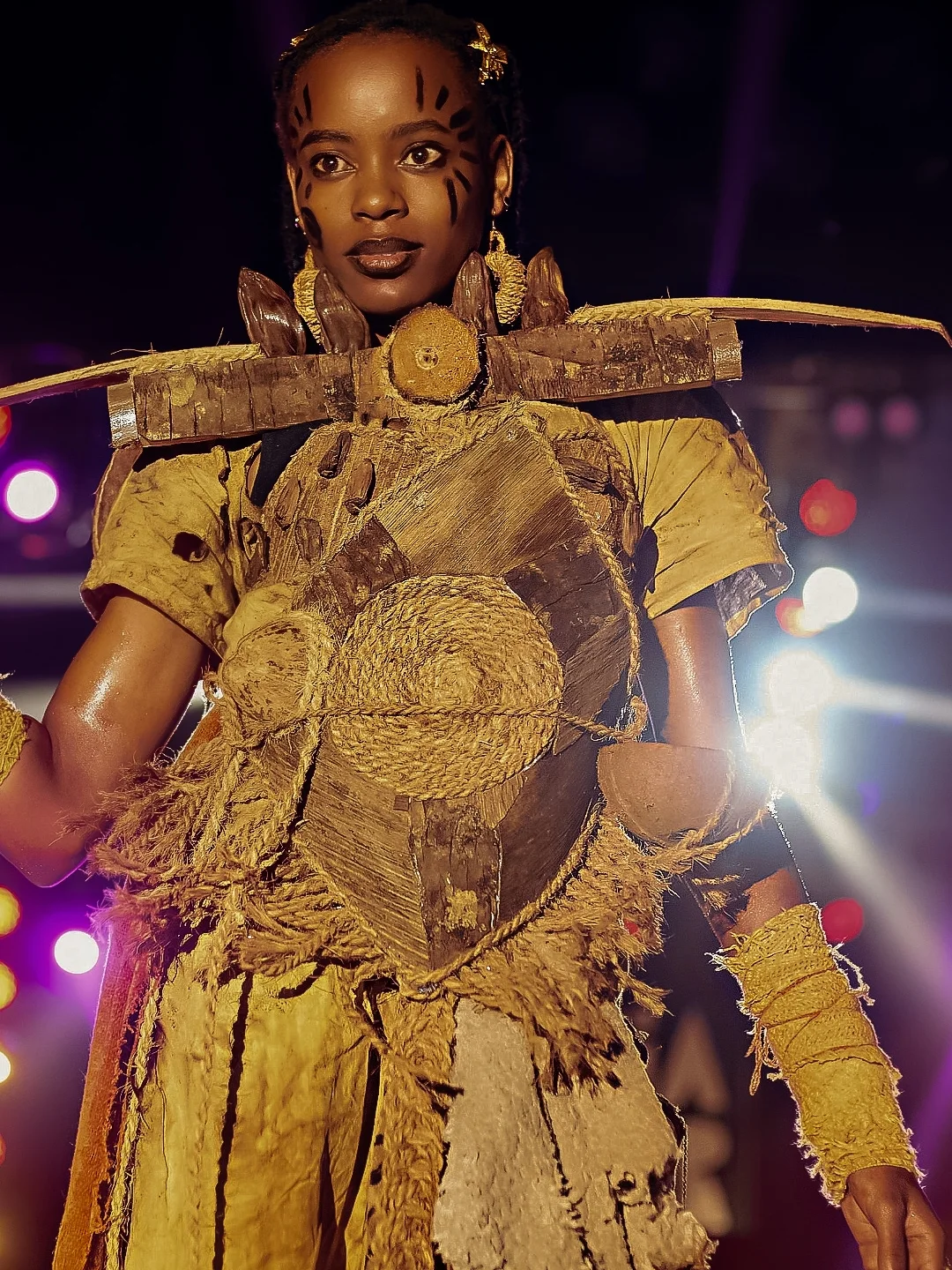
Draped in fabric interlaced with rope, she carried a small clay pot suspended by a cord. Smoke rose gently from it, swirling into the air as she shifted it from one hand to the other.
Her gaze never broke. Fixed on the audience, she moved deliberately, almost ceremonially each step calculated, each turn like a scene from a film slowed to capture every detail. Her skin glistened, oiled and luminous under the spotlights, while her lips were starkly painted black.
Simple markings adorned her face and flowers punctuated her outfit, symbols of life, rebirth and resistance. The audience was silent, almost reverent, as she passed more a living installation than a model.
Then came a scene that drew breath. Three men, dressed in traditional attire, marched solemnly onto the stage, holding a wooden bed hoisted with ropes and logs. Upon it lay another figure clad in warrior-like dress evoking a fallen hero.
ALSO READ: Rain fails to dampen spirits at FuTopia Festival
No words were spoken. As the bed was placed down, a woman approached and gently laid a flower at its side. The silence deepened. The message was clear: fashion, here, was a language.
The fashion was not about walking the runway it was about waking something deeper within. Each strut, each turn, was more than a model showcasing fabric. It was a scene, a moment in time suspended between spotlight and silence.
The garments didn’t just dress the body; they dressed entire narratives, woven tightly into threads of memory, rebellion, joy and mourning. Another scene followed and each scene goosebumps weren’t just from the chill of land breeze but from the crescendo of meaning that came act after act.
In silence men stood at either end of the stage, dressed in cultural attire, unmoving one to the left, one to the right. Between them, another man crawled forward, his body low to the ground, each movement strained.
The audience watched as the two standing men raised their whips in turn left, then right striking him as he passed. His back was marked by each strike, the pain raw and visible in the strain of his face. Whips rose and fell. Their expressions carried anger, almost hate, and it seemed to burn through the air.
Each thread woven with meaning but it was the man’s crawl slow, painful, determined that drew silence from the crowd. Not a voice, not a breath interrupted.
The music played on, steady and haunting. It framed the scene but didn’t distract from it. The man did not stop. Every movement forward defied the blows, as if inch by inch he pushed against the weight of centuries.
The soldiers, too, held their part not characters, but mirrors of something larger. And in that tension, the piece lived. But the night didn’t stay solemn for long. The festival proved to be nothing short of spectacular, as revellers were treated to a vibrant cocktail of entertainment, rhythm and roaring laughter.
The evening unfolded into a thrilling showcase of talent, crowned by an electrifying dance competition hosted by none other than renowned comedian Juma Omary, popularly known as Jol Master.
Taking centre stage with his trademark charisma and wit, Jol Master kept the crowds thoroughly entertained, infusing humour and high energy into the much-anticipated dance showdown.
The competition brought together six spirited groups Wiz Dady Gang, Winning Crew, Zanzibar Crew, Juju Crew, Beliver Dance and Big Follows Dance each determined to outshine the other in a display of sheer talent and rhythm.
With a fusion of genres blaring through the speakers from Bongo Flava to Afrobeats and traditional rhythms the groups dazzled the audience with synchronised steps, infectious energy and bold choreography.
The performers danced with their heads held high, smiles plastered across their faces, eyes locked on the crowd, feeding off the wild cheers and thunderous applause that echoed across the venue. The air was thick with anticipation as the competition reached its peak.
Every stomp, spin and shimmy drew screams from the enthusiastic crowd, who were as much a part of the show as the dancers themselves.
The tempo surged as Juju Crew took the stage, joining forces with Wiz Dady Gang for a blazing finale. Shirtless, fierce and electric with energy, they danced with controlled chaos spinning, leaping, twisting with fire in hand and breath.
Acrobatics met rhythm, and the air turned molten with movement. Every phone in the crowd was raised. The audience, eyes wide and voices louder, screamed in delight, unwilling to miss a single beat. Flashlights danced across the stage, bouncing off faces, ropes, and flames.
Music thumped through the ground, and cheers rolled like waves through the crowd. From thoughtful silence to roaring celebration, the FuTopia Festival’s final evening offered more than a show, it offered a vision.
A reminder that culture is not static, that heritage can evolve, and that art can be made from anything so long as the spirit is willing.
After a fierce contest filled with jaw-dropping routines and fierce footwork, the judges delivered their verdict. Wiz Dady Gang were crowned champions, earning not only the admiration of the audience but also a cash prize of 5m/-.
The jubilant group could barely contain their excitement, leaping into the air in celebration as confetti rained down and the crowd roared in approval. Winning Crew claimed the second spot, walking away with 3m/-, while Zanzibar Crew took third place honours with 2m/- to their name.
The other groups Juju Crew, Beliver Dance, and Big Follows Dance were also applauded for their efforts and flair, having added rich variety and intensity to the competition. The celebrations continued well into the evening, with dance, music and spontaneous crowd participation creating a carnival-like atmosphere.
Festival-goers were left buzzing with excitement, with many calling the grand finale one of the most unforgettable nights of the entire event. As the curtain finally fell on what has been a whirlwind of creativity, culture and community, one thing was clear, the spirit of unity and the pulse of music had left an indelible mark on all who attended.