Zungu orders probe into lavish govt vehicle purchases
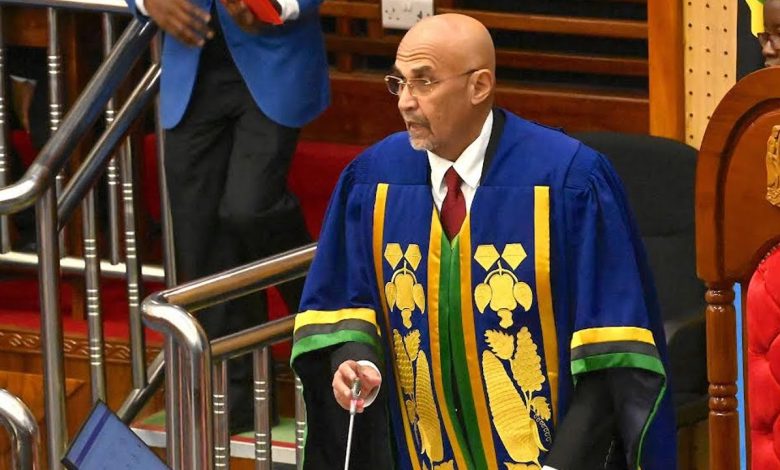
SPEAKER of the National Assembly Mussa Zungu has directed the Parliamentary Standing Committee on Budget to investigate public institutions defying government guidelines on official vehicle purchases and recommend action against those responsible.
The directive follows revelations that some ministries, public institutions and agencies have continued purchasing expensive vehicles in disregard of Public Service Circular No. 2 of 2021, which sets procedures and standards for acquiring and using official vehicles.
Presenting a report to Parliament yesterday on the procurement and use of government vehicles, Mr Zungu said excessive spending on official transport undermined efforts to control public expenditure and redirect resources towards development priorities.
He directed the Budget Committee to consult the Ministry of Finance, the Prime Minister’s Office, the Ministry of Works and the government’s chief property assessor, among other relevant institutions, to examine vehicle procurement and operating costs.
The review will cover the period from 2013 to 2026, including expenditure on vehicle purchases, fuel and maintenance, and identify measures to reduce the government’s transport bill.
Mr Zungu said the committee should also explore ways of reducing fuel consumption by reviewing engine capacity, vehicle types and the potential use of alternative energy sources, including electricity and natural gas.
“This includes developing strategies to avoid purchasing vehicles with large engines and shifting towards more affordable vehicles, including those using hybrid systems,” he said.
He directed the committee to summon officials from institutions found to have breached the 2021 circular by purchasing vehicles beyond their authorised entitlements and recommend appropriate action.
“We want everyone who has violated the circular to be called before the committee and questioned so that appropriate action can be taken,” he said.
The Speaker gave the committee until the next parliamentary meeting in January to complete the investigation and present its findings and recommendations to the House.
He said the exercise was necessary amid rising fuel prices and the cost of living, which were putting additional pressure on public finances.
“Things are difficult across the world because of fuel prices and the cost of living, and Tanzania is also experiencing these pressures.
We must tighten our belts and reduce expenditure,” he said. Mr Zungu cited President Samia Suluhu Hassan’s efforts to reduce the size of her official motorcade, including having some officials use buses, as an example of responsible public spending.
“If the President has taken steps to control expenditure, what are we waiting for?” he asked.
He added that he had directed the Clerk of the National Assembly to review vehicles used by his office and consider shifting towards hybrid models costing no more than 100m/-.
“If the Speaker can use more affordable vehicles, why should a minister buy a vehicle worth 400m/-? We must exercise discipline in the use of public funds and ensure every purchase reflects actual needs and the government’s financial capacity,” he said.
Mr Zungu recalled earlier government efforts to curb unnecessary expenditure on official vehicles, including recommendations contained in a report presented by former Prime Minister Mizengo Pinda in November 2002.
He also cited guidance from the Controller and Auditor General (CAG) calling for reduced vehicle-related expenditure and more economical transport arrangements.
The Speaker further referred to remarks by then Finance and Planning Minister, now Prime Minister, Dr Mwigulu Nchemba, when presenting the government’s budget estimates on June 4, 2022, in which he outlined measures to control unnecessary spending on vehicles and fuel.
Despite these repeated calls, Mr Zungu said some public institutions had continued to disregard expenditure-control measures.
He cited luxury vehicles, including some Lexus RX models reportedly costing about 300m/- each, saying such expenditure could instead finance essential public infrastructure.
He said the same resources could support the construction of health workers’ houses, classrooms and other facilities, stressing the need to ensure public funds were directed towards priorities that benefit citizens.