Z’bar’s youth must carry Karume’s torch into the Blue Economy era
ZANZIBAR: EVERY year, as Zanzibar pauses to remember Abeid Amani Karume, the tributes often recall a fearless revolutionary and a founding father.
But beyond the history books and ceremonial speeches lies a deeper question for today’s generation: what does Karume’s legacy demand of young people in a rapidly changing, technology-driven world?
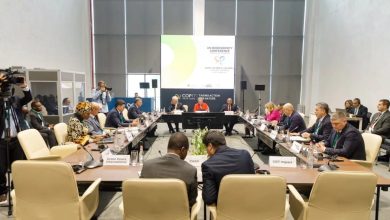
At the 8th Karume Memorial Forum held at Mwalimu Nyerere Memorial Academy (MNMA) in Bububu, that question took centre stage.
Scholars, leaders and students gathered not just to honour the past, but to connect it to the future, particularly through the lens of science, technology and the blue economy.
Karume’s story is often told through the lens of the 1964 Revolution, but his most enduring legacy may well be his bold investment in people. One of his earliest and most transformative decisions was to introduce free education for all.
At a time when access to schooling was limited, this move was revolutionary in itself, it laid the foundation for a more equal, informed and productive society.
His philosophy was simple but powerful: development must reach ordinary citizens. Education, hard work, self reliance and the fair use of national resources were the pillars upon which he sought to build Zanzibar.
While the term “blue economy” did not exist then, Karume’s emphasis on productivity in sectors such as fishing, agriculture and trade reflected an early vision of maximising the country’s natural wealth for public good.
More than five decades later, that vision is being reinterpreted in a modern context under the leadership of President Dr Hussein Ali Mwinyi.
Today, Zanzibar’s development agenda is anchored in the blue economy, an approach that promotes sustainable use of marine resources while creating jobs and driving economic growth.
But as speakers at the forum emphasised, the blue economy is no longer just about boats and fishing nets. It is about data, innovation, research and technology.
From modern fisheries and marine conservation to coastal tourism and digital systems for resource management, science and technology are now at the heart of economic transformation.
If Karume’s generation fought for liberation and laid the groundwork for equality, today’s youth are being called upon to build a knowledge based economy.
ALSO READ: Uhuru Torch 2026: Why Tanzania’s youths hold key to the nation’s development agenda
And that requires a different kind of preparedness, one rooted in science, technology, engineering and mathematics (STEM), as well as creativity and innovation.
Ministerial and academic voices at the forum stressed that science and technology education is no longer optional; it is essential.
It equips young people with the skills needed to participate meaningfully in emerging sectors and to compete not only locally, but globally.
Whether it is developing apps to monitor fish stocks, using data to improve marine transport systems, or innovating in seaweed processing, the opportunities are vast, but only for those with the right skills.
Ms Fatma Mohamed Ali, one of the facilitators at the forum, said the establishment of the Ministry of Communication, Information Technology and Innovation reflects this shift.
It signals a deliberate effort by the government to place digital transformation and youth innovation at the centre of national development.
Ms Ali who presented a paper entitled ‘The Role of Science and Technology Education in the Growth of the Blue Economy’, told the gathering that investments in digital infrastructure, innovation hubs and technology training are already creating new pathways for young Zanzibaris to turn ideas into impact.
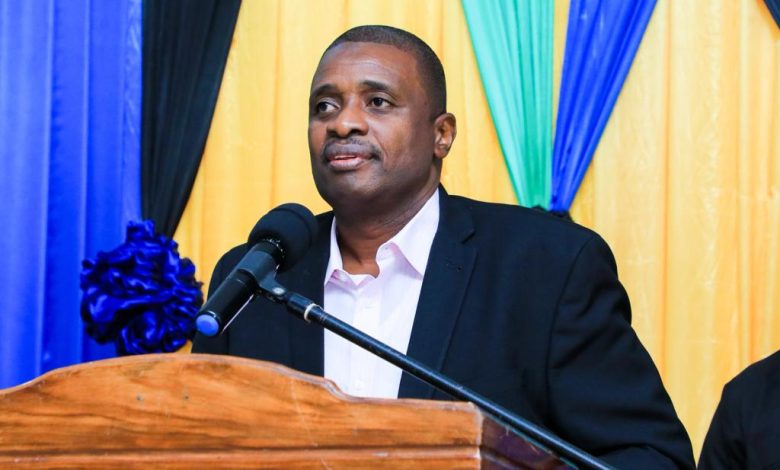
Yet, as Vice President Hemed Suleiman Abdulla noted in a speech delivered on behalf of President Mwinyi, progress is not just about policy, it is about values.
He reminded participants that the unity, peace and stability Zanzibar enjoys today are rooted in the principles championed by Karume: patriotism, integrity, accountability and a strong sense of collective purpose.
For young people, this means that success in the digital age must be guided by the same values that shaped the nation’s foundation.
Innovation without integrity, or progress without unity, cannot deliver sustainable development. Equally important is the call for youth to understand their history.
“By remembering where we came from, we can plan a stronger and more sustainable nation,” the President’s message emphasised.
In other words, the future of Zanzibar’s blue economy depends not only on technological advancement, but also on a generation that is grounded in its identity and inspired by its past.
At the MNMA, where student enrolment has grown significantly over the years, this connection between past and future is being actively nurtured.
Academic programmes now integrate leadership, ethics and patriotism alongside modern skills, preparing graduates to respond to real-world challenges.
For many students attending the memorial forum, the lessons were clear.
As organisers noted, such gatherings are not just commemorations, they are classrooms of a different kind, where young people learn from the legacies of leaders like Karume and apply those lessons to contemporary realities.
The Rector of the Mwalimu Nyerere Memorial Academy, Prof Haruni Mapesa, says the institution continues to play a key role in promoting knowledge, innovation and national unity in line with the philosophies of the country’s founding leaders, including Julius Kambarage Nyerere and Karume.
He noted significant growth at the Karume Campus, with student enrolment rising from just 22 in 2015 to 2,641 in the 2025/2026 academic year, part of a total of over 16,000 students across all campuses.
He said honouring Karume means valuing education, not just as a right, but as a responsibility. It means embracing science and technology, not as abstract concepts, but as tools for solving real problems.
It means using Zanzibar’s rich marine resources wisely, ensuring they benefit both present and future generations.
And above all, it means carrying forward the spirit of selfreliance, unity and service that defined Karume’s leadership.
Karume planted the seed of a just and empowered society. Today’s leaders are nurturing it through policies and reforms. But it is the youth who must ensure that it grows, into an economy that is innovative, inclusive and resilient.
Mr Frank Akile, a Public Relations Officer and Ms Lillian Mahena, a lecturer at MNMA and a member of the conference organizing committee, said the annual forum provides a valuable opportunity for young students to learn important lessons from the legacy of Abeid Amani Karume.
As Zanzibar navigates the tides of the 21st century, the message from the memorial forum is unmistakable: the journey from revolution to innovation is not complete. And it is the young generation that must take it forward.