Zanzibar, UN assess implementation of key development programmes
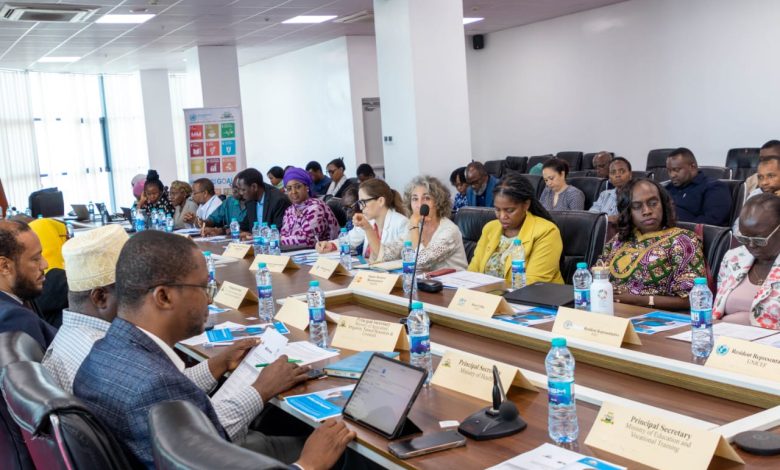
ZANZIBAR: THE government of Zanzibar has hosted the United Nations and other development partners in the archipelago to review progress on two joint programmes including supporting food systems, climate resilience and efforts to end violence against women and children in Unguja North and Pemba North.
Speaking during the meeting recently, UN Resident Coordinator, Ms Susan Namondo said the broader goal of the programmes is to strengthen public systems, reduce dependency on external financing and position Zanzibar to attract more domestic and private investment over time.
“The programmes should be seen as platforms for building government capability and resilience not only as funding instruments,” Ms Namondo said.
The event also involved a field visit in Pemba where participants saw seaweed facilities, community care services, and a rainwater harvesting system at a health facility and school outreach on gender-based violence.
Ms Namondo said her visit in Zanzibar showed not only project outputs but also signs that government-led systems are beginning to strengthen at community level.
Earlier, Opening the meeting, Acting Executive Secretary of Zanzibar Planning Commission, Dr Afua Mohamed said the gathering was a critical moment for reflection, learning, and forward planning as partners reviewed achievements, challenges and prospects for future financing.
Under the Zanzibar’s Joint Programme, early results include training 471 farmers in climate-smart agriculture and banana production, supporting 26 farmer groups and four cooperatives, reaching 1,772 caregivers with climate-smart nutrition support and constructing six rainwater harvesting systems benefiting around 22,000 people.
In protection, community outreach through faith leaders and male engagement groups has reached 53,676 people.
The complementary seaweed financing programme is being implemented by FAO, UNDP, IFAD and WFP in partnership with the Revolutionary Government of Zanzibar.
By 2028, it aims to help 15,000 seaweed-farming households raise incomes by 40 per cent through improved access to finance, stronger cooperatives, better post-harvest systems and expanded markets.
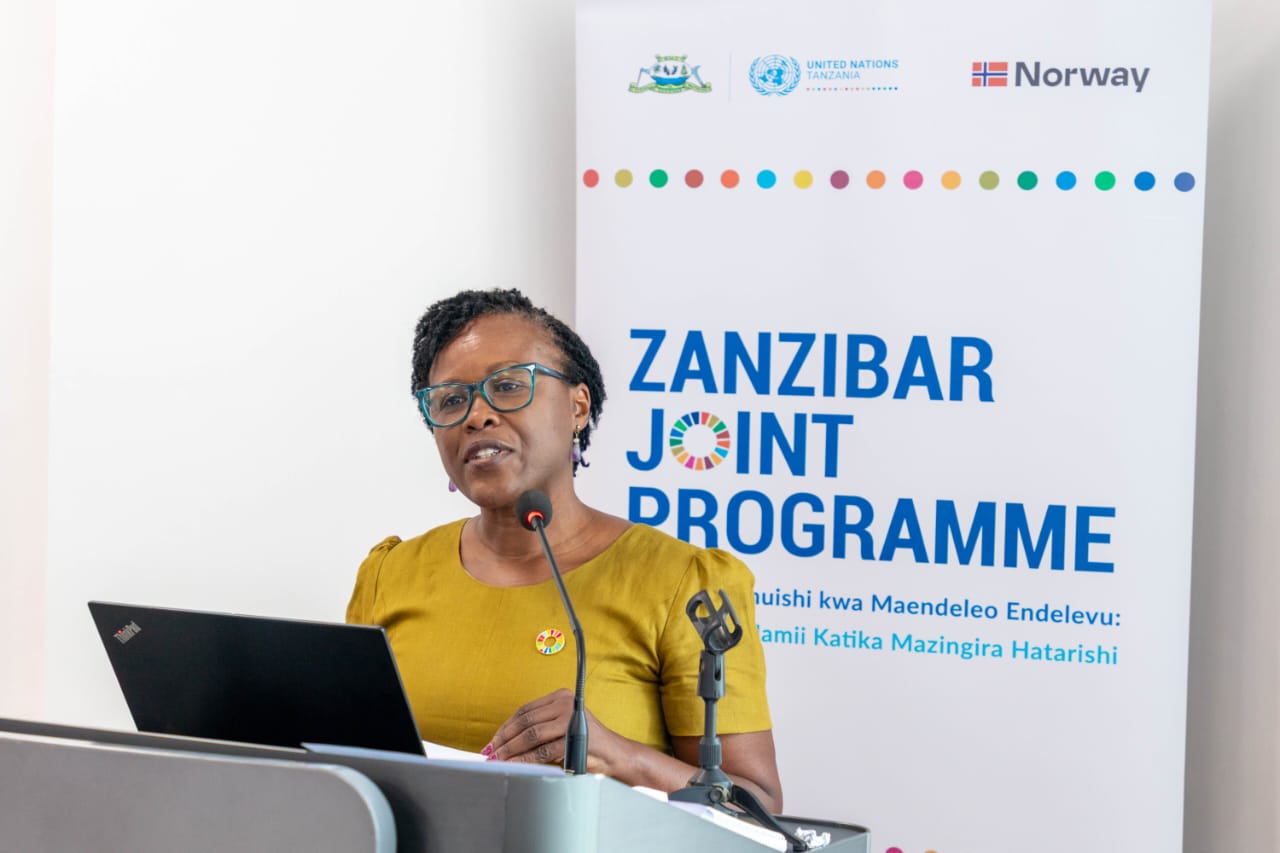
Participants said the next phase will place greater emphasis on sustaining results, improving coordination across institutions and attracting additional resources to scale up what is already working on the ground.
The meeting brought together government leaders, heads of UN organisations, development partners and other stakeholders to assess progress on the Zanzibar Joint Programme and the Joint Programme on Transforming Seaweed Farming through Integrated Financial Solutions and to discuss how to make coordination simpler and more effective as implementation continues.
The Zanzibar Joint Programme is supported by the Royal Norwegian Embassy through the Tanzania SDG Acceleration Fund, while the seaweed financing programme is supported by the UN Joint SDG Fund, all together are designed to complement one another by combining community-level support with longer-term work on finance, markets and system strengthening.