Zanzibar records impressive growth

DODOMA: ZANZIBAR’S economy has experienced remarkable growth, with the island’s growth rate rising from 5.1 per cent in 2021 to an impressive 7.5 per cent in 2024.
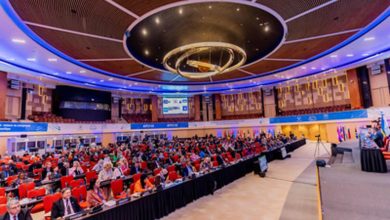
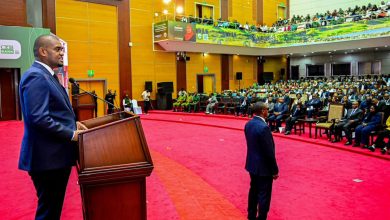
The revelation was made by the Isles Second Vice -President (2VP) Hemed Suleiman Abdulla during the Chama Cha Mapinduzi (CCM) extraordinary general meeting in Dodoma, adding: “It is attributed to various government initiatives under the leadership of President Hussein Ali Mwinyi.”
The real Gross Domestic Product (GDP) at constant prices has increased from 4.2tri/- in 2020 to 6.288tri/- in 2024.
This economic success has enabled the government to invest heavily in sectors crucial to the welfare of its citizens, including education, healthcare, water and electricity.
Education has been a top priority for the government, with significant increases in the Ministry of Education’s budget, which grew by 212.6 per cent from 265.5bn/-in 2021/2022 to 830bn/- in 2024/2025.
These funds have facilitated the construction of 114 new schools, including 35 modern multi-storey primary and secondary schools equipped with laboratories, libraries and examination halls.
As a result, the pass rate for Form Four students in Zanzibar increased from 55.4 per cent in 2020 to 85.6 per cent in 2023, while the Form Six pass rate rose from 96.2 per cent in 2020 to an outstanding 99.9 per cent in 2024.
ALSO READ: Isles registers progress in social welfare
In the healthcare sector, the government has made substantial investments, increasing the budget for the Ministry of Health from 177bn/- in 2020/2021 to 496bn/- in 2024/2025, reflecting a 180 per cent rise.
This funding has enabled the construction of 10 district hospitals and a regional referral hospital in Urban West, alongside the introduction of specialised services such as hip and knee replacement surgeries and kidney dialysis at Lumumba Hospital in Unguja and Abdalla Mzee Hospital in Pemba.
The government has also significantly increased its budget for medicines, raising it nearly 2.5 times from 17bn/- in 2020/2021 to 40bn/- in 2023/2024. Access to clean and safe water has improved considerably, with services now reaching 388 Shehia (wards), covering 88.22 per cent of the population.
Key achievements include the construction of 102 water wells, the installation of 25 water reserve tanks with a combined capacity of 144 million litres and the laying of 785.9 kilometre of water pipelines.
In terms of electricity, the government has expanded coverage, with 222 villages (139 in Unguja and 83 in Pemba) now connected to the grid, covering over 72 per cent of the target area.
Additionally, the cost of electricity connections has been reduced significantly— from 464,000/- to 200,000/- for customers within a 30-metre distance and single-pole connections have been lowered from 1.7m/- to 200,000/-.
The 2VP emphasised that Zanzibar’s economic growth and progress in essential services are a direct reflection of the successful implementation of the CCM Manifesto.
The government’s focus on improving education, healthcare, water and electricity infrastructure has not only contributed to economic growth but also significantly enhanced the quality of life for its citizens.
This commitment to development underscores Zanzibar’s continued progress and its dedication to the well-being of its people.