

Wonder Rooster, historic Mango tree put Lundo Island’s cultural heritage under tourism spotlight again
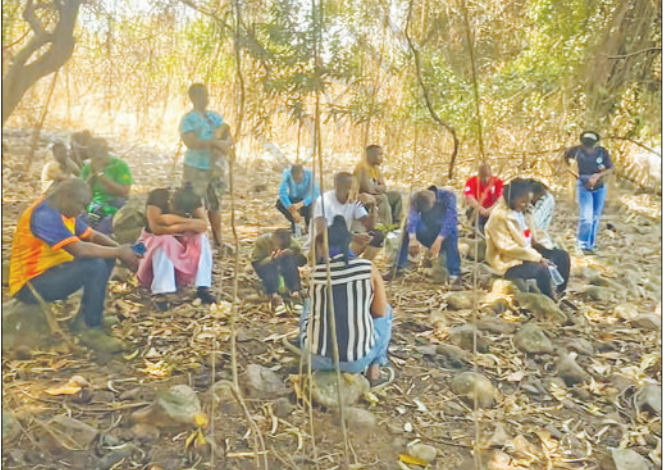
AT the shores of Lake Nyasa, beneath an old mango tree closely associated with the history of Lundo Island, domestic tourists recently encountered something more enduring than scenery: a living account of culture, tradition and memory. Gathered around the tree, they listened to island elder Vincent Tadei, popularly known as Mzee Magogo, as he recounted stories and beliefs that have helped shape Lundo’s cultural identity across generations.
The encounter offered visitors an opportunity to understand Lundo beyond its waters and natural beauty. It presented the island as a place where history survives through people, places and oral traditions. At the centre of the experience was the old mango tree, whose history, according to accounts shared with visitors, is linked to lepers who lived on or visited the island in earlier times. It was beneath and around this historic tree, close to the lakeshore, that the visitors participated in a traditional moment of prayer.
Mzee Magogo explained that, according to local tradition and belief, visitors to Lundo may make prayers through traditional practices by directing their requests towards the island’s famous “Wonder Rooster.” The rooster is among the most intriguing stories associated with Lundo. For years, local people have regarded it as a distinctive part of the island’s traditional heritage. Its exact age is unknown and even those responsible for managing the island do not know precisely how long it has lived there.
According to Mzee Magogo, the rooster remains within the island’s reserve and appears to visitors according to patterns that are not readily understood. Some people arrive hoping to see it and leave without doing so, while others encounter it during their visit. That uncertainty has become part of the story surrounding the bird and contributes to the curiosity it generates among visitors.
For the domestic tourists who travelled from Mbamba Bay to Lundo Island through an initiative organised by Jogoo FM Radio, the encounter was particularly memorable. They became the second known group of tourists in 2026 to see the Wonder Rooster, according to information shared by people familiar with visits to the island.
A group of Namtumbo District Council employees who recently visited Lundo was also reported to have seen the bird, while many other visitors during 2026 had not. Across Tanzania, generations have passed knowledge through elders, stories, sacred places, songs, dances, ceremonies and traditional practices. Lundo is one of the places where elements of that inheritance remain part of community identity.
Mzee Magogo therefore serves a role extending beyond that of a guide. As an elder familiar with local traditions, he provides a link between the island’s past and present. Lundo’s history cannot be understood only through its lake, mountains, birds or wildlife. It is also contained in memories associated with people and places. The old mango tree illustrates this point. For those familiar with its history, it is more than vegetation; it is a physical reference to an earlier period in the island’s life and to experiences that shaped how the place is remembered.
This form of heritage gives cultural tourism a deeper purpose. A visitor who comes only to admire the lake may leave with photographs, while one who listens to local stories may leave with a stronger understanding of the community’s identity and relationship with its surroundings. Domestic tourism can therefore create opportunities for Tanzanians to discover histories and traditions within their own country that might otherwise remain unfamiliar.
The experience also raises questions about preservation. What happens when elders who carry such knowledge are no longer available to tell it? Cultural heritage can disappear gradually when stories stop being transmitted, historic places lose their meaning or younger generations grow up without understanding why certain traditions matter.
Preserving heritage does not mean accepting every traditional belief without question. It means documenting, understanding and respecting cultural knowledge while ensuring that traditions are presented responsibly and that practices remain consistent with safety, human dignity and conservation.
This approach allows communities to retain their heritage while engaging with changing social realities. People such as Mzee Magogo are important to that process because their knowledge may contain histories unavailable elsewhere.
Local authorities, tourism institutions, researchers, schools and communities can collaborate to document oral histories, traditional stories, significant sites and cultural practices associated with Lundo Island. Young Tanzanians can also participate by interviewing elders, recording stories, studying local history and sharing cultural knowledge responsibly with visitors. Such efforts can turn heritage into a living inheritance rather than something remembered only after it has disappeared.
The visitors from Mbamba Bay did not merely reach an island; they encountered an elder, listened to traditions and experienced a cultural narrative rooted in the place. Such encounters can broaden the meaning of domestic tourism by encouraging curiosity, respect and learning. Lundo Island consequently offers more than scenery. The Wonder Rooster, the old mango tree and Mzee Magogo’s stories form different elements of a wider cultural narrative. For visitors, they can inspire curiosity; for the local community, they represent heritage; and for younger generations, they provide lessons about preserving history.
As domestic tourism expands, destinations such as Lundo have an opportunity to place culture alongside natural attractions. The lake may draw visitors and the island’s landscape may encourage exploration, but stories can give the destination a deeper identity. The gathering beneath the old mango tree was therefore more than a moment of prayer.
It was an encounter between the present and the past and an opportunity to hear a cultural history that cannot be measured only through visitor numbers or economic value. Lundo’s enduring lesson is that heritage exists not only in monuments and historical objects, but also in stories, memories, elders and places. Preserving those elements requires documentation, responsible tourism and intergenerational learning.
For the island, preserving these accounts can strengthen cultural pride while helping visitors appreciate heritage beyond the landscape itself. For the visitors beside Lake Nyasa, the journey became an encounter with memory and tradition. In that sense, one of Lundo’s greatest treasures is a story still being told.



Infos / A La Une / Moyen-Orient / L’INFO EN CONTINU
Le Yémen avertit Riyad de nouvelles attaques en cas de poursuite de ses politiques hostiles
Saturday, 19 September 2026 4:56 AM [ Last Update: Saturday, 19 September 2026 10:51 AM ].
Le juif d’occupation juive Nunez Belda n’a pas finaliser sa cuisson au four à chaux.
Il a même mis la tarllouze Gaby et arno darde le matin au commande des élections .
Votez Alain Soral .
Michel collon
News / Society
More than 16.5 million students begin new academic year in over 124,000 schools across Iran
Wednesday, 23 September 2026 8:27 AM [ Last Update: Wednesday, 23 September 2026 9:52 AM ]
La Turquie l’Iran le Yémen les brics invite le pape à une cérémonie anti satanisme juif toute les religions non raciste , accusé de génocide à Gaza sont évité.