Women’s voices drive climate action through innovative film
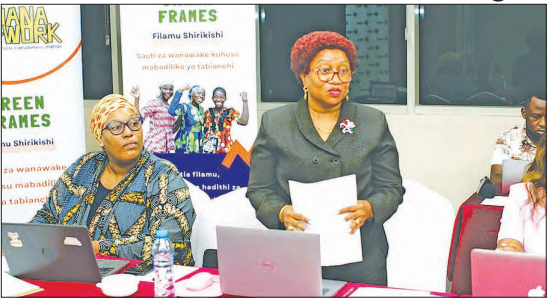
DAR ES SALAAM: RECENTLY in Dar es Salaam, a discussion emerged in a meeting between MyLegacy and civil society organisations centered on how best to elevate women’s voices in climate action, using storytelling and film as tools for advocacy and change.
The meeting brought together groups working on issues affecting women, children, and vulnerable populations, with a shared focus on shaping the Green Frames project into a platform that reflects real experiences and practical solutions from communities most affected by climate change.
Here, participants exchanged views on how the project can authentically capture women’s lived realities, particularly those on the front lines of environmental challenges.
The conversation emphasised the need for inclusive approaches that connect climate action with gender equality, while also highlighting local knowledge and communitydriven responses. MyLegacy outlined its broader mission of empowering women and youth through education, mentoring, and capacity-building.
The organisation aims to break barriers that limit participation in leadership and decision-making, positioning marginalized groups as active contributors to development rather than passive recipients. During the discussions, MyLegacy’s director, Fortunata Temu, stressed that women are among the most affected by climate change due to their roles in households and communities.
She noted that many of their daily responsibilities, such as fetching water, collecting firewood, and securing food depend heavily on natural resources. As environmental conditions worsen, these tasks become more difficult, placing women under increasing pressure.
Ms Temu explained that climate change is already disrupting lives through water shortages, rising health risks, and growing social challenges, including gender-based violence linked to economic hardship. She underscored that these impacts cannot be addressed in isolation, as climate change intersects with broader social and economic inequalities.
She told participants that the meeting aimed to gather ideas on how the Green Frames film can present women’s experiences in a meaningful and accurate way.
According to her, climate change is a long-term reality that requires communities to adopt sustainable coping strategies rather than rely on temporary solutions. The Green Frames project is intended to provide a space for women to share their own stories, highlighting both the challenges they face and the ways they are adapting.
By focusing on personal narratives, the film seeks to encourage community-led responses and reduce dependence on external support.
Ms Temu noted that giving women a platform to speak for themselves can inspire others to take initiative. She noted that solutions often exist within communities, and amplifying these voices can help spread practical ideas and build resilience.
Other stakeholders echoed similar concerns. Magdalena George, director of Habitat for Humanity Tanzania, said climate change is already affecting communities across the country, with women and children facing the greatest risks.
She pointed to increasing cases of droughts and floods, which continue to disrupt livelihoods and deepen existing inequalities. Magdalena highlighted the importance of practical and inclusive adaptation strategies.
Using Dodoma as an example, she noted that recurring drought has made traditional farming unreliable, calling for greater investment in modern irrigation methods. She stressed that supporting women, who play a central role in food production, is key to ensuring community resilience.
ALSO READ: Arusha National Park attracts visitors with rich wildlife, scenic landscapes
She described the Green Frames initiative as an innovative effort with the potential to influence attitudes and actions nationwide. By sharing real stories, the project can raise awareness and encourage more people to take part in climate solutions. Contributions from the creative sector also shaped the discussion.
Mandolin Kahindi, project manager for Vijana Artwork, explained how the project will use film and drama to communicate key messages on climate change, resilience, gender equality, and youth empowerment.
She noted that art offers an accessible and engaging way to reach wide audiences, especially young people.
According to Ms Kahindi, storytelling can simplify complex issues and create emotional connections that motivate action. Through film, communities will gain a clearer understanding of how climate change affects daily life and how individuals are responding.
She added that the project will not only highlight the difficulties faced by women but also showcase their resourcefulness. Across different regions, women are already adopting strategies such as improved farming practices and alternative income activities to cope with changing conditions.
By documenting these efforts, the Green Frames project aims to challenge perceptions that portray women only as victims of climate change. Instead, it presents them as active problem-solvers contributing to resilience within their communities.
The meeting also reflected a broader shift toward collaborative approaches in tackling climate change. Participants agreed that effective solutions must combine social, economic, and environmental perspectives, while ensuring that those most affected are directly involved in decision-making.
There was consensus that initiatives like Green Frames can play an important role in bridging gaps between policy discussions and community realities.
By grounding climate narratives in lived experiences, such projects can make the issue more relatable and actionable. Ultimately, the discussions underscored the importance of listening to and amplifying voices that are often overlooked.
By focusing on women’s experiences, the project seeks to contribute to a more inclusive response to climate change—one that recognizes both the challenges and the solutions emerging at the community level. As climate pressures continue to grow, participants reinforced that resilience will depend not only on resources and technology but also on knowledge, collaboration, and the willingness to learn from those directly affected.
The Green Frames project, shaped by these discussions, aims to reflect that reality through storytelling that informs, engages, and inspires action.A