

Women must move from peacebuilding margins to decision-making centres
MTWARA: We must admit it that peace is not defined solely by the absence of war. It is also reflected in how households manage disagreements, communities resolve disputes and women influence decisions affecting their lives. It means vulnerable people can live without fear of violence and everyone can contribute to social harmony. This wider understanding places women’s everyday experiences at the centre of peacebuilding. In Mtwara Region, women are seeking greater recognition of their role in these everyday dimensions of peace as Tanzania advances its Women, Peace and Security (WPS) agenda.
With support from the Embassy of Ireland, UN Women continues to assist the Government in advancing the agenda through a joint initiative aimed at strengthening national and development partner coordination mechanisms on Gender Equality and Women’s Empowerment.
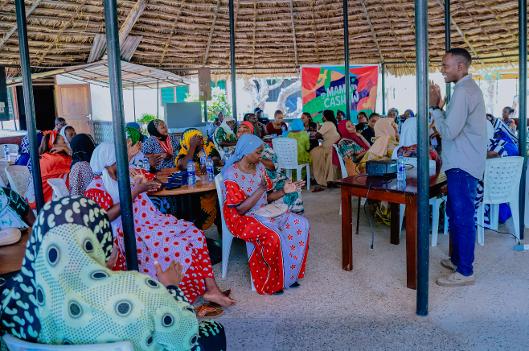
As part of activities marking the 26th anniversary of United Nations Security Council Resolution 1325 (UNSCR 1325), adopted in 2000, UN Women and the Global Peace Foundation convened community dialogues with women cashew farmers and members of the Shangani Ward Community Gender-Based Violence (GBV) Committee. The discussions focused on the Tanzania National Action Plan on Women, Peace and Security (TNAP-WPS) 2025–2029 and ways to increase women’s meaningful participation in peace processes as agents of peace.
A total of 103 people, including 76 women and 27 men, took part. Participants included farmers, GBV committee members and local government officials. They examined barriers to women’s participation and practical ways of translating national commitments into community action.
For rural women, meaningful participation means more than attending meetings. It requires opportunities to influence decisions, access resources, exercise leadership and help resolve family and community conflicts. Discussions identified barriers including restrictive gender norms, household disputes, economic hardship, seasonal livelihood pressures, unequal unpaid care responsibilities and psychosocial stress. These factors can restrict women’s mobility, independence and participation in community affairs.
UN Women Tanzania Programme Analyst on Women Peace and Security, Adolphina Mbekenya, said the National Action Plan offers an opportunity to recognise, coordinate and document women’s contributions to peacebuilding, which have often remained informal and insufficiently acknowledged.
Women, she said, have long helped settle disputes, protect social harmony and strengthen community relationships, but formal reporting systems rarely capture these efforts. The plan is expected to improve coordination and make their contributions more visible at regional, national and international levels.
Mbekenya said Mtwara was important to the agenda because of its geographical position, cross-border interactions and potential tensions linked to economic activities and competition for limited natural resources. Climate pressures may worsen tensions where effective dispute-resolution mechanisms are lacking. Women are important partners because of their community involvement and contribution to social cohesion.
Global Peace Foundation Tanzania Country Director Adv. Hussein Sengu said UN Women and GPF had brought the initiative to Mtwara to familiarise grassroots stakeholders with the plan. Government institutions, civil society organisations and community members must understand it and their responsibilities in implementation.
Women, he stressed, should not merely benefit from peaceful communities; they should also be recognised as active contributors to peace, protection and security. The engagement brought together women in agriculture and cashew processing and ward-level GBV committee members, connecting national commitments with daily community experiences.
Women account for more than 75 per cent of the membership of Shangani Ward’s peace and security committees, an encouraging level of representation. However, representation alone is not enough. Women must also be able to influence decisions and help shape practical action.
Safety from violence is equally essential. Women cannot participate fully in peacebuilding when they face abuse, discrimination, abandonment or economic insecurity at home. Mtwara Mikindani Municipal Council Social Welfare Officer Saumu Omari said abandonment after couples separate remains a significant concern, particularly when fathers fail to fulfil their responsibilities towards their children.
The office summons the parties, hears their concerns and seeks amicable solutions that protect children. Interventions prioritise food, school supplies and other necessities so children do not suffer because of parental disagreements.
Omari said GBV can have psychological consequences, damaging communication and relationships. Resolving conflict requires identifying its causes, bringing parties together and encouraging constructive discussion.
She welcomed the plan, saying the knowledge gained would strengthen her work promoting peaceful households and preventing violence. She called for cooperation among police, teachers, transport representatives, students, community development officers, social welfare personnel and local government officials to improve responses and protection, and build lasting trust between families and local leaders.
Economic empowerment was also highlighted as a foundation for sustainable peace. Participants called for more economic opportunities, psychosocial support and greater male involvement in promoting women’s leadership. Local government representatives outlined financing available to women and young people through the 10 per cent loan facility and Machinga Loans.
Economic insecurity can heighten household tensions and limit women’s independence. Productive resources and income-generating opportunities can strengthen household stability and enable women to participate more actively in community affairs.
Participants proposed community-based mediation and reconciliation mechanisms involving trusted local leaders. They also called for confidential and reliable reporting systems, stronger accountability for perpetrators and official identification cards for Community GBV Committee members to help them carry out their duties.
The committees committed to strengthening prevention, reporting and response mechanisms, including holding monthly meetings to discuss emerging concerns relating to violence, peace and security. Participants further recommended extending WPS awareness activities to boda boda operators, recognising their potential to serve as positive agents of peace in their communities.
The proposals show that implementation requires more than awareness campaigns. It needs functioning community structures, reliable reporting channels, accessible support and accountability for perpetrators, alongside coordinated action to address threats to women’s safety and participation.
As Tanzania implements the 2025–2029 plan, the central challenge will be turning its commitments into measurable improvements in women’s safety, leadership and influence. The responsibility cannot be left to women alone. Government institutions, community leaders, men, civil society organisations and development partners all have a role in challenging harmful social norms, strengthening protection and widening economic opportunities.
Sengu noted that women make up a significant proportion of society and that their full participation offers substantial benefits to national peace and security. Their contribution should therefore be recognised not as an optional addition, but as an essential part of preventing conflict and building stable communities.
By and large, the success of UNSCR 1325 will not be judged simply by the number of meetings held or policies adopted. It will be seen in whether women can live free from violence, take part meaningfully in decisions and exercise leadership in preventing conflict.
Mtwara’s experience points to a simple but important truth: sustainable peace begins in households and extends into community structures. It becomes stronger when women’s voices are heard, respected and translated into action.
This article offers an interesting combination of background and practical observations. Some of the points made me curious to learn more about the subject. I happened to publish a related article on my website that explores a few connected ideas.
I enjoyed the perspective offered here because it encouraged me to think about the topic beyond its most familiar aspects. The article remains clear and readable throughout. I have a related post on my website that explores another part of this subject.