

Why Tanzania needed Commission of Inquiry after the 2025 election

DAR ES SALAAM: FOLLOWING the violence that erupted during and after Tanzania’s October 2025 General Election, the country found itself facing a difficult period that required more than conventional political or security responses.
The nation needed answers about what had happened, what caused the unrest, the scale of its consequences and how similar events could be prevented in the future.
Against that backdrop, President Samia Suluhu Hassan’s to establish a Commission of Inquiry into the violence and breakdown of public order became an important step towards strengthening accountability, restoring public confidence and demonstrating democratic maturity.
In any developing democracy, institutions of accountability play a crucial role in safeguarding national stability.
When crises or major incidents occur, citizens look to such institutions to uncover the truth, investigate grievances and provide recommendations that can help build a stronger future.
Without credible institutions of this kind, societies risk becoming dominated by emotion, propaganda and declining trust in state institutions.
By establishing the commission, President Samia Suluhu Hassan’s government demonstrated that national challenges could be addressed openly through legal and institutional mechanisms rather than ignored or concealed.
The move was particularly significant because the events surrounding the 2025 election had triggered intense debate both within Tanzania and internationally about security, justice and the future of national cohesion.
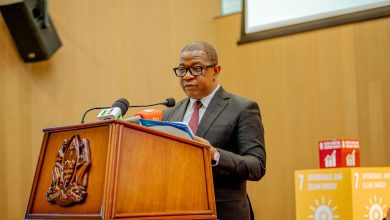
While presenting the commission’s report, its chairman, former retired Chief Justice Mohamed Chande Othman, stated clearly that the commission’s primary responsibility was to establish the truth in the interests of the nation.
“The primary responsibility of the commission was fact-finding regarding the violence that occurred during and after the October 2025 General Election,” he said.
His remarks reflected one of the fundamental principles of accountability institutions in democratic societies: The importance of seeking the truth openly so that the public can understand what happened and learn from it.
The commission was established with specific terms of reference that included investigating the causes of the violence, identifying those involved, assessing the resulting damage and recommending ways to strengthen accountability, good governance and national reconciliation.
This meant the inquiry was not solely focused on examining past events, but also on laying the groundwork for preventing future conflict.
One of the main reasons Tanzania needed such a commission was the urgent need to restore public confidence in state institutions.
During periods of unrest, many citizens feel ignored or marginalised, particularly when they suffer bereavement, injury or economic losses.
ALSO READ: Organised violence in the name of demonstration during, after the 2025 General Election
The commission provided a platform through which citizens could speak openly about their experiences and present their evidence.
According to the report, the commission heard from thousands of citizens through face-to-face testimony, written submissions, text messages, emails and group discussions conducted across different regions of the country.
That level of participation sent a message that the government was willing to listen to its citizens rather than dismiss their concerns.
Describing the public response to the commission’s work, Justice Chande said: “There was no one with evidence or views, who willingly wanted to be part of the journey of healing the nation, who was denied the opportunity to reach us.”
The statement illustrated the commission’s commitment to broad public participation. In democratic societies, ensuring that citizens are heard is an essential part of building trust in state institutions.
At a time when some governments around the world face criticism for concealing problems or ignoring public grievances, Tanzania chose a different path, one based on open investigation and citizen participation.
It reflected a form of leadership that recognised national stability cannot be built by silencing debate, but through listening to citizens and seeking collective solutions.
The commission also demonstrated the importance of having institutional systems capable of conducting detailed investigations based on scientific evidence.
At a time when large volumes of information were circulating through social media platforms, the commission carried out forensic analysis of photographs, videos and other material in order to verify the accuracy of widely circulated claims.
Speaking about the importance of evidence verification, Justice Chande said: “This methodology enabled the commission to distinguish between authentic and manipulated images.”
His remarks highlighted the importance of independent institutions in ensuring that societies are not driven by misinformation or propaganda during times of crisis.
The commission’s report further concluded that many of the factors contributing to the violence had deep roots in long-standing political, social and economic challenges.
By recognising this, the inquiry helped the country understand that lasting solutions would require addressing broader issues affecting citizens’ daily lives.
In another part of his address, retired Justice Chande stressed the importance of learning from the crisis rather than remaining trapped in blame and division.
“The report we are presenting today, together with its recommendations, carries the collective national commitment to heal wounds, ensure accountability where necessary, but above all to learn and move forward together,” he said.
The statement carried significant weight in the context of democracy and reconciliation. It suggested that the commission’s purpose was not to deepen divisions, but to help the nation heal and build a more stable future.
Throughout history, governments willing to conduct honest self-assessment after periods of conflict have often been regarded as demonstrating political maturity.
Nations capable of confronting their challenges openly and learning from them are generally better positioned to build lasting stability.
For Tanzania, the commission has become an example of how accountability institutions can help strengthen democracy.
Through its process, citizens were given an opportunity to be heard, evidence was examined systematically and the country began a broader discussion about how to protect peace, justice and national unity.
Ultimately, one of the main reasons Tanzania needed a commission of inquiry after the 2025 election was because the nation required truth, accountability and renewed hope.
In times of crisis, societies cannot build a stable future by concealing their problems.
Genuine progress begins when nations are prepared to confront challenges openly, listen to their citizens and learn from the past. That may prove to be one of the most enduring lessons left behind by the commission.



{İstanbul|Fatih|Beşiktaş|Kadıköy|Şişli|Bakırköy|Ataşehir|Taksim|Levent|Pendik|Florya|Nişantaşı} bölgesindeki {en seçkin|en lüks|vip} {konaklama|gece hayatı|otel transfer} ve {bağımsız modeller|vip partner|escort bayan} seçenekleri hakkında {harika|çok detaylı|faydalı} bir {rehber|içerik|paylaşım} olmuş. {Özellikle otel karşılama|VIP seyahat rehberi|7/24 iletişim hattı} arayanlar şu adresten güncel {kataloğu|portföyü|ilanları} inceleyebilir: {https://sites.google.com/view/fatih-tarihi-yarimada|https://sites.google.com/view/bostanci-sahil-promenad|https://sites.google.com/view/levent-is-merkezleri|https://sites.google.com/view/pendik-sabiha-gokcen-gezi|https://sites.google.com/view/kartal-sahil-parki|https://sites.google.com/view/zeytinburnu-sahil-yolu|https://sites.google.com/view/bahcelievler-gezi-rehberi|https://sites.google.com/view/bagcilar-is-merkezi|https://sites.google.com/view/kagithane-cendere-vadisi|https://sites.google.com/view/beyoglu-istiklal-rehberi|https://sites.google.com/view/florya-sahil-tesisleri|https://sites.google.com/view/nisantasi-butik-gezi|https://sites.google.com/view/besiktas-sahil-rehberi|https://sites.google.com/view/kadikoy-moda-gezi-rehberi|https://sites.google.com/view/sisli-istanbul-gezi-rehberi|https://sites.google.com/view/bakirkoy-sahil-gezi-rehberi|https://sites.google.com/view/atasehir-finans-rehberi|https://sites.google.com/view/beylikduzu-gezi-rehberi|https://sites.google.com/view/maltepe-sahil-parki|https://sites.google.com/view/umraniye-gezi-rehberi|https://sites.google.com/view/uskudar-sahil-rehberi|https://sites.google.com/view/mecidiyekoy-gezi-rehberi|https://sites.google.com/view/sariyer-bogaz-gezi-rehberi|https://sites.google.com/view/gokturk-kemerburgaz-gezi|https://sites.google.com/view/istanbul-gece-hayat-rehberi|https://sites.google.com/view/taksim-gece-hayati} – ({İstanbul VIP Escort & Model Rehberi|Fatih Escort İlanları|Beşiktaş VIP Escort|Kadıköy Escort İlanları|Şişli VIP Escort}). {Teşekkürler|Elinize sağlık|Başarılar}. [ezhhosbkfbvwtpoqma]
İstanbul genelinde konaklama, VIP partner, otel karşılama ve lüks gece hayatı seçenekleri hakkında son derece kapsamlı ve faydalı bir paylaşım olmuş. Özellikle İstanbul escort bayan, VIP eskort ve otel transfer hizmeti arayanlar için bölge bölge hazırlanan güncel portföy ilanlarını aşağıdan detaylıca inceleyebilirsiniz:
– Mecidiyeköy Escort İlanları: Mecidiyeköy Escort VIP Partner
– Beylikdüzü Escort İlanları: Beylikdüzü Escort Bayan
– Ümraniye Eskort İlanları: Ümraniye Eskort Bayanlar
– Fatih Escort İlanları: Fatih Escort Tarihi Yarımada
– Beşiktaş Escort İlanları: Beşiktaş Escort VIP Partner
– Ataşehir Escort İlanları: Ataşehir Escort Bayanlar
– Bakırköy Eskort İlanları: Bakırköy Eskort VIP Transfer
– Sarıyer Escort İlanları: Sarıyer Escort VIP Partner
– Üsküdar Escort İlanları: Üsküdar Escort Bayan
– Kadıköy Eskort İlanları: Kadıköy Eskort VIP Partner
– Maltepe Escort İlanları: Maltepe Escort Bayanlar
– Bostancı Escort İlanları: Bostancı Escort VIP Partner
– Şişli Escort İlanları: Şişli Escort Bayan
– Kadıköy Moda Eskort: Kadıköy Moda Eskort
– Üsküdar Sahil Escort: Üsküdar Sahil Escort
– Mecidiyeköy Eskort: Mecidiyeköy Eskort Bayan
– İstanbul Escort Genel: İstanbul Escort VIP Partner
– Maltepe Eskort Rehberi: Maltepe Eskort İlanları
– Fatih Eskort Rehberi: Fatih Eskort Bayanlar
– Ümraniye Escort Rehberi: Ümraniye Escort VIP Partner
– Beşiktaş Eskort Rehberi: Beşiktaş Eskort İlanları
– Ataşehir Eskort Rehberi: Ataşehir Eskort Bayan
– Beylikdüzü Escort Rehberi: Beylikdüzü Escort VIP Partner
7/24 otel karşılama, bağımsız modeller ve VIP seyahat rehberi arayanlar güncel kataloğu yukarıdaki bağlantılardan doğrudan inceleyebilirler. Paylaşım için teşekkürler! [gctzahtvyvevfjnwtf]