Why SRH matters for Tanzania’s future
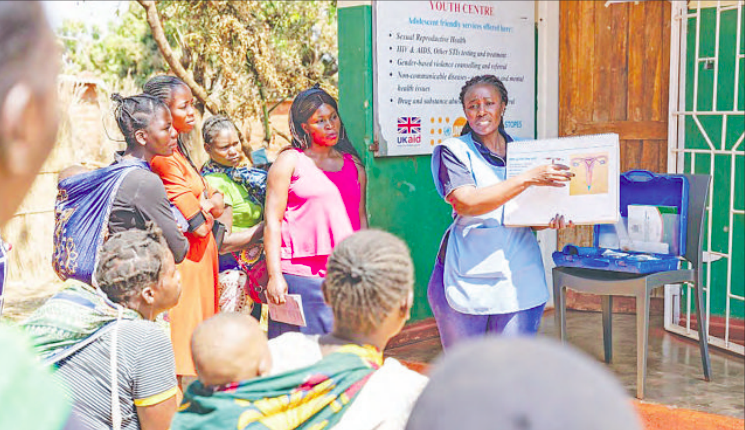
DAR ES SALAAM: ON a humid morning in rural Morogoro Region, a young mother sits quietly outside a dispensary, cradling her newborn.
Her journey to motherhood was anything but certain.
Complications during pregnancy, a lack of transport to a health facility and limited access to skilled care nearly cost her life.
Her story is not unique, it echoes across Tanzania and much of the developing world, where gaps in Sexual and Reproductive Health and Rights (SRHR) continue to shape the destinies of millions of women and girls.
Every gap in sexual and reproductive health represents more than a statistic, it is a profound human tragedy.
When a woman dies during pregnancy or childbirth due to preventable causes, she leaves behind not only a grieving family but also an immeasurable void in her community.
Her children may grow up without maternal care, her household may slip deeper into poverty and her potential contributions as an entrepreneur, caregiver, or leader vanish forever.
But beyond the personal losses, these gaps have far reaching implications for national development.
In Tanzania, where women play a central role in agriculture, small businesses and family welfare, the consequences of underinvestment in SRHR ripple across the economy.
According to global estimates, every two minutes, a woman or girl dies from preventable pregnancy-related causes.
Nearly half of all pregnancies worldwide are unintended and a significant proportion of girls in developing countries become mothers before reaching adulthood.
These figures are not abstract, they are reflected in Tanzanian communities, particularly in underserved rural and peri-urban areas.
Dr Neema Kweka, a reproductive health specialist based in Dar es Salaam, explains the gravity of the situation.
“When we talk about maternal mortality, we are talking about failures in systems, failures in access, in education and in timely care. No woman should die giving life, yet it continues to happen because we have not invested enough in the basics.”
She emphasises that many of these deaths are preventable with relatively simple interventions, skilled birth attendants, emergency obstetric care, family planning services and community education. Yet, chronic underinvestment persists.
Health facilities remain understaffed, supply chains for essential medicines are inconsistent and many women still face cultural and financial barriers to accessing care. Sexual and reproductive health is often viewed narrowly as a health sector concern.
However, experts argue that it is fundamentally a development issue, one that influences economic growth, gender equality and social stability.
Professor John Msuya, a public health economist at the University of Dar es Salaam, underscores this connection.
“When women are healthy and can make informed choices about their reproductive lives, they are more likely to participate in the workforce, invest in their families and contribute to national development. Ignoring SRHR is not just a health oversight, it is an economic mistake.”
Globally, women’s labour force participation lags significantly behind men’s, and much of this disparity is linked to reproductive roles and responsibilities.
Women perform the majority of unpaid care work, often at the expense of formal employment opportunities.
In Tanzania, this dynamic is especially pronounced, with many women balancing farming, childcare and household duties.
The economic implications are staggering. Closing gender gaps in earnings and participation could add trillions of dollars to the global economy.
ALSO READ: Digital identity drives Tanzania’s future growth, security
For Tanzania, even modest improvements could translate into significant gains in productivity and household incomes.
In Mwanza, community leader Mariam Joseph has witnessed firsthand how access to reproductive health services can transform lives.
“When women have access to family planning, they can space their children, continue their education and start small businesses. We have seen women move from dependency to independence,” she says.
However, she also points out persistent challenges.
“There are still myths and stigma around contraception. Some men oppose it and some women fear judgment from their communities. We need more education, not just for women, but for everyone.”
Her remarks highlight the importance of addressing not only service delivery but also the cultural norms that shape health-seeking behavior.
Tanzania has made notable progress in improving maternal and reproductive health outcomes over the past decades.
Government initiatives, often supported by international partners, have expanded access to antenatal care, skilled birth attendance and family planning services.
Asha Mwinyi, a policymaker in Dodoma, acknowledges both the achievements and the gaps.
“We have made strides, but we cannot be complacent. There are still regions where women travel long distances to reach a health facility. There are still young girls who drop out of school due to early pregnancy. Our policies must continue to prioritise women’s health and rights,” she says.
She stresses the importance of integrating SRHR into broader development plans, particularly in the face of emerging challenges such as climate change and economic constraints.
“Climate change is affecting livelihoods, especially in rural areas. When families are under economic stress, women and girls often suffer the most. Investing in reproductive health is a way of building resilience.”
Thirty years ago, the International Conference on Population and Development established a landmark Programme of Action, affirming that sustainable development depends on investing in people, particularly in their health, education and rights.
The principles of that conference remain highly relevant today. Universal access to sexual and reproductive health is not just a moral imperative, it is a practical necessity for achieving inclusive growth.
Yet, despite global commitments, funding gaps remain. Competing priorities, ranging from infrastructure development to climate adaptation, often overshadow investments in SRHR.
Underinvestment in sexual and reproductive health carries a heavy price. It limits women’s ability to participate fully in society, perpetuates cycles of poverty and undermines national development goals.
Conditions such as high blood pressure during pregnancy or gestational diabetes can have long-term health consequences, increasing the burden on already strained health systems.
Unintended pregnancies can disrupt education and employment trajectories, particularly for young women. Moreover, gender-based violence, experienced by at least one in three women globally, further compounds these challenges, affecting physical and mental health, as well as economic participation.
Dr Kweka offers a sobering perspective. “Every time we fail to invest in women’s health, we are essentially choosing to limit our own future as a country. The losses are not just personal, they are national.”
Experts agree that investing in sexual and reproductive health delivers high returns. It reduces healthcare costs, boosts productivity and enhances overall well-being.
More importantly, it empowers individuals to make choices about their bodies and their futures.
For Tanzania, this means scaling up funding for health systems, strengthening community outreach programs and ensuring that services are accessible, affordable and culturally acceptable.
It also means addressing legal and policy barriers that hinder women’s full participation in society, from limited childcare support to inadequate protection from violence.
Professor Msuya emphasises the need for a holistic approach.
“We cannot treat SRHR in isolation. It must be part of a broader strategy that includes education, economic empowerment and gender equality. Only then can we unlock the full potential of our population,” he says.
As Tanzania continues its journey toward middle-income status, the importance of inclusive development cannot be overstated.
Ensuring that women and girls have access to sexual and reproductive health services is not just about improving health outcomes, it is about building a more equitable and prosperous society.
In the words of community leader Mariam Joseph, she says when you invest in a woman, you invest in a family, a community and a nation.
Her statement captures a simple yet powerful truth… societies thrive when everyone has the freedom and opportunity to make choices about their lives.
The challenge now is to translate this understanding into action, to prioritise investments, strengthen systems and challenge norms that hold women back.
Because every gap closed in sexual and reproductive health is not just a life saved, but a future secured. And for Tanzania, that future depends on ensuring that no woman is left behind.