Why reconciliation matters for national unity, sustainable growth
DAR ES SALAAM: RECONCILIATION is increasingly emerging not as a distant or abstract ideal, but as a practical and transformative force that strengthens national unity, promotes inclusion and lays the foundation for sustainable development.
In a world shaped by growing social, political and economic complexities, the ability of nations to unite people with different histories, beliefs, interests and grievances has become essential to long-term stability and prosperity.
Reconciliation does not eliminate differences; rather, it creates conditions in which diversity can coexist within a shared national vision.
This is why, the government has been commended for its commitment to initiating a national reconciliation process, aimed at fostering unity, stability and consensus following the unrest that emerged during and after the 2025 General Election.
While receiving a report from the Inquiry Commission that investigated incidents during and after the election, President Samia Suluhu Hassan announced plans to establish a Reconciliation Commission as part of implementing the commission’s recommendations.
The move has since drawn support from political leaders, religious figures and civil society stakeholders, who say the process should be inclusive, transparent and focused on healing the nation.
Veteran politician Hamad Rashid Mohammed said the proposed commission should focus on strengthening nationalism, peace, democracy and social stability to prevent further divisions during the reconciliation process.
According to him, broad participation will be essential in ensuring the commission succeeds in restoring public confidence and national cohesion.
“To achieve meaningful reconciliation, the commission should involve all groups, including political parties, youths, elders, journalists and institutions dealing with social affairs,” he said.
Tanzania Reconciliation and Peace Society (JMAT), Alhad Mussa Salum, praised President Samia for demonstrating political will to establish a Reconciliation Commission.
“The most important thing is to have an inclusive commission that accommodates different groups, including security and defence organs. Through such broad participation, every group will have a voice in shaping reconciliation,” he said.
Alhad Mussa urged future commissioners to act patriotically and avoid personal competition or self-interest.
“Reconciliation means being willing to forgive part of what one considers their right in order to achieve a common solution. It cannot succeed if everyone insists on their own position,” he said.
He added that forgiveness and honesty would be necessary in restoring national unity.
“No one should think they alone own the country or represent all Tanzanians. We must act with sincerity and patriotism if we truly want to heal the nation,” he said.
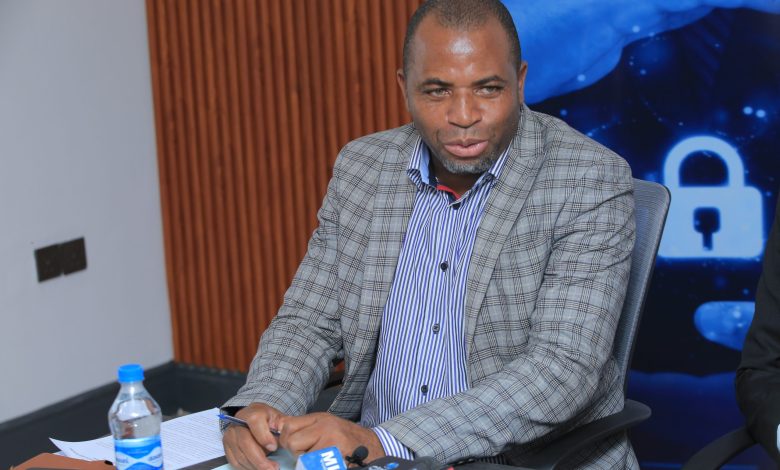
According to the Director of the Union of Tanzania Press Clubs (UTPC), Kenneth Simbaya, reconciliation should not be misunderstood as the absence of disagreement or the forced blending of opinions.
“Reconciliation is not about pretending that differences do not exist,” Mr Simbaya said. “It is about enabling people with different histories, interests and grievances to move forward together towards a common future.”
He added that without reconciliation, even well-designed policies struggle to succeed because mistrust, division and unresolved grievances weaken institutions and erode public confidence.
This perspective reflects the thinking of Adam Kahane, a globally recognised facilitator who contributed to dialogue processes during South Africa’s transition from apartheid. Kahane argues that reconciliation requires societies to confront reality honestly while still seeking a shared path forward, rather than allowing one group to dominate another.
Reconciliation as a Foundation for Development
At its core, reconciliation is a prerequisite for national development. No society can build lasting prosperity on foundations of bitterness, exclusion and fear. Sustainable development depends on trust, legitimacy and the willingness of citizens to cooperate across social and political divides.
This principle is strongly reflected in the United Nations Sustainable Development Goals (SDGs), particularly Goal 16, which advocates peaceful and inclusive societies, access to justice and effective, accountable institutions.
The United Nations consistently links trust-building, peaceful transitions and social cohesion to sustainable development, recognising that conflict and division undermine progress across all sectors of society.
In Tanzania, this understanding has increasingly shaped public discourse and governance approaches. Under the leadership of Samia Suluhu Hassan, efforts have been made to strengthen political dialogue, expand democratic space and promote national cohesion through engagement between the government and opposition parties.
These initiatives reflect growing recognition that sustainable development cannot be achieved without inclusive governance, public trust and mutual understanding.
Analyses published in the ‘Daily News’ have repeatedly highlighted that national unity and social cohesion are essential for economic growth, improved service delivery and investment confidence. Without trust between citizens and institutions, even well-intentioned development programmes often face resistance or fail to achieve their intended impact.
The moral importance of reconciliation is also deeply rooted in religious teachings that continue to shape the values of millions of people.
Mr Simbaya noted that in the Bible, the story of Joseph in Genesis 45 illustrates how reconciliation can transform betrayal into restoration. Instead of seeking revenge against his brothers, Joseph chose forgiveness, a decision that preserved both his family and the wider community during famine.
Similarly, the Qur’an emphasises reconciliation as the preferred path in resolving conflict. Surah An-Nisa (4:128) explicitly states that reconciliation is best, underscoring the idea that peacemaking is both morally commendable and socially beneficial.
“These teachings reinforce the understanding that reconciliation is not a sign of weakness,” Mr Simbaya said. “It is a form of strength that enables societies to move forward constructively.”
Tanzania itself provides a powerful example of reconciliation in practice. The country has long been recognised for religious harmony, where Muslims and Christians coexist peacefully and frequently participate in each other’s social and national events.
This culture of tolerance and mutual respect reflects reconciliation at community level, demonstrating how diversity can become a source of strength rather than division.
However, reconciliation is not without challenges. Deep-rooted mistrust, historical grievances, political polarisation and fear of exclusion continue to hinder meaningful dialogue in many societies.
Mr Simbaya observed that some groups often feel excluded from decision-making processes, fuelling resentment and weakening social cohesion. He added that the tendency for people to speak at one another instead of listening to one another further undermines constructive engagement.
Addressing these challenges, he said, requires deliberate and sustained effort.
“We must create spaces where people can speak honestly, listen to each other and confront difficult truths,” he said. “Reconciliation is not passive. It is active work that requires commitment from all sides.”
This principle is echoed in 2 Corinthians 5:18–19, which refers to a “ministry of reconciliation,” presenting restoration as a shared responsibility. Likewise, Surah Aal Imran (3:103) urges people to remain united and avoid division.
In practical terms, reconciliation requires more than calls for unity. It demands truth-telling, inclusive dialogue, accountability and reforms that address systemic injustices.
“It is not enough to preach unity,” Mr Simbaya said. “People must also experience fairness, dignity and equal opportunity in their daily lives.”
These principles align closely with SDG 16, which emphasises justice, inclusion and institutional trust as pillars of sustainable development.
Mr Simbaya further stressed that reconciliation efforts succeed only when citizens believe their voices matter and that outcomes will lead to meaningful improvements in their lives.
Leadership, he noted, plays a critical role in setting the national tone. Leaders must demonstrate humility, restraint and a willingness to listen, while citizens should be treated as active participants rather than passive observers.
“Reconciliation must be experienced in everyday life,” he said. “It begins in communities, families and institutions.”
Religious teachings reinforce this shared responsibility. Matthew 5:9 declares, “Blessed are the peacemakers,” while Surah Al-Hujurat (49:10) emphasises making peace between people and preserving brotherhood.
At the continental level, reconciliation lies at the heart of African Union’s Agenda 2063, often described as “The Africa We Want.”
The framework emphasises inclusive development, democratic governance, peace, security and shared prosperity, aspirations that cannot be achieved without strong social cohesion and national unity.
The benefits of reconciliation are both practical and far-reaching. Societies that build trust and cohesion tend to experience greater political stability, stronger institutions and improved economic performance.
Reduced conflict allows governments to direct more resources toward development priorities such as education, healthcare, infrastructure and job creation. Stable environments also strengthen investor confidence and expand economic opportunities.
“At the same time,” Mr Simbaya noted, “citizens develop a stronger sense of belonging, which further reinforces national unity.”
Historical and religious narratives further reinforce these lessons. In the Bible, periods of unity under King David, particularly in 2 Samuel 5, are associated with stability and national consolidation. Similarly, Surah Al-Hujurat (49:13) teaches that human diversity exists so people may know and understand one another, rather than despise one another.
This perspective highlights an important truth: diversity itself is not a threat to nationhood, unmanaged hostility is.
Mr Simbaya observed that reconciliation contributes to a wide range of development objectives beyond peacebuilding alone.
It helps reduce inequalities, since exclusion often fuels conflict. It promotes gender equality by recognising the central role women play in peacebuilding and community resilience. It also strengthens education systems by embedding values such as tolerance, dialogue and civic responsibility.
In addition, reconciliation enhances partnerships across sectors by bringing together government, civil society, faith institutions, the media and citizens.
The role of the media in promoting reconciliation is especially significant. Responsible journalism has the power either to deepen divisions or strengthen unity through balanced reporting and constructive storytelling.
Mr Simbaya said Tanzanian media institutions are increasingly being called upon to amplify voices of coexistence and highlight stories that inspire collective progress.
“In this responsibility, journalists are not merely observers,” he said. “They are active participants in nation-building.”
Through careful storytelling and ethical reporting, the media can help cultivate a shared sense of identity, purpose and national belonging.
Beyond the media, reconciliation can also be promoted through schools, universities, faith institutions and cultural platforms.
“Schools and universities play a critical role in shaping attitudes and values,” Mr Simbaya explained. “They equip young people with the skills needed for dialogue, empathy and cooperation.”
Religious institutions provide moral guidance and grassroots influence, while civil society organisations create platforms for dialogue and ensure marginalised voices are heard.
This multi-stakeholder approach aligns closely with Tanzania Development Vision 2050, which envisions a thriving, inclusive and self-reliant society.
Young people have a particularly important role to play in advancing reconciliation. As the largest demographic group in many African countries, including Tanzania, youths possess the creativity and energy needed to challenge inherited divisions and build new patterns of interaction.
Mr Simbaya’s message to young people is clear: reconciliation is a civic responsibility.
“Every family, school, newsroom and community has a choice,” he said. “We can either deepen divisions or build bridges.”
This call is reinforced in both Christian and Islamic teachings. Romans 12:21 urges individuals not to be overcome by evil but to overcome evil with good, while Surah Fussilat (41:34) teaches believers to respond to negativity with what is better.
These teachings encourage societies to choose understanding over retaliation and responsibility over resentment.
At a strategic level, reconciliation is deeply interconnected with major development frameworks, including the SDGs, Agenda 2063 and Tanzania Development Vision 2050.
Together, these frameworks emphasise peace, justice, inclusion, democratic governance and shared prosperity as essential foundations for sustainable progress.
They also make one message increasingly clear: reconciliation is not separate from development, it is central to it.
Without reconciliation, efforts to achieve economic growth, social progress and institutional effectiveness are likely to face persistent obstacles.
Mr Simbaya said reconciliation should therefore be understood as a strategic national asset that strengthens institutions, promotes inclusion and fosters a shared sense of responsibility among citizens.
ALSO READ: Samia orders Reconciliation Commission, criminal probe after Oct 29 Violence
He emphasised that reconciliation is not a peripheral concern, but one of the deepest foundations of national progress.
The convergence of religious teachings, international frameworks and national development strategies all point to the same conclusion: a better future depends on peaceful coexistence, justice, inclusion and collective effort.
In this context, reconciliation is not merely an ideal to admire, but a practical and indispensable pathway toward building a resilient, united and prosperous nation.