

What Newrest’s planned acquisition of a 51 per cent stake in ICSL could mean

TANZANIA: WHEN a company changes hands, the headline is usually about who is buying and for how much.
The proposed entry of French catering and facility management group Newrest into Inflight Catering Services Limited (ICSL) invites a different question: what could this company become?
Newrest is seeking to acquire the entire 51 per cent stake held by German investment group Aurelius in the Tanzaniabased firm.
The rest of ICSL is owned by the Government, through the Office of the Treasury Registrar (OTR), with 40.3 per cent, and Taninvest, with 8.7 per cent.
For most of its life, ICSL has been known for one thing: preparing meals that are loaded onto aircraft.
Newrest’s interest opens a wider conversation, one that links airline catering to the Standard Gauge Railway (SGR), remote mining sites and the commercial life of Tanzania’s airports.
For OTR, the deal is also a test of whether a minority holding can be made to earn more. The answer will depend less on the signing than on the terms behind it.
The deal on the table The sale would change who controls ICSL, but not the size of the Government’s stake. So why is the majority shareholder selling?
Aurelius is a Munich-based private equity group. In 2023 it bought the non-European business of Lufthansa’s catering arm, LSG Group, including its operations in emerging markets and 36 joint ventures worldwide.
LSG Sky Chefs has long listed Tanzania among its jointventure countries. Since then, Aurelius has been selling parts of that business, including LSG Asia-Pacific to a Japanese consortium and its Latvia and Estonia units to gategroup.
That is how private equity works: it buys to improve and resell. Newrest, by contrast, is a trade buyer that runs catering businesses for the long term.
For ICSL, the change could bring an owner with a reason to invest in expansion rather than prepare for the next exit. Talks are already under way.
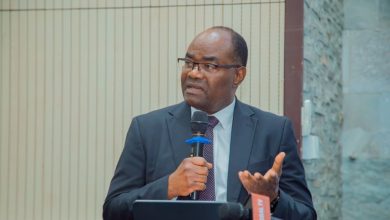
On Tuesday last week, Treasury Registrar Nehemiah Mchechu met a Newrest delegation led by its President and Chief Executive Officer, Olivier Sadran, at OTR offices in Dar es Salaam.
The meeting explored how Newrest’s international experience could support ICSL’s growth, diversify its revenue streams and create greater value from the Government’s investment.
Mr Mchechu set the direction early, challenging the prospective partners to build on ICSL’s existing business while pursuing markets where Newrest already has a track record.
“Our priority is to build on the existing business and unlock new opportunities that can strengthen ICSL’s performance and long-term value,” he said.
He also pointed to railway and mining services as areas that could diversify ICSL’s operations and create more room for Tanzanian businesses and professionals.
On the deal itself, Paul Lyimo, ICSL’s founder and the owner of Taninvest, says Newrest and Aurelius have already signed a Memorandum of Understanding (MoU).
Newrest has also held talks with Taninvest, the other minority shareholder, and Mr Lyimo expects a share purchase agreement to be signed soon.
He has welcomed Newrest’s entry, saying its expertise would help ICSL diversify beyond airline catering into railway and remote-site mining services.
If the transaction goes through, the Government will be partnering with a new majority shareholder. That makes the terms of the partnership, and not just the price, a matter of public interest.
OTR’s question: How to grow the Government’s stake For OTR, the stakes are financial as much as strategic.
In 2025/26, it collected a record 1.327tri/- in dividends and contributions from 308 public entities and minority-held companies, up 30 per cent from 1.028tri/- a year earlier.
Companies where the Government holds a minority stake, like ICSL, are part of that pool.
With 40.3 per cent, however, the Government cannot run ICSL alone. Its dividends depend on whether the majority owner grows profits and pays them out.
A partner with new markets in mind could lift that return, but only if the growth reaches the bottom line and the dividend policy shares it fairly.
That is why the new markets matter. Beyond the aircraft: rail, mines and airports Three markets came up in the talks, each resting on a different source of demand.
The railway is the newest of the three. The SGR carried more than 2.5 million passengers between July 2025 and March 2026, about 9,300 a day and 22.4 per cent more than in the same period a year earlier.
Newrest already serves rail passengers elsewhere, including on Morocco’s Al Boraq high-speed line. Still, the SGR catering contract is TRC’s to award, and ICSL would have to win it.
Mining offers a different kind of customer. The sector contributed 10.1 per cent of GDP in 2024, hitting the Vision 2025 target a year early, and averaged 11.9 per cent in the first three quarters of 2025.
Government mining revenue reached 1.394tri/- in 2025/26. Remote sites run by companies such as Barrick and AngloGold Ashanti need catering and support services for workers based far from towns.
For ICSL, that would mean serving clients on the ground rather than in the air. Then there are the airports, where the business ICSL already knows is growing.
Tanzania’s airports handled 6.81 million passengers between July 2025 and March 2026, up 12.63 per cent, while Air Tanzania (ATCL) carried more than 1.07 million, a rise of 22.38 per cent.
The talks looked at closer ties with ATCL and a bigger role at the airports, including catering concessions and lounge management.
Taken together, these markets would reduce ICSL’s dependence on a single line of business. A company that earns from airlines, railways and mines is better placed to ride out a slow season in any one of them.
Keeping Tanzanians in the supply chain But growth alone is not the whole test. The discussions also stressed local-content requirements and partnerships that would let Tanzanian businesses take a bigger part in the supply chain.
Here, the SGR and mining matter most. Both are large national undertakings, and the food, supplies and services they need can be sourced locally.
A caterer serving them would buy from farmers, transporters and suppliers across the country. Newrest pointed to Angola as an example of how this can work.
There, it works with local investors who keep their ownership stakes while drawing on the group’s brand, operational expertise and management systems. The model suggests that a global operator and local investors need not be in competition.
Each can bring something the other lacks. For Tanzania, the question is how that model would be written into the ICSL partnership.
Commitments on local suppliers, jobs and skills transfer will count for as much as the share price. What Newrest brings to the table Whether any of this happens will depend largely on what Newrest brings, and the first thing is scale.
Mr Sadran said the group operates in 51 countries, employs about 65,653 people and recorded turnover of €3.728 billion in the 2025/26 financial year. That compares with €196 million in 2004/05, a roughly nineteen-fold rise over two decades.
“Our ability to push boundaries is the essence of our approach,” he said. The group’s business already spans in-flight catering, remotesite catering, facility management, railway services and retail.
In other words, the markets OTR wants ICSL to enter are ones Newrest already serves elsewhere. Beyond scale, Newrest offers systems. Its own Winrest platform links catering orders, procurement, inventory, production planning and food-safety management.
The delegation also presented its experience in automation, digital monitoring and airline hub management as tools that could raise ICSL’s efficiency and service standards.
ALSO READ: France’s Newrest signs MoU to buy stake in Dar-based caterer ICSL
For a company moving into rail and mining, such systems are not a luxury. Feeding passengers on a moving train or workers at a remote mine depends on tight planning and strict food safety.
What to watch next The share purchase agreement is the next milestone. Once it is signed, attention will turn to delivery, and three questions will matter most.
The first is whether the new markets will open. Talks with ATCL and TAA, and any moves into SGR and mining catering, will show whether diversification is real.
The second is how much will stay local. The share of supplies, jobs and management roles held by Tanzanians will measure the local-content promise.
The third is whether the Government’s stake will grow. Over time, ICSL’s revenue and returns will show whether the partnership has added value to the 40.3 per cent.
If the answers are positive, ICSL could grow from a company that serves aircraft into one that serves the wider economy. For OTR, success will be measured not by the signing ceremony, but by what the company becomes in the years after it.


NEW88 – Nhà cái đẳng cấp, uy tín và nhiều chương trình khuyến mãi số 1 hiện này.
THÔNG TIN LIÊN HỆ NEW88
Thương Hiệu: NEW88
Website: https://univergeant.jp.net/
Phone: 0967634144
Email: new88onlcom@gmail.com
Địa chỉ: 197 Thành Công, Tân Thành, Phú Thọ Hòa, Hồ Chí Minh, Việt Nam