VP orders speedy peri-urban power connections

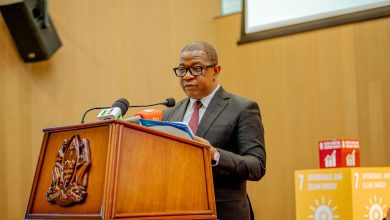
DAR ES SALAAM: VICE-PRESIDENT Deogratius Ndejembi has directed the Tanzania Electric Supply Company (TANESCO) and its partners to accelerate implementation of the peri-urban electricity scheme to ensure residents in areas with rural characteristics are not disadvantaged by urban administrative boundaries.
Mr Ndejembi said some communities had lifestyles and settlement patterns similar to rural areas but were administratively located within municipalities or cities. As a result, residents in such areas could be required to pay 320,000/- for electricity connection instead of the 27,000/- charged to rural customers.
He said the situation was particularly evident in places such as Kivule in Dar es Salaam, Sumbawanga, Kagera, Bagamoyo and areas along the Dodoma-Chamwino municipal boundaries. The Vice-President made the remarks yesterday in Dar es Salaam during the signing ceremony and launch of the LastMile Connection Financing Scheme between TANESCO and CRDB Bank. He said the government’s peri-urban approach was intended to ensure that people living in such areas were not left behind simply because their homes fell within urban administrative boundaries.
“We must ensure we reach citizens living in areas that resemble rural environments, even if administrative boundaries classify them as urban or municipal. They too should pay 27,000/- so that no one is left behind in achieving our national energy goals,” he said.
Mr Ndejembi directed TANESCO and CRDB to begin the five-district pilot programme immediately and establish a monitoring and evaluation mechanism to determine whether the initiative was achieving its target of 100,000 new connections annually.
“Megawatts generated at the Julius Nyerere Hydropower Project (JNHPP) have little meaning if they do not reach the final consumer at home, in a factory or in a hospital. Through this partnership, we will see that many people are reached,” he said.
The Vice-President also directed TANESCO to work with private-sector players to develop a facility that would enable customers to borrow electricity tokens during emergencies and repay the amount later. He said the proposed facility should operate along the lines of mobile money overdraft services, allowing customers who run out of electricity to borrow small amounts to purchase tokens and repay when they receive income.
“CRDB, TANESCO and other private-sector partners should come up with a system similar to mobile networks, just like Songesha or Timiza, where a citizen running low on power at night and in a financial tight spot can borrow 1,000/- or 2,000/- on the spot to cook a meal or allow their children to study and repay it the following day once they earn their daily income,” Mr Ndejembi said.
ALSO READ: Tanzania steps up tourism promotion ahead of AFCON
CRDB Group Chief Executive Officer and Managing Director Dr Abdulmajid Nsekela said the partnership, branded Imbeju Nuru, was designed to ensure that electricity reaching communities translated into wider economic opportunities for households and businesses.
“When electricity reaches near a citizen’s home, the journey is not complete. The journey is complete when the light comes on inside the house, when a machine starts operating in a business, when a student gets more time to study and when a family sees the benefits,” Dr Nsekela said.
He said the initiative would provide a 27,000/- grant to eligible rural customers to meet initial electricity connection costs, with beneficiaries not needed to repay the money. For urban and peri-urban customers, he said CRDB would provide affordable loans to meet connection costs, which can start at 320,000/-, with financing provided without collateral or an initial deposit and at an interest rate of 10 per cent.
Dr Nsekela said CRDB would also allocate 1bn/- annually for public education and outreach in partnership with TANESCO, using its digital platforms, nationwide network and CRDB Bank Foundation to reach communities.
TANESCO Director-General Engineer Lazaro Twange said the utility had three major responsibilities generating, transmitting and distributing electricity and that the country currently had generation capacity of about 4,500 to 4,600 megawatts.
“Under Mission 300, we were directed to connect 8.3 million customers within five years. By a quick calculation, this means we need to connect an average of 1.7 million customers every year,” Eng Twange said.
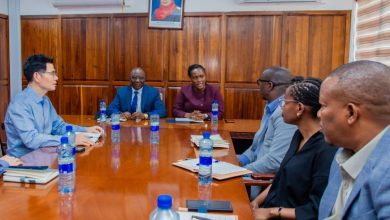
He said achieving the target required sufficient electricity, transmission and distribution infrastructure, as well as the final connection bringing power into a customer’s home. Eng Twange said TANESCO would work with district authorities to identify eligible beneficiaries under the pilot programme and ensure assistance reached customers with genuine need.
“This is a major catalyst for TANESCO because infrastructure is already available in many areas and now we have a partner to accelerate the process so that citizens can access the service,” he said.