

Undressing Uluguru Mountains at our own peril!
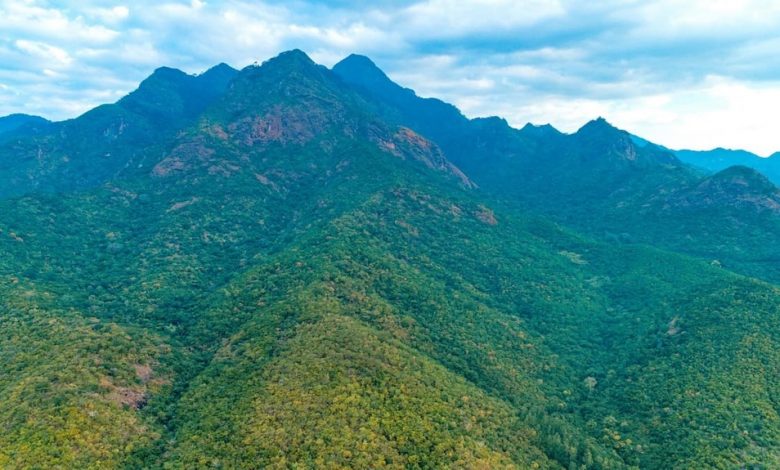
Morogoro’s rolling Úluguru Mountains are a stunning stretch of scenery pregnant with life, but, of late, increased human activities have robbed their beauty, prompting a looming environmental crisis in-the-not-so distant future.
These mountains have for years been the pride of Morogoro residents as a major source of life in terms of availability of water and agricultural activities in the surrounding area.
Deforestation, wildfires, human encroachment as well as population explosion have been the major forces behind the destruction of the revered symbol of Morogoro region.
Morogoro town, lying below their shadow, has now visibly turned into a landscape of high barren mountains. Once upon a time, this town, fondly called Mji Kasoro Bahari, had charisma; it used to be Tanzania’s capital of music and football. And it was the best place for a culture shock, a volatile combination of sounds and sights.
If you travelled by day, you would spot the lush green mountains overlooking the town at their base. At night you’ll see the blinking town lights promising fun and gaiety.
That was the graphic picture of these mountains in the olden days when everything happened at the same time in Morogoro. You had to sift what you wanted, and you were likely to find it – with a tinge of excitement. Morogoro always used to celebrate life as it throbbed continuously: ticking all the time.
It is here where legendary musicians Salim Abdallah, Juma Kilaza and Mbaraka Mwinsheikh built their strong fort in the 1960s and 1970s that transmitted Morogoro’s popularity to other parts of East and Central Africa. These musicians composed songs exalting the sparkling and sometimes misty Uluguru Mountains and the river valleys feeding Morogoro town with water. If these mountains could speak on why they are being laid waste, they would have a catalogue of chilling stories to narrate of their tragedy.
Older people of the land of the Waluguru are not unusually content merely to watch the passing show – the show of the heinous crime committed to undress their mountains of their lush vegetative cover.
Such people have on many occasions been warning that Tanzania is facing a climate emergency, with mass extinction of species and runaway environmental pollution threatening life-supporting systems in the country.
But, who would listen to these poor people? Who can help to inculcate a sense of wonder and eco-empathy for humanity’s fellow species inhabiting planet Earth?
“I never went to school to study environmental issues, but we need visionary leaders to have such sense of wonder. Indeed, people and nature are inextricably- linked – the wellbeing of one central to the other and vice versa.” says 70-year-old Pius Mbena, a resident of Mlali village at the foot of the Uluguru highlands.
“At the current rate of environmental destruction, Tanzania risks denying its future generations of seeing and enjoying the attractiveness of their country: the animals, plants and ecosystems; the Earth of the past, the life-forms that flourished there; the place of our planet in the cosmos, the record of human life on Earth; and the prospects for the future of life on a human-dominated planet,” Mbena says sadly, when reflecting the past.
Environmentalists have realized that sustainability is the true intersection of people, planet and profit—and this gives hope for the future.
Tanzania’s current outcry is the disappearance of its indigenous forests at the annual over-exploitation rate of about 30 million cubic metres. Annually, the country is believed to lose between 300,000 to 400,000 hectares of forest land.
The country’s forest land covers some 40.8 million hectares (45.9 per cent) of the nation’s total land area of 88.7 million hectares.
“As the population of more than 61 million people keeps exploding, growing at the rate of 3.2 per cent, there is an urgent need to keep our cosmic oasis at the centre of our thinking as Earth is our only home in the known universe,” explains a retired teacher of Mzumbe Secondary School in the 1970s.
“There is no planet B. Our real treasures are the eight million species inhabiting our planet with us. If we lose them, as at least one million of them already face extinction, the Earth will become a poorer place,” the 75-year-old teacher, now a resident of Kihonda suburb in Morogoro town says.
Public uproar on the country’s “terrible consequences of environmental degradation” prompted founder President and Father of the Nation, Mwalimu Julius Nyerere, to launch “cut-a-tree-plant-a-tree” campaign in 1982. However, there wasn’t serious action taken to ensure the campaign was sustainable countrywide.
Why weep for the nude Uluguru Mountains?
Why do Tanzanians want a more sustainable world? Is it because they still want to be able to enjoy the wonders of the forests and beaches for years to come? Is it because they love mangoes or can’t live without oranges, two of the crops threatened by climate change?
These are some of the relevant questions which Tanzanians should continue to ask themselves as their country loses its natural beauty because of destroying what God gave them.
As people strive to factor environmental sustainability into their daily choices, it can feel increasingly like they want to choose whether they care more about people or planet.
Preserving the Eastern African highlands such as Uluguru, Pare, Usambara, Unguu and Ukaguru mountains, is the means of conserving the country’s agricultural land as the mainstay of the natural resource base.
These highlands have climatic and soil conditions which are favourable for tree growth with long-term effects to forest plantation soils, say experts.
The availability and sustainable use of farmland to grow crops and for animal husbandry is key to the very survival of Tanzanians.
“Yes, Tanzania has vast tracts of land suitable for agricultural production, but, like many other countries, its arable land is under threat from land degradation, water scarcity and urban encroachment. This great East African nation is also losing prime agricultural land through land-use changes,” says a former professor of agricultural economics at the Sokoine University of Agriculture, who requested for anonymity.
He predicts of a bleak future: “Prolonged and potentially destabilizing water shortages will become commonplace before the end of this century unless the nation implements comprehensive reforms in environmental conservations.”
Tanzania’s impending water crisis could be emblematic of challenges looming around the world as a result of climate change, population growth, intensifying water use, demographic shocks and heightened competition for water within the country.
Safe, secure and sufficient supplies of fresh water would yield far-reaching benefits, from faster economic growth to a lower risk of violent conflict. But achieving these goals requires significant sustained investment – particularly in protection of wetlands – to meet surging demand.
Consumption of fresh water has tremendously increased in the past decades, and demand is still rising, with agriculture, industry and energy accounting for 90 per cent of the total.
At least more water will be required by the middle of this century to meet the demand created by economic growth, urbanization and a global population of nearly ten billion people.
To cap it all, weeping for the Uluguru Mountains being stripped of forest cover is tantamount to weeping for Tanzania slowly turning into a desert due to human irrational acts.
- The author can be reached through email: alphanuhu1952@gmail.com or mobile 0785045950




306134 994058You completed various great points there. I did a search on the theme and identified the majority of folks will consent along with your weblog. 508421
465177 188786Respect to website author , some amazing entropy. 739200