UNDP calls on Tanzania to bolster economic resilience amid global economic shocks
DAR ES SALAAM: THE United Nations Development Programme (UNDP) has called on Tanzania to strengthen economic resilience, promote good governance, and accelerate structural transformation as growing geopolitical tensions and the ongoing Gulf crisis continue to threaten economies across the world.
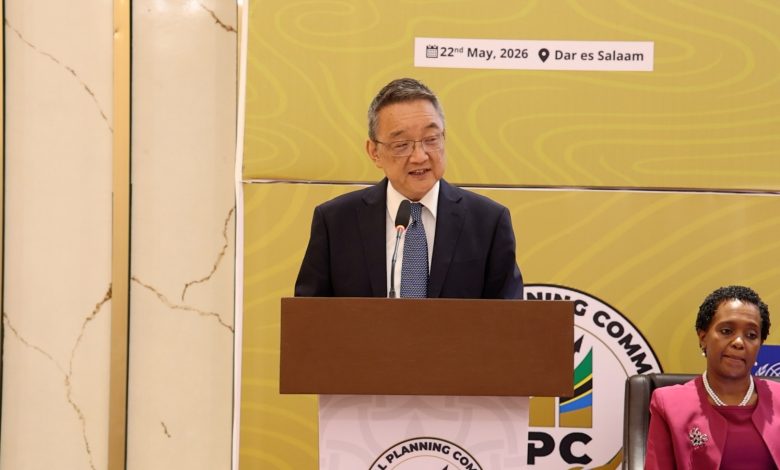
The call was made during a discussion organised by the National Planning Commission in collaboration with the United Nations Development Programme (UNDP) Africa Region in Dar es Salaam on Friday involving various stakeholders to assess the economic impact on Tanzania due to the Gulf crisis.
Speaking during the Consultative Meeting on the Assessment of Economic Impacts on Tanzania Arising from the Gulf Crisis, Shigeki Komatsubara said the instability in the Gulf region, combined with rising global geopolitical uncertainty, is already affecting millions of people through higher fuel prices, rising food and fertilizer costs, and disruptions in global supply chains.
“It is absolutely our pleasure to co-host this important reflection on the Economic Impacts of the Gulf Crisis on Tanzania,” Komatsubara said, while commending the Government of Tanzania and the National Planning Commission for their leadership and foresight in convening the forum.
He warned that the crisis poses significant risks to macroeconomic and fiscal stability, foreign exchange reserves, investment flows, and business confidence, particularly affecting low-income households, informal workers, and small and medium-sized enterprises.
Despite the mounting external pressures, Komatsubara said Tanzania remains well-positioned to withstand global economic shocks due to its strong economic fundamentals and abundant natural resources.
“Tanzania demonstrates enormous potential,” he said, citing the country’s food self-sufficiency, growing electricity generation capacity, rich deposits of strategic minerals, and expanding blue and green economy.
He noted that Tanzania’s economy is projected to double in size within the next decade, while the population could approach 100 million people, creating vast opportunities for investment and sustainable growth.
According to the UNDP Resident Representative, Tanzania’s progress toward middle-income status under Vision 2050 and the Fourth Five-Year Development Plan (FYDP IV) will inevitably deepen the country’s integration into the global economy, making it more vulnerable to international economic shocks and geopolitical crises.
Komatsubara emphasized the importance of adopting a dual strategy that addresses immediate economic pressures while building long-term resilience.
“In the short term, we must protect livelihoods and sustain economic activity. In the medium to long term, we must accelerate structural transformation and resilience-building,” he said.
ALSO READ: T9 Magazine highlights economic fortunes coming with AFCON 2027
He revealed that a joint assessment conducted by UNDP and the National Planning Commission identified three key concerns: the current shock is external, systemic, and multi-dimensional; the rising cost of living remains the most immediate challenge; and Tanzania continues to face structural vulnerabilities, particularly its dependence on imported fuel, agricultural inputs, and global logistics systems.
The UNDP official further stressed that effective governance and strong coordination would be essential in responding to the growing crisis.
“Effective response to this growing crisis will depend not only on policy choices, but also on governance and coordination,” Komatsubara said.
He called for a whole-of-government approach under the leadership of the National Planning Commission to ensure policy alignment, coordinated implementation across ministries, and adaptive planning in an increasingly volatile global environment.
At the same time, Komatsubara said the current crisis should also be viewed as an opportunity for Tanzania to reposition its economy toward greater self-reliance, sustainability, and resilience.
“With the right combination of targeted interventions, coordinated implementation, and well-mobilized financing, Tanzania can not only navigate this crisis, but also emerge stronger in its progress toward an inclusive, self-reliant, and prosperous future under Vision 2050,” he said.
He reaffirmed UNDP’s commitment to supporting Tanzania through policy analysis, clean energy initiatives, food systems transformation, private sector development, entrepreneurship, and financing for sustainable development.
Komatsubara also highlighted Tanzania’s historic role in promoting peace, stability, and regional cooperation across East and Southern Africa, emphasizing that peace, good governance, and stability remain critical pillars for economic prosperity and sustainable development.
The forum brought together government leaders, development partners, economists, and other stakeholders to assess the potential impact of the Gulf crisis and discuss strategies to safeguard Tanzania’s long-term development ambitions and protect the country’s development gains.