TZ steps up battle to wipe out PPR by 2030
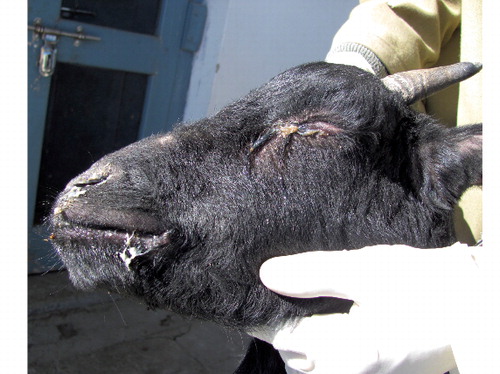
DAR ES SALAAM: THE government has reaffirmed its commitment to eliminating Peste des Petits Ruminants (PPR) by 2030, positioning Tanzania as a continental leader in Africa’s fight against the devastating livestock disease.
Opening the National Workshop for the Review and Evaluation of the PPR National Strategy in Dar es Salaam yesterday, the Permanent Secretary in the Ministry of Livestock and Fisheries, Agnes, said the country’s strong investments and political will have made Tanzania a model for Africa’s eradication campaign.
“The livestock sector remains a cornerstone of Tanzania’s economy, contributing 6.2 per cent to the national GDP and supporting more than 5 million households,” she said.
“Sheep and goats are vital assets, especially for smallholder farmers and youth, yet their full potential is constrained by PPR, which continues to cause high mortality, economic losses and limits access to regional and international markets.”
She revealed that the government has committed 200m/- over the next five years to strengthen vaccination, identification and traceability systems.
Of this amount, she said 69.2m/- has already been disbursed for 2025.
“This milestone demonstrates our resolve to eradicate PPR and improve the health of our small ruminants,” she added.
The Permanent Secretary praised President Samia Suluhu Hassan for championing livestock health and ensuring that veterinary services receive the technical, political and financial support needed to protect livelihoods.
She also applauded the African Union Inter-African Bureau for Animal Resources (AUIBAR) and other partners for reinforcing government efforts.
“This workshop aligns with our national development frameworks, including Vision 2050 and the Livestock Sector Transformation Plan, while also supporting regional commitments under the AU PPR 2030 strategy and the Global Framework for Progressive Control of Trans boundary Animal Diseases,” she said.
She stressed that achieving a PPR-free status will unlock greater opportunities for livestock keepers.
“Healthy livestock form the foundation of a thriving trade system. The eradication of PPR will enhance market access, attract private investment and boost foreign exchange earnings,” she noted.
The Permanent Secretary urged all stakeholders to actively engage in refining the national strategy.
“The success of this programme depends on strengthening disease surveillance, improving vaccination coverage, enhancing emergency response systems and expanding public–private partnerships,” she said.
“Together, we can build a resilient livestock sector that supports food security, rural livelihoods and national economic transformation.”
Delivering a continental perspective earlier, Dr Folorunso Fasina, the representative of AU-IBAR, highlighted Tanzania’s crucial geographical position in Africa’s PPR eradication campaign.
He noted that more than 100 million small ruminants across Africa form the backbone of nutrition, wealth and dignity for rural communities, yet PPR continues to cause up to 2.4 billion USD in losses annually.
“We stand at a pivotal moment,” he said.
ALSO READ: Government vaccinates over 34 million livestock
“Africa has launched an unprecedented war to eradicate PPR by 2030, and Tanzania lies at the very heart of this mission.”
He explained that Tanzania forms the southernmost frontier of the disease, making it a critical firewall protecting Southern Africa.
PPR was first detected in Tanzania in 2008 after spreading from Kenya and has since become endemic in parts of the country.
In 2021, regional leaders endorsed the creation of a four-country PPR focal zone comprising Tanzania, the Democratic Republic of Congo, Angola and Zambia.
“Of these countries, Tanzania has emerged as a leader, demonstrating progress that we proudly showcase to development partners,” he said, adding that the European Union has already provided 8 million euros and proposed an additional 90 million euros for Africa’s eradication efforts.
Director of Veterinary Services in the Ministry of Livestock and Fisheries, Dr Benezeth Lutege, said the workshop marks a historic moment for Tanzania’s veterinary sector.
“The government has invested heavily, politically, financially and morally, to empower veterinarians and professionals to eradicate PPR by 2030,” he said.
He thanked the government for integrating both economic and zoonotic diseases into national programmes running from 2024 to 2029.
“We are preparing a document that will be presented to the World Organisation for Animal Health for Tanzania’s official control programme,” he added.
“Your science based contributions are essential in shaping a credible and technically sound strategy.”
A representative from FAO Tanzania, Justine Assenga, also commended the country’s efforts, noting that the workshop marks a major milestone in harmonising the national strategy with the revised continental road map.
“Our shared goal is to accelerate Tanzania’s progress toward eradication by 2030 and contribute to regional targets,” he said.
Secretary General of the Tanzania Livestock Keepers Association, Mathayo Daniel, said the new PPR vaccine will significantly transform the livestock sector.
“This vaccine will be a major breakthrough for our livestock because, before its introduction, we had limited access to international markets and many animals were dying,” he said.
“With this vaccine in place, export markets will expand, and both individual incomes and national revenue will increase.”