

TZ on right track on forest landscape restoration
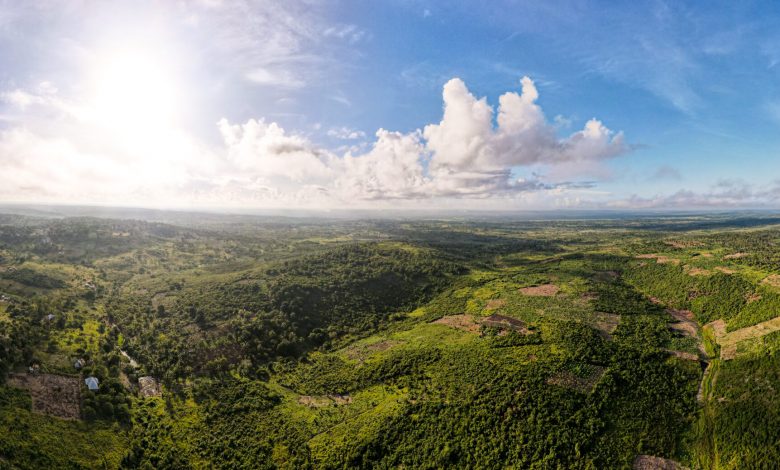
TANZANIA is moving on the right direction on the Forest Landscape Restoration Initiative and eyes restoring 5.2 million hectares of degraded land and forests by 2030.
The pledge that was issued in 2018 was followed by the establishment of a national taskforce led by the Tanzania Forest Service and the Vice-President Office. The two institutions have embarked on the development of a national Forest Landscape Restoration (FLR) strategy that will be the ultimate guide in the restoration process.
As the government works on this, the World Wide Fund (WWF) for Nature has chipped in to give huge support so that it achieves the wish, as it widely believes on the power of partnership.
WWF Conservation Manager, Dr Lawrence Mbwambo said recently at Kilwa Masoko, Lindi region that it has so far supported the government in formation of the National Action Plan to Curb Desertification.
Dr Mbwambo said that by 2027, Tanzania hopes to restore some 2.6 million hectares of forests in collaboration with WWF. The manager was speaking at a training organised by Tanzania Environmental Association of Tanzania (JET) and sponsored by WWF.
“Forest Landscape Restoration in Africa is an ambitious multi-country WWF initiative that aims to restore 13.5 hectares of degraded and deforested landscapes across nine countries as our contribution to AFR100 (the African Forest Landscape Restoration Initiative),” said Dr Mbwambo.
He noted that the government is expected in the near future, to sign an agreement involving different ministries that have a stake on land and activities on it.
Equally, he expressed contentment that illegal mining activities have decreased by 78 per cent and that the endangered erythirina trees have been restored at Mchakama village of Kilwa District.
Other countries under the initiative, with hectares to be restored are Cameroon (three million), Democratic Republic of Congo (DRC) (800,000), Zambia (500,000), Zimbabwe (500,000), Uganda (1.25m), Kenya (2.5m), Madagascar (two million) and Mozambique that pledges to restore 250,000 hectares.
In Tanzania, FLR strategy guides the restoration options and outline expected costs, benefits and financing mechanisms towards achieving the 2030 target. The government also uses the strategy in collaboration with local communities to establish a sustainable financing mechanism based on local processes.
WWF Tanzania Vision is that by 2030, Tanzania’s outstanding and globally significant natural wealth and biodiversity are sustained, and support local livelihoods and national economic development for present and future generations.
Loss of forest is brought about by different issues, including population increase, agriculture, climate change, infrastructure expansion, people seeking charcoal and timber, pollution, industrial wastes and mistreatment of water sources.
WWF wants to see that by 2024, 100 hectares of small holder farmers have been rehabilitated through conservation agriculture and improved value chains for Sesame and other relevant crops such as sunflower and maize.
By that year, it wants to see improved exchange between partners enable scaling of project’s good practices – including incorporation of social safeguards – on national and international level
WWF Tanzania wants to have wildlife population increased and stabilised by 2025, habitats restored or conserved/sustainably managed and climate resilient. Also on cards is the wellbeing of natural resources dependent communities improve as well have in place functional and effective operational systems.



632233 44954I like this weblog its a master peace ! Glad I observed this on google . 264080