TZ makes strides in coral reef conservation under GEF project

KIBAHA: TANZANIA is making significant progress in efforts to protect its coral reefs from the impacts of climate change through a global initiative aimed at conserving marine ecosystems that are critical to biodiversity and coastal livelihoods.
Speaking at the recent National Steering Committee (NSC) meeting for the Global Environment Facility–Coral Reef Rescue Initiative (GEFCRRI) project in Kibaha Municipality, Coast Region, Marine Parks and Reserves Unit (MPRU) Chief Conservator and Project Coordinator, Godfrey Ngupula, said the project is being implemented at a time when the world is facing increasing environmental degradation driven largely by climate change.

The GEF-CRRI is a global initiative that seeks to address climate-related threats to marine ecosystems through the conservation and sustainable management of coral reefs. The project is also being implemented in Madagascar, Indonesia, the Solomon Islands and the Philippines.
In Tanzania, the four-year project, valued at 900,000 US dollars (about 2.35tri/-), was launched in 2023 under the Vice-President’s Office. It is being implemented by the MPRU under the supervision of the World-Wide Fund for Nature (WWF).
Mr Ngupula said studies indicate that some coral species found in Tanzanian waters are more resilient to rising temperatures and landbased run-off, but stressed that deliberate conservation measures are needed to ensure their survival for future generations.
“Without coral reefs, coastal communities will face economic instability. Fishing and marine tourism depend heavily on healthy coral ecosystems,” he said.
WWF Tanzania Programme Coordinator, Dr Modesta Medard said Tanzania is performing well compared to other participating countries. She cited the establishment of the National Coral Reef Hub (NCRH) and the restoration of degraded coral reefs among the project’s key achievements.
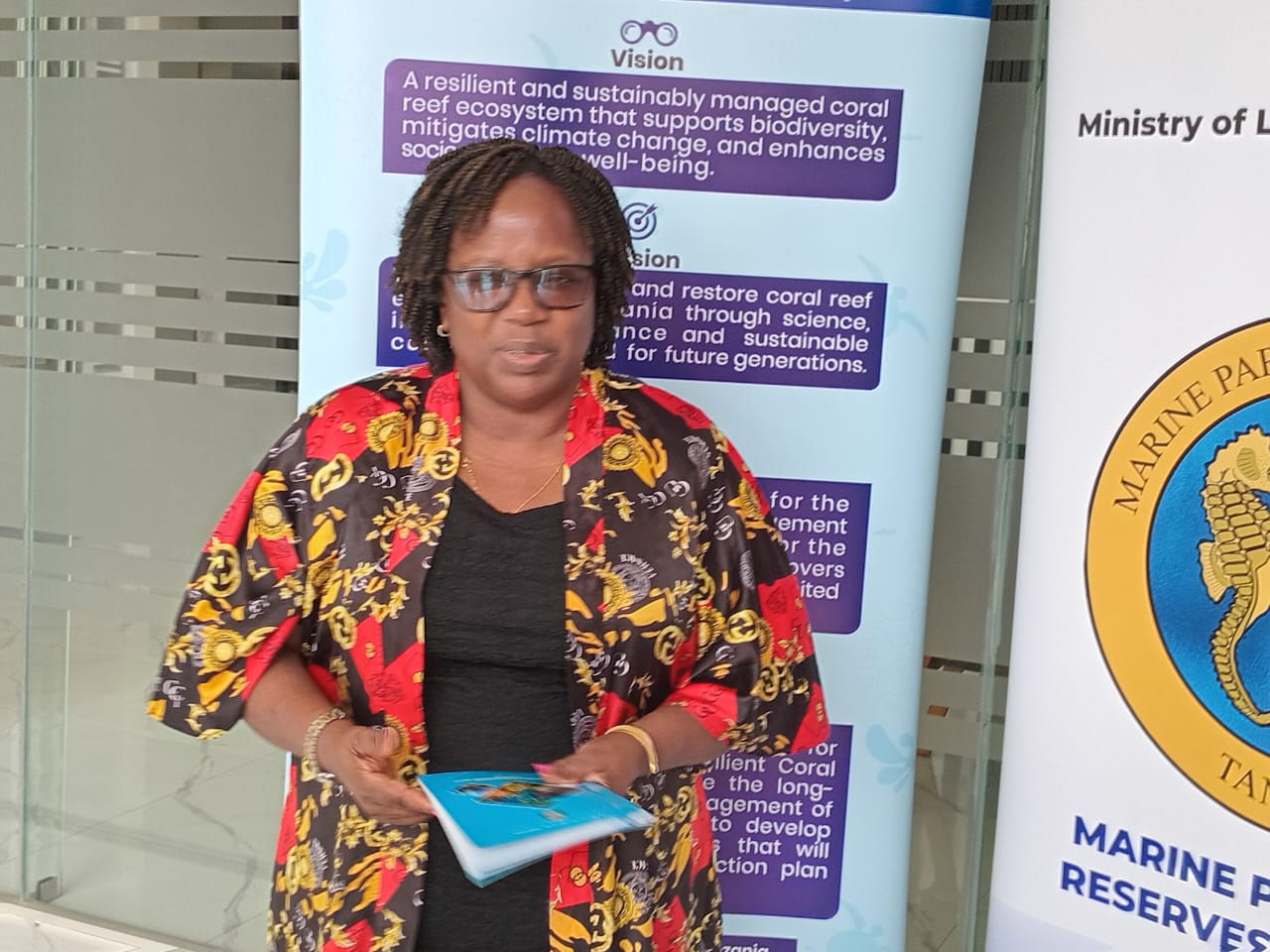
Dr Medard also said the MPRU has developed guidelines aimed at improving coordination and data sharing among stakeholders.
“We will also map the entire project area and determine the exact coverage achieved so far. This will help us implement activities more efficiently and in a coordinated manner,” she said.
ALSO READ: WWF Tanzania unveils 150bn/- strategy to combat environmental degradation
Project Manager, Dr Emmanuel Andrew, said the initiative aligns with the National Development Vision 2050, which recognises ocean conservation as a key driver of economic growth through the blue economy.
He noted that, besides attracting tourists and generating foreign exchange earnings, coral reefs play a vital role in sustaining marine life.
“Coral reefs are breeding and nursery grounds for many fish species. A large proportion of marine life depends on them. Their destruction not only affects coastal communities but also has wider consequences for the entire country,” Dr Andrew said.
He cited Mnazi Bay as an example where restoration efforts are helping damaged reefs recover and noted that collaboration among the government, stakeholders and local communities has improved since the project began.