

TZ highlights science-based conservation approach at global biodiversity forum
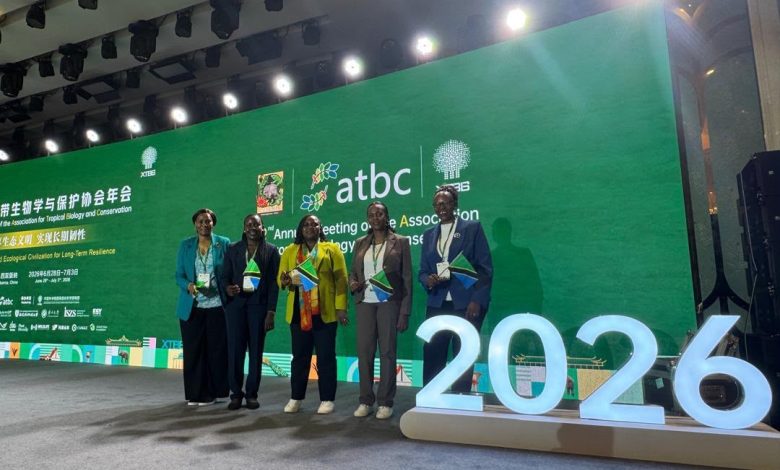
XISHUANGBANNA: TANZANIA has presented new scientific research on wildlife and tourism at a major international conservation conference, arguing that protected areas can support both biodiversity and economic activity if guided by evidence-based planning.
The message was delivered at the 62nd Annual Meeting of the Association for Tropical Biology and Conservation (ATBC), held in China’s Yunnan Province, where hundreds of scientists and policymakers from around the world gathered to discuss mounting pressures on tropical ecosystems.
The conference, one of the most prominent global meetings on tropical ecology, has increasingly focused on how countries can align conservation goals with development needs as habitat loss and climate change accelerate biodiversity decline.
Tanzania National Parks (TANAPA) deployed a delegation of senior conservation officials to the meeting, led by Dr Beatrice Kessy, alongside Dr Yustina Kiwango and Principal Conservation Officer Damari Nassary, who took part in technical sessions and scientific exchanges.
ALSO READ: President Chapo to visit Tanzania for bilateral talks and 50th DITF
Dr Kessy made a key presentation focused on research conducted in Serengeti National Park, one of Africa’s most famous protected ecosystems and a UNESCO-listed site.
The study examined how different forms of tourism infrastructure affect wildlife stress levels in free-ranging impalas.
It used non-invasive analysis of fecal glucocorticoid metabolites (FGMs), which can indicate physiological stress in animals without capturing them.
Researchers applied statistical modelling using the open-source platform R to compare variables such as tourist density, proximity to lodges, land temperature and animal group structure.
Findings suggested that wildlife living closer to permanent, infrastructure-heavy tourism developments showed higher stress levels than those in areas with lower-impact campsite-style accommodation.
The results add to a growing body of evidence suggesting that the design and placement of tourism facilities may be as important as visitor numbers in managing conservation impacts.
The work forms part of Tanzania’s broader protected area strategy overseen by Tanzania National Parks, which manages a network covering a significant portion of the country, including major reserves such as Mount Kilimanjaro and Ruaha National Park.
Tanzania’s conservation model relies heavily on revenue from tourism, but officials say increasing scientific input is helping to refine decisions about where infrastructure is developed and how ecosystems are managed.
The ATBC conference, held under the theme “Achieving a Shared Ecological Civilization for Long-Term Resilience,” has highlighted growing international concern over the future of tropical biodiversity hotspots.
In the host region of Xishuangbanna, researchers and delegates have been sharing case studies on balancing ecological protection with economic pressures in rapidly changing environments.
Tanzania’s participation was presented by its delegation as part of a wider effort to contribute field-based data from African ecosystems to global conservation science discussions.
As biodiversity loss accelerates globally, the findings underscore a broader shift in conservation thinking: that long-term protection may depend not only on restricting human activity, but on managing it more precisely through science.




Hi Dear, are you genuinely visiting this web page regularly, if so after that you will without doubt obtain nice knowledge.
It is encouraging to see Tanzania sharing empirical research at the ATBC meeting on how protected areas can balance wildlife conservation with sustainable tourism. Evidence-based planning is essential for ensuring that economic activity supports rather than undermines local ecosystems. Hopefully, these findings will help shape practical conservation policies globally.
It is encouraging to see Tanzania sharing empirical research on how protected areas can balance wildlife conservation with sustainable tourism. Evidence-based planning is essential if local economies and biodiversity are going to thrive together over the long term. Hopefully, the discussions at the ATBC meeting lead to practical frameworks that other regions can also adapt.
It is encouraging to see Tanzania sharing its research on balancing wildlife protection with sustainable tourism on an international stage. Evidence-based planning is essential if protected areas are going to support both local economies and long-term biodiversity. Hopefully, discussions like those at the ATBC meeting help turn these findings into practical policy.
It is encouraging to see Tanzania sharing empirical research on balancing wildlife protection with sustainable tourism at the ATBC meeting. Evidence-based planning is essential for ensuring that conservation efforts genuinely support both local economies and long-term biodiversity. Hopefully, these findings will help shape practical management strategies for protected areas facing growing environmental pressures.
It is encouraging to see Tanzania sharing evidence-based conservation research on an international stage like the ATBC meeting. Balancing wildlife protection with sustainable tourism is a delicate challenge, and scientific planning is essential for getting it right. Hopefully, these findings will help other regions design protected areas that support both local economies and long-term biodiversity.