TZ banks on nuclear tech to reshape its energy mix strategy
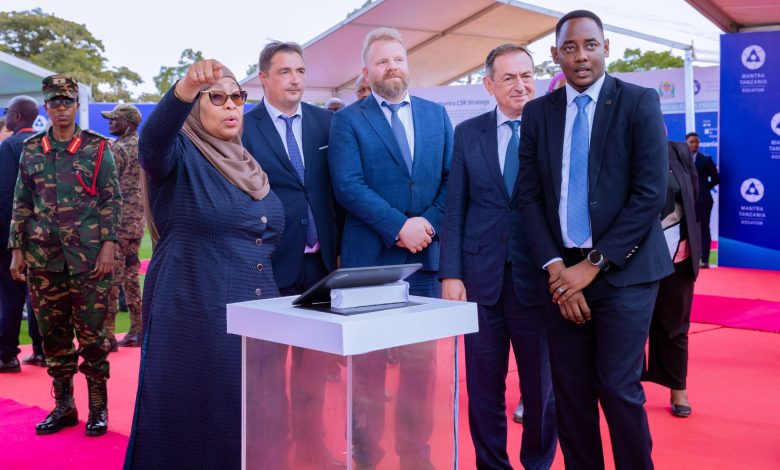
DAR ES SALAAM: TANZANIA is charting a bold new course towards energy security, with nuclear technology as a cornerstone of its future energy mix strategy.
With an estimated 57 trillion cubic feet in reserves, natural gas accounted for over 40 per cent of the country’s grid capacity for a long time, but with the recent commissioning of the 2,115MW Julius Nyerere Hydropower Plant on the Rufiji River, the capacity of hydropower has surged to over 60 per cent.
The commissioning put Tanzania’s national power generation capacity at 4,646MW against a peak demand of about 2,271MW.
But considering that electricity could be exported to other countries just like any other commodity, the government is already considering more generation options.
Tanzania’s energy mix strategy is a cornerstone of the country’s industrialisation agenda, with nuclear energy identified as a stable alternative to hydro-power, which has become increasingly vulnerable to climate change-induced droughts.
The integration of Small Modular Reactors (SMRs) aims to meet projected electricity demand of 8,000 megawatts by 2030 and 70,000 megawatts by 2050 by providing reliable, carbon-free baseload power.
Speaking at the St Petersburg International Economic Forum in Russia in June 2026, President Dr Samia Suluhu Hassan made Tanzania’s clean energy ambitions clear to the global business community.
“We’re transitioning to clean energy. We’re interested in the sort of energy mix that will enable us to generate clean energy. We’re interested in building small nuclear power plants, which Rosatom is currently discussing with Tanzania,” she said.
The President’s statement marked a significant milestone in Tanzania’s long-term energy strategy, confirming that the country is actively pursuing nuclear technology as part of its broader energy mix, a diversified portfolio that includes hydro, natural gas, solar and wind power.
She noted that foreign direct investment had increased to about 5 billion US dollars (about 13.23tri/-) in 2025 from nearly 3 billion US dollars (about 7.93tri/-) in 2021.
“Tanzania is open for business. Tanzania is ready for new ideas and innovation,” she declared.
A strategic partnership with Russia
The nuclear energy discussions formed a central part of President Samia’s bilateral talks with Russian President Vladimir Putin at the Kremlin on June 3, 2026.
The two leaders reaffirmed the longstanding relationship between their countries and discussed opportunities to expand economic cooperation, with energy featuring prominently on the agenda.
President Putin acknowledged Tanzania’s growing strategic importance and emphasised Russia’s readiness to support the country’s energy transformation.
“We have opportunities for cooperation in energy, geological exploration, transport, logistics, healthcare and education services,” he said during the meeting.
President Putin also commended President Samia for her efforts in strengthening bilateral relations, noting her engagement with Russia even before assuming the presidency.
“We see your choice of Russia for your first visit after taking office as a very positive sign,” he said.
For her part, President Samia thanked President Putin for the invitation and noted the significance of the visit, which came 55 years after the last official state visit to Moscow by a Tanzanian head of state.
She praised Russia’s historic role in supporting African liberation movements and acknowledged its continued contribution to Tanzania’s development.
“We have been working with Russia to date and much of the development we are talking about in my country has benefited from Russia’s contribution. We are very thankful,” President Samia said.
ALSO READ: Tanzania Weighs Russia Nuclear Technology Amid Energy Ambitions
Experts weigh in
Ministry of Energy Tanzania Permanent Secretary Felchesmi Mramba emphasised the necessity of diversification.
“We cannot rely on one source of energy because climate change has taught us a hard lesson. Diversifying our energy mix to include cleaner and more reliable options like nuclear is no longer a luxury but a necessity for our industries and the SGR,” he said.
Tanzania Atomic Energy Commission (TAEC) Director General Najat Kassim Mohammed highlighted the scale of the challenge ahead.
“With electricity demand projected to hit 70,000 megawatts by 2050, traditional sources alone will fail us. Small Modular Reactors (SMRs) offer the most stable carbon-free baseload power that will bridge this massive deficit while preserving our environment,” she said.
International Atomic Energy Agency (IAEA) Director General Rafael Mariano Grossi praised Tanzania’s forwardlooking approach.
“Tanzania’s forward-looking approach to integrating nuclear into its energy mix is a model for industrialising nations. Nuclear energy provides that 24/7 reliability that fossil fuels offer, but without the devastating carbon footprint,” he said.
Already, there have been some signs of improvement during the past few years. Tanzania Electric Supply Company (Tanesco) currently uses water (hydro energy), natural gas and diesel to generate electricity.
This is a departure from the past when generation relied solely on water and diesel.
As such, analysts say a focus on nuclear technology adds another unexploited source that Tanzania is already blessed with.
Building local expertise
The success of Tanzania’s nuclear ambitions depends on developing local expertise. TAEC Director General Najat Kassim Mohammed confirmed the country’s preparations.
“The entire process is being carried out in accordance with international nuclear safety standards and every step is aimed at ensuring the safe use of nuclear technology for the population and the environment,” she said.
IAEA Africa Division Director Gashaw Gebeyehu Wolde confirmed the agency’s support.
“Tanzania is an important partner in Africa. We will expand training and support projects that strengthen your nuclear capacity,” he said.