Turning waste into wealth: Mabwepande factory promotes organic fertiliser production
DAR ES SALAAM: IN a city where markets generate large quantities of fruit remains and other biodegradable waste every day, what many people consider rubbish is becoming a valuable resource capable of supporting agriculture, protecting the environment and keeping neighbourhoods clean.
At Mabwepande in Bunju, Dar es Salaam, this transformation is taking shape through an organic fertiliser production project that collects biodegradable waste from markets and converts it into fertiliser for agricultural use.
The initiative offers a practical response to two challenges facing urban communities: the growing volume of waste requiring proper disposal and the need to promote sustainable fertiliser production using locally available resources.
Through Mabwepande Compost Management Limited, Kinondoni Municipal Council is demonstrating how waste management can go beyond collecting and disposing of rubbish to creating products that contribute to agricultural production and environmental conservation.
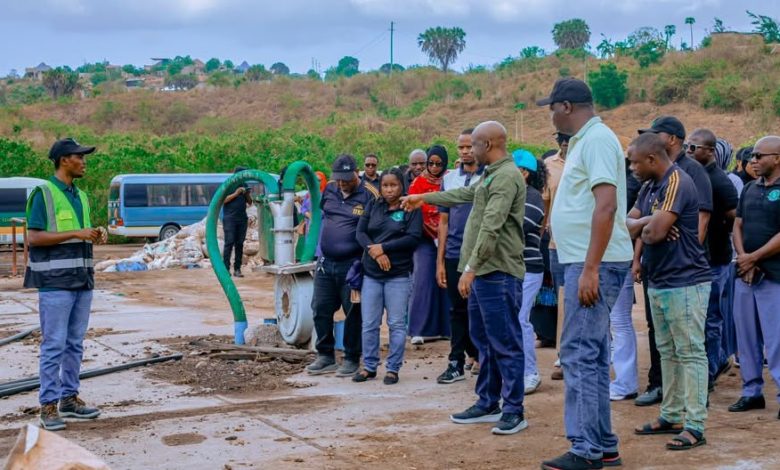
The project attracted officials from the Tanzania Fertiliser Regulatory Authority (TFRA), who visited the factory as part of activities marking World Fertiliser Day, observed annually on October 13.
The visit provided an opportunity to examine how biodegradable waste is being transformed into a useful agricultural input while promoting investment in locally produced fertiliser.
TFRA Eastern Zone Manager, Mr Daniel Maarifa, said the initiative formed part of the Authority’s efforts to encourage domestic fertiliser production using resources available within the country.
“Biodegradable waste is among the available resources that can be used to promote fertiliser production in the country while also protecting the environment,” he said.
The approach connects urban waste management with agricultural needs, creating a system in which materials discarded in markets can be collected and processed into products that support farming rather than becoming an environmental burden.
For a city such as Dar es Salaam, where markets generate substantial quantities of organic waste, initiatives of this nature offer an opportunity to improve waste handling while exploring alternative sources of agricultural inputs.
Instead of allowing fruit remains and other biodegradable materials to accumulate in disposal areas, the project provides a pathway for recovering their value through compost production.
According to the factory’s Organic Fertiliser Production Specialist, Mr Jimson Mkenda, the Mabwepande project is implemented by Kinondoni Municipal Council with financial support from the City of Hamburg in Germany, through the Government of Tanzania.
“The project has received 6.3bn/-, while its total budget stands at 7.91bn/-,” he said.
The investment reflects efforts to establish a system that links municipal waste management with the production of organic fertiliser, creating an opportunity to address environmental challenges while supporting agriculture.
Mr Mkenda said the project receives biodegradable waste from six markets located in four councils within Dar es Salaam Region.
“Fruit remains and other biodegradable materials are collected from six markets in four councils in Dar es Salaam Region and used as raw materials for fertiliser production,” he said.
The participation of markets is important because the materials they generate can be recovered before being mixed with other forms of rubbish, making collection and processing more manageable.
Kinondoni Municipal Council also contributes to the project’s operations, supporting its implementation as part of broader efforts to improve waste management and promote the productive use of available resources.
The project demonstrates how cooperation between local government authorities and external development partners can support initiatives that combine environmental protection with economic activity.
Beyond its infrastructure and financial investment, the initiative depends on effective waste collection systems and public participation.
The availability of biodegradable materials alone is not enough; waste must also be collected and separated appropriately to ensure that suitable materials reach the factory.
This is why public awareness forms an important part of the project’s activities. Mr Mkenda said the factory would continue educating residents about waste collection and the importance of separating biodegradable waste from non-biodegradable materials.
He said, “we will continue providing education on the collection and separation of biodegradable and non-biodegradable waste to help keep the city clean, control environmental pollution and reduce carbon emissions.”
Separating waste at its source can make it easier to recover useful materials and reduce the amount of rubbish sent to disposal sites. It can also improve the efficiency of facilities that depend on specific waste materials for production.
For households, traders and market operators, the practice requires a change in how waste is handled daily. Fruit peels, vegetable remains and other biodegradable materials need to be separated from plastics and other nonbiodegradable items so that they can be collected for appropriate processing.
Such participation can help strengthen the link between waste generation and resource recovery, ensuring that environmental initiatives are supported by the communities they serve.
The project’s progress is also reflected in its sales, as Mr Mkenda said Mabwepande had so far sold approximately 1.4 million kilogrammes of fertiliser.
He said plans were underway to purchase additional containers to extend services to more markets and increase the collection of biodegradable waste.
Expanding the collection network is important because the quantity of organic waste available for processing depends partly on the effectiveness of the collection system.
Reaching more markets can provide access to additional raw materials while encouraging more traders and communities to participate in waste separation.
However, increasing production and expanding distribution also require attention to the quality of the final product. Organic fertiliser must meet the required standards to ensure that farmers receive products suitable for agricultural use.
This concern was among the issues raised during the TFRA visit, as the Authority’s Laboratory Manager, Ms Leila Robin, said the visit was intended not only to observe the company’s activities but also to remind organic fertiliser producers across the country of the importance of laboratory testing.
“All organic fertilisers produced in the country should be tested in a laboratory before reaching consumers or being used to establish their quality and nutrient content,” she said.
According to Ms Robin, testing helps establish the quality of the product and determine its nutrient content, information that is important in assessing its suitability for agricultural application.
ALSO READ: Waste is an opportunity, not rubbish to be thrown away
Laboratory analysis also helps identify potentially harmful substances that may be present in fertiliser. She urged producers to submit their products for testing to determine heavy metal levels, which can pose health risks to consumers when present at harmful concentrations.
The message places product quality alongside production and environmental management as essential elements of a sustainable fertiliser industry.
Although converting biodegradable waste into fertiliser offers environmental and agricultural opportunities, the process requires proper handling, monitoring and compliance with applicable quality standards.
For farmers, reliable information about fertiliser composition can support decisions on its use, while regulatory oversight helps protect consumers and maintain confidence in locally produced products.
TFRA Fertiliser Production and Environment Promotion Manager, Ms Getrude Ng’weshemi, said the Authority continued to encourage investment in fertiliser production and monitor the progress of factories that had invested in the country.
“We continue to promote investment in fertiliser production and monitor the progress of factories that have invested in the country to ensure they produce quality fertiliser,” she said.
The Authority’s involvement reflects the importance of connecting investment promotion with regulation, particularly as Tanzania explores ways to expand domestic fertiliser production using available resources.
At Mabwepande, the opportunity lies in making productive use of materials that might otherwise contribute to the city’s waste burden. The project brings together municipal authorities, development partners, market operators and regulators around an approach that links cleaner urban environments with agricultural production.
Its continued progress will depend on expanding waste collection, strengthening public awareness and maintaining the quality of the fertiliser produced. As plans to acquire additional containers advance, the initiative has the potential to reach more markets and recover greater quantities of biodegradable waste.
The experience also offers a reminder that waste management and agriculture need not operate as separate concerns. With appropriate collection systems, processing facilities and quality controls, materials discarded in urban markets can become useful resources.
For Mabwepande, the task is to sustain that transformation while encouraging more residents and traders to separate their waste and support responsible disposal practices.
The broader lesson is that keeping cities clean can also contribute to productive economic activity when waste is treated not merely as something to discard, but as a resource that can be recovered, processed and put to beneficial use.