Turning Tanzania’s natural wealth into national prosperity
TANZANIA stands among Africa’s most resource-rich nations, endowed with vast mineral deposits, natural gas reserves, wildlife, forests, fertile land, water resources and an extensive coastline.
From gold buried beneath the ground in Geita, Shinyanga, Mwanza and Mara to strategic minerals scattered across the country; from the wildlife of the Serengeti to the beaches and islands of the Indian Ocean; and from natural gas reserves in the south and offshore waters to forests, lakes and fertile land, Tanzania possesses a natural resource base capable of shaping its economic future.
Dira 2050 places this wealth at the centre of its long-term transformation, recognising the need to use natural resources efficiently, productively and sustainably for national development and improved livelihoods. The ambition is considerable. By 2050, Tanzania seeks to become an upper-middle-income country with a national economy valued at about 1 trillion US dollars and an average annual income per person of 7,000 US dollars (about 18.4m/-).
Achieving that ambition will require sustained growth across the economy, but minerals, natural gas, tourism, forests, land and marine resources are expected to provide some of the strongest foundations for the transformation. The challenge, therefore, is no longer simply about possessing resources. It is about turning them into greater economic value.
That means moving from extraction to value addition, from natural attractions to competitive tourism products, from gas production to industrialisation and from resource ownership to wider participation by Tanzanians.
Mining: Turning underground wealth into economic power
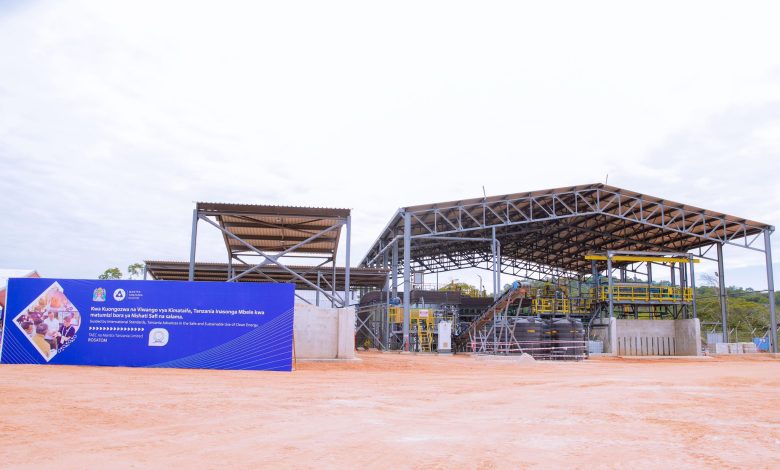
Few sectors illustrate Tanzania’s economic potential more clearly than mining. For decades, the country has been internationally recognised for gold, diamonds and the world-famous tanzanite. Increasingly, however, attention is turning to strategic and critical minerals such as graphite, lithium, uranium and other resources whose importance is rising as the global economy moves towards new technologies, renewable energy and cleaner production.
Dira 2050 identifies mining as a sector with enormous potential to contribute to national transformation. The sector is already increasing its contribution to the economy. According to figures presented to the National Assembly by the Minister for Minerals, Mr Antony Mavunde, mining’s contribution to Gross Domestic Product (GDP) rose from 9.1 per cent in 2023 to 10.1 per cent in 2024, while its average contribution reached 11.9 per cent during the first three quarters of 2025.
Government revenue from mining also increased from more than 753bn/- in 2023/24 to over 1.07tri/- in 2024/25. By March 2026, the government had collected more than 1.03tri/-, equivalent to almost 115 per cent of the target for the first nine months of the financial year. The figures demonstrate how mineral wealth is increasingly becoming an important source of public revenue, employment and wider economic activity. But the next stage is to capture more value from what Tanzania produces.
Rather than exporting minerals in raw or semi-processed form, greater domestic processing can create jobs, strengthen skills and technology transfer, stimulate manufacturing and establish industries linked to mining. This is why value addition has become a central element of Tanzania’s mining strategy. According to Mr Mavunde, the Ministry of Minerals has completed a Mineral Value Addition Strategy aimed at moving the country away from exporting raw minerals towards processing them domestically.
The objective is to connect mining with manufacturing while creating employment, increasing GDP, promoting innovation and improving the competitiveness of Tanzanian mineral products. Tanzania already has six gold refineries in Dodoma, Shinyanga, Geita, Dar es Salaam and Mwanza, while the Government is encouraging investment in smelting and processing facilities for minerals including copper, nickel, tin and salt. Such investments can change the economic meaning of mining.
A gold mine, for example, can generate opportunities for engineering firms, transporters, financial institutions and local suppliers. Graphite can support processing and manufacturing, while critical minerals can attract technology and industrial investments. Mining can therefore become a catalyst for industrialisation rather than remain an isolated extractive activity.
According to Mr Mavunde, between July 2025 and March 2026, the government issued 8,878 small-scale mining licences, alongside continued training and technical support for artisanal and small-scale miners. By March 2026, mining activities had generated more than 20,000 jobs, the majority held by Tanzanians. Mining companies and service providers had also purchased goods and services worth more than 4tri/- from Tanzanian companies.
This demonstrates the potential of local-content policies to spread the benefits of mineral wealth beyond mining companies and into the wider economy. Government reforms are also creating opportunities for Tanzanians to participate directly in mineral extraction. In Geita, small-scale miners at Mgusu Miners are among the beneficiaries.
Mgusu Miners Secretary Zakaria Nshoma said the group secured a mining licence after the Government opened former mining areas in the Kigosi Forest Reserve for Tanzanians to apply for licences. He said the group applied through the Resident Mining Office in Mbogwe and successfully secured a licence after completing the required payments.
“We applied for the licences through the Resident Mining Office in Mbogwe and we were successful in securing one,” Mr Nshoma said.
He said the development had enabled local miners to move into more formal mining operations, giving Tanzanians greater opportunities to benefit directly from the country’s mineral resources. Mr Nshoma said the group was awaiting surveying and allocation of its specific mining block before fully commencing operations. For Dira 2050, the lesson is clear: mineral wealth must move beyond underground value to become industrial wealth, technological wealth, government revenue and human capital.
Tourism: Turning natural beauty into economic value If minerals represent
Tanzania’s wealth beneath the ground, tourism represents the wealth above it. Few countries possess Tanzania’s combination of wildlife, landscapes, mountains, beaches, islands, forests, lakes and cultural heritage. The Serengeti and its Great Wildebeest Migration remain among the world’s most recognised natural attractions. Mount Kilimanjaro draws visitors from around the globe, while the Ngorongoro Conservation Area, Zanzibar’s beaches and historical heritage, national parks, marine attractions and cultural sites provide a diverse tourism offering.
This diversity is increasingly translating into economic value. Presenting the Ministry of Natural Resources and Tourism’s 2026/27 budget estimates in the National Assembly, docket minister Dr Ashatu Kijaji said tourist arrivals reached 5,935,561 in 2025, an increase of 10.7 per cent from 5,360,247 visitors in 2024. International tourist arrivals rose to more than 2.29 million, while domestic tourism also continued to grow. Tourism earnings increased from 3.9 billion US dollars (about 10.25tri/-) in 2024 to 4.4 billion US dollars (about 11.56tri/-) in 2025, an increase of nearly 13 per cent.
The sector is now Tanzania’s second-largest foreign exchange earner after mining. Its contribution extends far beyond hotels and national parks. The natural resources and tourism sector contribute 21.5 per cent to GDP, with tourism accounting for 17.2 per cent, while forestry and beekeeping contribute 4.3 per cent. The sector also supports approximately 3.6 million direct and indirect jobs annually.
Tourism is, therefore, one of Tanzania’s strongest instruments for inclusive growth. Dira 2050 seeks to build on this potential by expanding tourism beyond traditional wildlife safaris. The country aims to promote cultural and heritage tourism, ecotourism, beach and cruise tourism, hunting tourism, meetings and exhibitions, sports and other specialised products, with the ultimate goal of positioning Tanzania as a leading tourism hub in Africa.
ALSO READ: Tanzania’s Anglican Church formally installs PM Nchemba as its Lay Canon
This diversification can make tourism more resilient while creating new markets and investment opportunities. Tanzania’s growing international recognition provides another opportunity. The country was named the World’s Leading Safari Destination 2025, while Serengeti National Park was recognised as the World’s Leading National Park. However, tourism’s economic future depends on protecting the natural resources that sustain it. Wildlife cannot support tourism if habitats disappear.
Beaches cannot attract visitors if marine environments are polluted, while forests and ecosystems cannot generate sustainable income if they are poorly managed. The Controller and Auditor General’s (CAG) 2024/25 audit highlights this challenge.
Despite the National Environmental Policy of 2021 emphasising sustainable forest conservation, Tanzania lost an average of 376,970 hectares of forest annually between 2016 and 2021, mainly due to farming, population growth, firewood uses and uncontrolled grazing
. Between 2021/22 and 2024/25, Local Government Authorities achieved between 67 and 87 per cent of their treeplanting targets, averaging 80.43 per cent nationally. However, only 50.9 per cent of planted trees survived and grew, with the CAG attributing the low survival rate to weak monitoring, ineffective restoration planning, poor coordination between relevant authorities and inadequate evaluation.
These findings underline an important principle of Dira 2050: environmental conservation is not separate from economic development. Tanzania’s forests, wildlife, coastline, lakes and biodiversity are economic assets. Protecting them is therefore essential to protecting future sources of income, employment and foreign exchange.
Natural Gas: Fuel for Industrialisation
Perhaps no resource carries greater expectations for Tanzania’s industrial future than natural gas. Gas can generate electricity, provide energy for industries, power vehicles, support households and institutions, reduce dependence on imported petroleum products and create opportunities for Tanzania to become an important energy supplier in the region.
Tanzania already produces natural gas from the Songo Songo and Mnazi Bay fields, while further development is continuing at Ntorya in the Ruvuma Basin and offshore blocks associated with the proposed Liquefied Natural Gas (LNG) project. Presenting the Ministry of Energy’s 2026/27 budget estimates in the National Assembly, the then Minister for Energy, Mr Deogratius Ndejembi, said natural gas production had reached more than 41.5 billion cubic feet during the previous fiscal year.
The expansion of compressed natural gas (CNG) is particularly significant. By March 2026, more than 20,000 vehicles were using natural gas, including private cars, trucks, buses and Bajaj vehicles, while 18 CNG stations were operational, with additional stations under construction. For a growing economy, affordable and reliable energy is critical. Factories need dependable power. Businesses require predictable energy costs, while households and transport operators are affected by fuel prices.
Natural gas can therefore provide Tanzania with a competitive advantage while supporting the transition towards a more diversified energy system. Its greatest potential, however, lies in its connection with industrialisation. Gas can support fertiliser production, petrochemicals, manufacturing and power generation. It can encourage investment in industrial parks and help reduce energy costs for businesses.
“The government is continuing to prioritise the development of the LNG project, the Ntorya gas project and other exploration programmes, while also expanding the availability of gas for transport, industries, institutions and households,” said Mr Ndejembi.
Tanzania also has ambitions to strengthen regional energy cooperation and trade. Dira 2050 identifies energy as a major driver of national transformation. Tanzania expects electricity consumption per person to rise dramatically from about 170 kWh to 3,000 kWh by 2050. That target reflects the scale of economic transformation envisaged. More factories, businesses, digital infrastructure and households will require reliable energy.
The country is, therefore, pursuing a diversified energy mix that includes hydropower, solar, wind, geothermal energy and natural gas. The Julius Nyerere Hydropower Project (JNHPP), with an installed capacity of 2,115 megawatts, is one of the major investments supporting this ambition.
Natural gas will complement renewable energy sources while providing the stable power and industrial feedstock required by a modern economy. Land, Forests and the Blue Economy Tanzania’s development potential extends beyond minerals, tourism and gas. Land remains one of the country’s most important resources, offering opportunities for agriculture, industry, housing, infrastructure and investment.
However, population growth, urbanisation, agricultural expansion and industrial development are increasing pressure on land. Dira 2050 places emphasis on effective land-use planning to balance farming, livestock, housing, industry, infrastructure and conservation. Well-planned cities can attract investment, secure land ownership can encourage development, while effective land-use planning can reduce conflicts and protect environmental resources.
The blue economy offers another largely untapped frontier
Tanzania’s long coastline, major lakes and rivers provide opportunities in fisheries, marine tourism, water transport and renewable energy. Dira 2050 sees the sustainable use of ocean and freshwater resources as an increasingly important contributor to employment, income and environmental protection. Investment in natural gas, ports, sustainable fishing, marine conservation and water-based infrastructure can help Tanzania unlock these opportunities.
Tanzania has begun implementing the Dira 2050 Blue Economy agenda through efforts to unlock the economic potential of its marine resources, with the fisheries sector emerging as a key area. As part of the strategy, the Tanzania Fisheries Corporation (TAFICO) recently signed an agreement with China’s Rongcheng Xinyang Ship Industry Limited to build three deep-sea fishing vessels, enabling the country to directly exploit resources within its Exclusive Economic Zone (EEZ).
Two vessels will be owned by TAFICO and one by the Zanzibar Government, with construction expected to take nine months. Minister for Livestock and Fisheries, Dr Bashiru Kakurwa, said the project forms part of the implementation of Dira 2050, aimed at transforming fisheries into a stronger contributor to economic growth.
“The government plans to procure three more vessels, bringing the fleet to six, as it seeks to strengthen Tanzania’s capacity to sustainably harness and protect its abundant marine resources,” he said.
Turning resource wealth into public revenue The economic contribution of Tanzania’s natural resources is also reflected in the country’s ability to mobilise domestic revenue. TRA Commissioner General Yusuph Mwenda said that during the financial year ending June 2026, the Tanzania Revenue Authority (TRA) collected 37.96tri/-, equivalent to 105 per cent of the 36.07tri/- target.
The collection translated into an average monthly revenue of 3.165tri/-. TRA now targets 41.83tri/- in the current financial year. To achieve this, average monthly collections will need to rise to 3.480tri/-, requiring an additional 320bn/- per month. Commissioner Mwenda said the target is achievable through closer cooperation between TRA and taxpayers.
ALSO READ: Dar Port climbs 105 places in the CPPI index from 360th to 255th position in 2025 rankings
“When the sixth phase government assumed office, TRA had the capacity to collect 21tri/- annually. Today, that capacity has nearly doubled to 41.830tri/-. This remarkable growth reflects the expansion of business activities and the country’s economy,” he said.
While TRA continues to increase collections, the CAG has also highlighted areas requiring improvement in tax administration. The value of tax cases pending before appellate bodies increased from 3.75tri/- involving 317 cases in 2023/24 to 4.86tri/- involving 1,223 cases in 2024/25. Of the latest amount, 3.07tri/- was before the Tax Revenue Appeals Tribunal, 1.75tri/- before the Tax Revenue Appeals Board and 41.37bn/- before the Court of Appeal.
The CAG recommends strengthening the capacity of the appeals bodies through increased staffing, digitisation and improved case management, while enhancing TRA’s internal dispute-resolution mechanisms and prioritising high-value cases. The findings underline the importance of ensuring that taxes assessed or deducted are ultimately realised by the government efficiently and without unnecessary delays. For Tanzania’s long-term development, stronger tax administration can complement the growth of resource-based revenues and provide the public financing needed to invest in infrastructure, education, health and productive sectors.
From natural wealth to national prosperity
As Tanzania continues its journey towards 2050, the principle remains clear: natural resources must serve national development and citizen welfare. The country’s mineral deposits, natural gas, wildlife, forests, land, water bodies and marine resources give it a powerful foundation for economic transformation. But resources alone do not guarantee prosperity. The real opportunity lies in converting natural wealth into productive capital through value addition, industrialisation, technology, skills development, local participation, environmental conservation and efficient public revenue mobilisation. If Tanzania can achieve that transition, the resources beneath the ground, the natural wealth above it and the opportunities beyond its shores can become more than sources of raw materials and foreign exchange. They can become engines of industrial growth, employment, innovation and inclusive prosperity. That is the central promise of Dira 2050: to transform Tanzania’s abundant natural wealth into lasting economic power and, ultimately, a more prosperous, inclusive and sustainable nation.