

Tulia hails Burkina Faso’s war on terror

OUAGADOUGOU: Inter-Parliamentary Union (IPU) President Dr Tulia Ackson has praised Burkina Faso for making progress in the fight against terrorism, saying the return of displaced people to areas recovered from extremist groups signals a major step towards restoring normal life.
Dr Tulia explained that the government’s efforts to resettle returning communities and restore essential services such as education, clean water and economic opportunities demonstrated progress in rebuilding areas once affected by extremist violence.
“I have also received reports that citizens have returned to live in liberated areas. This is a significant achievement in ensuring that returning communities have access to essential services, including education, clean and safe water, as well as opportunities to resume economic activities and their normal lives,” she said.
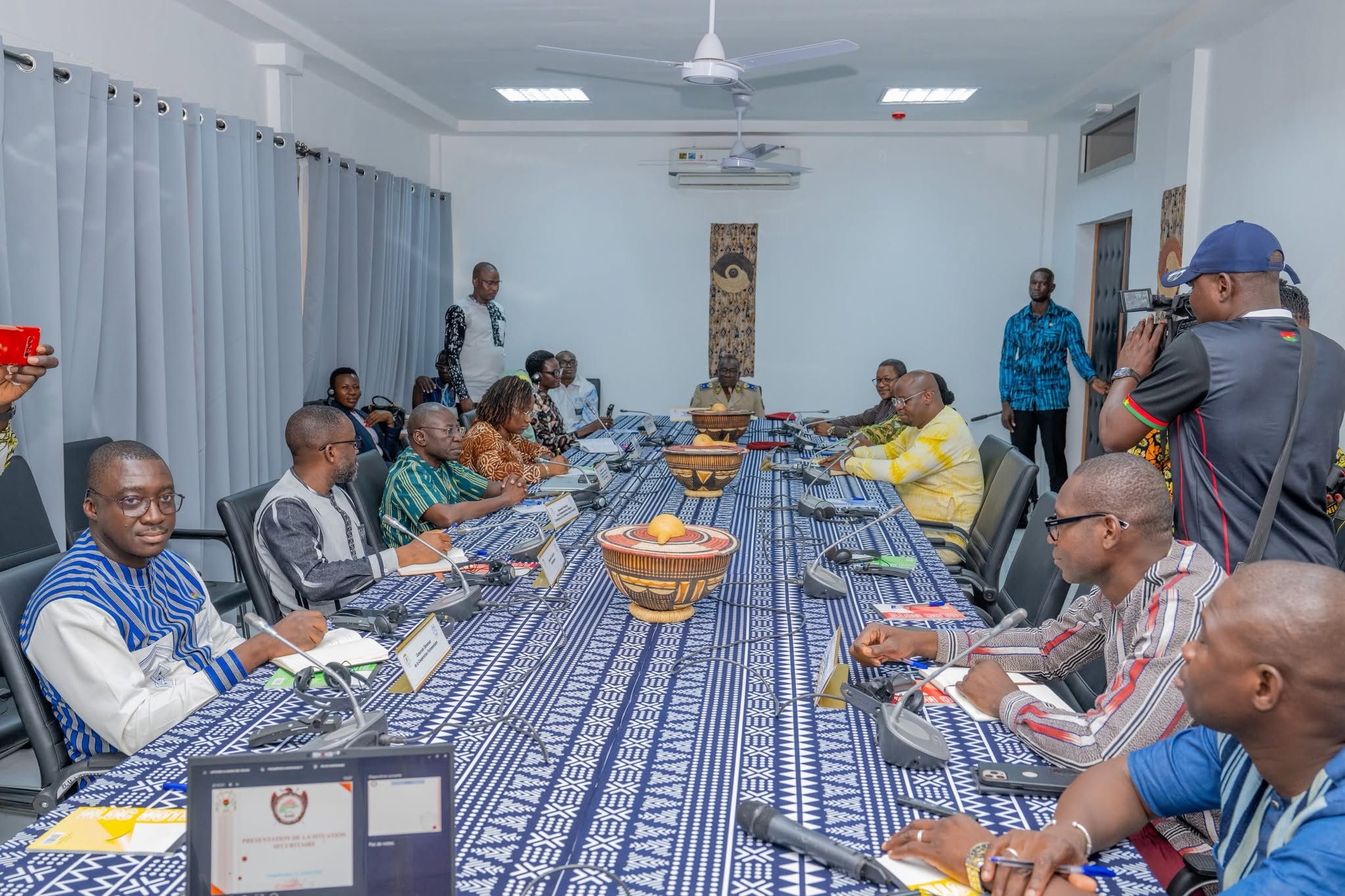
She made the remarks after a working session with a Burkina Faso government delegation attended by four cabinet ministers, following the conclusion of the main dialogue during her official visit to the West African nation.
The ministers briefed Dr Tulia on ongoing counter-terrorism operations and government measures to strengthen national security and restore stability in communities previously affected by extremist groups.
Dr Tulia also commended Burkina Faso’s Head of State, Captain Ibrahim Traoré, for his leadership in tackling the country’s security challenges while advancing its development agenda.
ALSO READ: Dr Tulia tours Burkina Faso in IPU’s bid to deepen inter-parliamentary ties, security
Despite the security situation, the government delegation said the country was continuing to implement development programmes in key areas, including healthcare, education, domestic revenue mobilisation, human rights, foreign affairs and the protection of national sovereignty.
Dr Tulia further praised cooperation between Burkina Faso and neighbouring countries in confronting terrorism, describing regional collaboration as vital to improving security across the wider Sahel.
“We will convey a positive message about Burkina Faso, highlighting the government’s strong commitment to ensuring the country remains safe and stable, not only for the benefit of Burkina Faso but also for the entire Sahel region,” she affirmed.
The rules are quite different in India and Tanzania, though in both countries prisoners generally do not have unrestricted access to mobile phones.
India
Prisoners are not allowed to possess or use personal mobile phones. Mobile phones are considered contraband in prisons.
Many prisons provide supervised telephone facilities, allowing inmates to call approved family members or lawyers at scheduled times.
Some states have introduced monitored video calls or e-prison communication systems, especially after the COVID-19 pandemic.
The exact rules vary because prisons are administered by individual state governments.
Tanzania
Prisoners are also not permitted to keep or use personal mobile phones.
Communication with family is typically through:
supervised visits,
letters,
and, in some facilities, supervised telephone calls if the prison administration permits them.
Access to telephones is generally more limited than in many Indian prisons, depending on the facility and available resources.
Key differences
Aspect India Tanzania
Personal mobile phones Not allowed Not allowed
Supervised phone calls Available in many prisons Available in some prisons, often more limited
Video calls Available in some prisons Generally uncommon
Rules Vary by state Governed nationally by prison authorities
So, in both countries, prisoners cannot freely use mobile phones. The main difference is that India has more prisons offering supervised phone and video-call facilities, while Tanzania’s communication options are generally more limited and depend on the specific prison’s resources and policies.
La terreur à changer de camps depuis choguel kokala maiga.
Pata mkopo kuanzia TZS 200,000 kwa Nipe Boost tumia kukamilisha mahitaji yako ya haraka bila wasiwasi. Piga 0724152598 kwa usajili sasa tukuhudumie.
Si vous laissez un seul déchet juif entré en Afrique , il vous pollue , demande à vous soigner , et vous exterminé.
Caca cola , plastique , Doliprane dégénératif , conserves e414 gomme arabique , … Tomate concentrée sans tomate , tout ce que vous importez d’Occident prépare les épidémies : cancer hiv , Ebola , covid , tous cela provient des labo juif à caractère dominateur .arrogant et ne respectant jamais les lois , la ou ils arrivent , ils imposent la leur .
Les textes d’ONG repose sur la torah satanique manipulatrice ,
Regardez le film dune , trouvez la baronne qui dit ” inutile de vous battre pour moi”
If you’re asking whether prisoners in Tanzania are allowed to have TVs, and how that differs from India, here’s a general comparison:
Topic Tanzania India
Personal TV in cells Generally not allowed. Prisoners do not typically keep personal televisions in their cells. Generally not allowed in most prisons. Personal TVs are rare and usually not permitted.
Shared TV Some prisons may have a shared television in common areas for recreation or educational programs, depending on the prison’s resources and rules. Many prisons have shared TVs in common areas, especially in larger or better-funded prisons. Access varies by state and prison.
Rules Governed by the prison authority and can vary by facility. Security and available resources are major factors. Prison rules differ by state because prisons are administered by state governments. Facilities and privileges vary considerably.
Key differences
There is no general rule that prisoners in Tanzania have greater access to TVs than prisoners in India.
In India, because some prisons have more resources, shared television facilities are more commonly reported in larger prisons.
In Tanzania, access to recreational facilities, including televisions, tends to be more limited due to resource constraints in many prisons.
If you meant “Jain” as in the Jain religion, rather than jail, let me know—that would be a different question.
https://egaliteetreconciliation.fr/Xavier-Moreau-Trois-centieme-bulletin-on-les-aura-80831.html