Tourism must deliver Tanzania’s trillion-dollar dream
DAR ES SALAAM: TOURISM is expected to play an increasingly important role in Tanzania’s long-term development strategy as the country begins implementing Dira 2050, an ambitious national blueprint aimed at transforming the country into a prosperous, inclusive and competitive economy by mid-century.
The vision targets a one trillion-dollar economy, higher incomes (7,000 US dollars per capita) stronger industries and improved living standards for a population projected to exceed 118 million people by 2050.
Achieving those ambitions will require sustained growth across several sectors, and policymakers increasingly view tourism as one of the industries best placed to contribute to that transformation.
Already one of Tanzania’s leading foreign exchange earners, tourism sits alongside agriculture, industry, mining, financial services, construction and the blue economy among the sectors identified in Dira 2050 as drivers of future growth.
The strategy seeks to build a more diversified and resilient economy by expanding sectors capable of attracting investment, creating jobs and generating export earnings.
The government’s approach is reflected in the Ministry of Natural Resources and Tourism’s 2026/27 budget, where conservation and tourism development are presented as complementary objectives supporting both environmental sustainability and economic growth.
Presenting the budget in the National Assembly, Minister for Natural Resources and Tourism Dr Ashatu Kijaji said the government would continue implementing strategic programmes aimed at increasing the economic contribution of tourism and natural resources, while ensuring sustainable conservation.
The sector enters the Dira 2050 era with considerable momentum.
Tanzania received 5.94 million visitors in 2025, up from 5.36 million the previous year. International arrivals reached 2.29 million, while domestic tourism grew to 3.64 million visitors.
Tourism earnings increased from 3.9 billion US dollars to 4.4 billion dollars, highlighting the sector’s growing contribution to economic activity, employment and foreign exchange earnings.
Government officials believe these gains demonstrate the sector’s potential to contribute even more significantly to national development over the coming decades. Dira 2050 recognises tourism as one of Tanzania’s natural advantages.
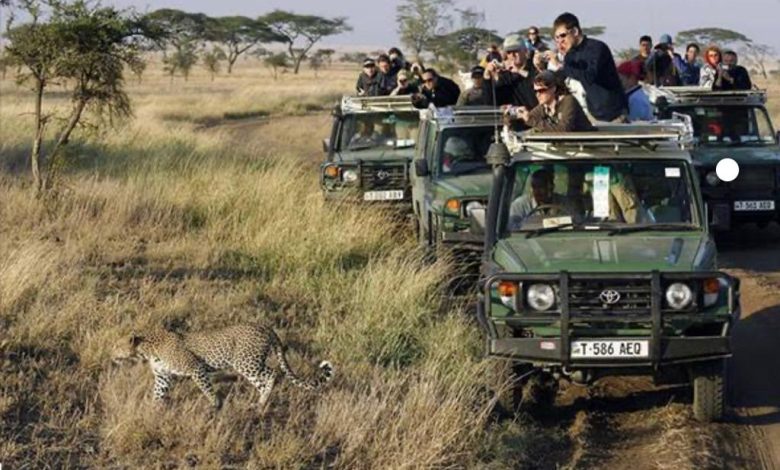
The country is home to some of Africa’s most recognisable destinations, including Serengeti National Park, the Ngorongoro Conservation Area, Mount Kilimanjaro, Zanzibar’s coastline and the vast ecosystems of Ruaha and Nyerere national parks.
Combined with historical sites such as Kilwa Kisiwani, Bagamoyo and Olduvai Gorge, these attractions give Tanzania a tourism offering few countries can match.
The challenge now is to translate that natural and cultural wealth into broader economic opportunities, while preserving the resources upon which the industry depends. Conservation remains central to that objective.
Wildlife tourism continues to form the backbone of Tanzania’s visitor economy, making environmental protection inseparable from economic performance.
During the year under review, the government completed the country’s second national wildlife census using domestic resources, providing updated data expected to guide future conservation planning and tourism development.
The exercise aligns closely with Dira 2050’s commitment to environmental integrity and climate resilience.
The document identifies biodiversity conservation, sustainable management of natural resources and protection of ecosystems as essential components of long-term development.
For Tanzania, conservation is not simply an environmental responsibility. It is also an investment in one of the country’s most valuable economic assets. Infrastructure development is equally important.
Dira 2050 identifies integrated logistics as one of the strategic drivers expected to accelerate economic transformation.
Improved transport networks, stronger regional connectivity and easier movement of people are expected to benefit multiple sectors, including tourism.
The government has continued investing in infrastructure serving tourism destinations.
During the review period, three airstrips were completed in Ruaha and Nyerere national parks, construction of the Mikumi airstrip continued and eight tourism airstrips were rehabilitated.
More than 3,700 kilometres of roads and over 500 kilometres of walking trails were constructed or improved across protected areas.
ALSO READ: Police strengthen tourism security
These investments are helping improve accessibility while opening new destinations to visitors. One beneficiary has been the Southern Tourism Circuit, where revenues increased from 24.6bn/- to 27.7bn/- during the year.
Officials view the circuit as one of the country’s strongest opportunities for future tourism expansion. Tourism’s importance extends beyond visitor spending.
The industry creates demand for accommodation, transport, food production, handicrafts, cultural activities and a range of supporting services.
In many rural areas, tourism generates economic opportunities that might otherwise be limited.
This aligns with Dira 2050’s broader goal of ensuring economic growth creates opportunities across different regions and communities.
Technology is expected to play a growing role in achieving that objective. Digital transformation is identified as one of the five strategic drivers of Dira 2050.
The government wants more services delivered through accessible digital platforms while encouraging innovation across sectors.
Tourism is already adapting to this shift. The Tanzania Travel Companion platform allows visitors to access information and travel support through digital channels, while government agencies continue modernising licensing, permitting and sector management systems.
Officials believe digital tools will become increasingly important in destination marketing, visitor management and improving overall competitiveness. The government is also working to diversify tourism products.
Wildlife safaris and beach tourism remain the industry’s foundation, but policymakers see opportunities in conference tourism, sports tourism, cultural tourism and specialised niche markets.
Several major international events expected over the coming years, including the 153rd Inter-Parliamentary Union Assembly and the 2027 Africa Cup of Nations, are expected to support growth in Meetings, Incentives, Conferences and Exhibitions tourism.
Sports tourism is also receiving increased attention, while investments such as the international-standard golf course developed within the Serengeti ecosystem reflect efforts to broaden Tanzania’s tourism offering and attract higher-spending visitors.
Cultural and heritage tourism represent another important opportunity. Vision 2050 places strong emphasis on preserving Tanzania’s heritage and national identity.
Historical sites, archaeological discoveries and cultural traditions provide opportunities to expand tourism while strengthening preservation efforts and creating additional income for local communities.
The launch of the Ngorongoro-Lengai Geopark Museum reflects this broader strategy of linking conservation, education, research and tourism development. The blue economy is expected to provide further opportunities.
With its extensive coastline, marine ecosystems and inland water resources, Tanzania is well positioned to expand coastal tourism and water-based economic activities.
Dira 2050 identifies the blue economy as one of the sectors expected to contribute significantly to future growth and job creation.
Tourism also supports several of the vision’s wider development objectives. The sector generates employment, particularly for young people and women.
It attracts foreign investment, supports small businesses, stimulates rural economies and contributes to foreign exchange earnings.
These contributions are likely to become increasingly important as Tanzania seeks to create a larger and more diversified economy capable of supporting a growing population.
As implementation of Dira 2050 gathers pace, tourism is being positioned not simply as a successful industry, but as a strategic sector capable of supporting multiple national priorities at once.
Its continued growth will depend on effective conservation, improved infrastructure, stronger digital systems and a broader range of tourism products.
If those foundations continue to strengthen, tourism could become one of the sectors that helps shape Tanzania’s economic transformation over the next quarter century