

The truth on Tanzania’s MT Asana hijacking
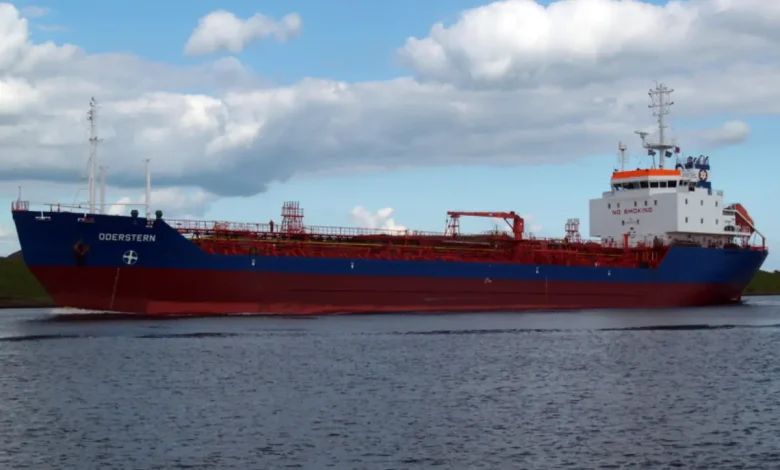
DAR ES SALAAM: WHEN suspected Somali pirates seized the MT Asana in the Gulf of Aden on July 17, the vessel was widely described as a Tanzanian flagged fuel and chemical tanker.
While that description was legally accurate, it also risked creating a misleading impression.
A ship flying Tanzania’s flag is not necessarily owned by Tanzania, operated by a Tanzanian company, carrying Tanzanian cargo or crewed by Tanzanian seafarers.
The vessel had reportedly departed Mukalla, Yemen and was bound for Bosaso, Somalia, before armed men boarded and diverted it towards Puntland waters.
The incident is best understood within the framework of the international ship registration system.
Every merchant vessel must be registered under a national flag, but the flag state, beneficial owner, operator, financier and crew often come from different countries.
Shipowners choose registries based on legal certainty, registration fees, tax treatment, administrative efficiency, mortgage registration, crewing rules and the availability of provisional or bareboat-charter registration.
For ships that generate revenue only while transporting cargo, a registry capable of processing documentation efficiently can significantly reduce costly downtime. Tanzania participates in this global industry through the Tanzania Zanzibar International Register of Shipping.
Its strategic location along western Indian Ocean trade routes connecting southern Africa, East Africa, the Gulf and Asia gives the registry commercial significance.
Flying the Tanzanian flag provides a vessel with an internationally recognised legal identity under which ownership, mortgages and operational documents can be recorded.
The attraction is not lower port charges or exemption from foreign inspections, but rather a credible legal framework backed by a coastal state with active ports and growing maritime ambitions.
The benefits to Tanzania extend beyond registration fees, annual tonnage charges and other administrative revenues.
A larger registry also creates opportunities for maritime lawyers, surveyors, inspectors, engineers, training institutions and seafarer certification professionals.
Moreover, it strengthens Tanzania’s influence in international shipping forums while supporting the Government’s blue economy agenda without requiring the state to own every vessel flying its flag.
Regional comparisons illustrate Tanzania’s progress. According to the United Nations Trade and Development (UNCTAD) 2024 Maritime Profiles, Tanzania had 476 propelled seagoing merchant vessels of at least 100 gross tonnes registered under its flag, with a combined carrying capacity of approximately 2.454 million deadweight tonnes.
Kenya had 27 vessels with 12,900 deadweight tonnes, while the Democratic Republic of Congo had 25 vessels with about 32,800 deadweight tonnes.
Somalia had four vessels with roughly 600 deadweight tonnes, and Mozambique’s fleet totalled about 33,600 deadweight tonnes.
Uganda, Rwanda and Burundi had no published seagoing national-flag fleet figures in the same UNCTAD report.
In practical terms, Tanzania has about 18 times more registered merchant vessels than Kenya and nearly 190 times Kenya’s carrying capacity.
Its flagged tonnage is also more than 70 times that of either Mozambique or the Democratic Republic of Congo.
These figures primarily demonstrate that Tanzania has built a regional maritime registry trusted by international shipowners.
That, in turn, creates opportunities to expand inspection, certification, seafarer employment and other maritime professional services.
The hijacking record also deserves regional perspective. Between July 2021 and July 2026, publicly verified reports indicate only two clear piracy incidents involving vessels flying flags from Tanzania’s immediate maritime neighbourhood.
The first involved the Somali-flagged fishing vessel Alkhary 2, seized near Hafun in April 2026 and released two days later with its crew reportedly unharmed.
The second was the Tanzanian-flagged MT Asana, hijacked in July 2026. Publicly available reporting reviewed for this article identified no Kenyan-, Mozambican- or Congolese-flagged merchant ships hijacked during the same fiveyear period.
Older incidents are sometimes cited, including the hijacking of the Kenyan-flagged fishing vessel Sakoba in 2010 and the Mozambican-flagged fishing vessel Vega 5 later that year.
While these cases demonstrate that East African-flagged vessels have previously fallen victim to piracy, they do not indicate a recent pattern targeting regional ship registries.
Indeed, most significant Somali piracy incidents since late 2023 have involved vessels registered far beyond East Africa.
The Malta-flagged Ruen was hijacked in December 2023. In March 2024, pirates seized the Bangladesh-flagged bulk carrier Abdullah, carrying 23 crew members, while it was sailing from Mozambique to the United Arab Emirates.
It was later released after pirates reportedly received a 5 million US dollars ransom.
In April 2026, pirates also hijacked the Palau-flagged tanker Honour 25 and the St Kitts and Nevis-flagged cement carrier Sward, which was bound for Mombasa.
The pattern suggests that pirates target vulnerable vessels operating along profitable shipping routes rather than ships registered under any particular national flag. That distinction is important.
The MT Asana hijacking should not be interpreted as evidence that the Tanzanian flag itself made the vessel a target.
More plausible contributing factors include the absence of an armed security team, the vessel’s transit through one of the world’s highest-risk maritime corridors and the recent resurgence of Somali pirate activity.
Responsibility lies solely with those who boarded and seized the vessel. For Tanzania, the more important question is what the country gains from maintaining an international ship registry.
The answer is both measurable and significant. Tanzania today operates the largest international ship registry among its immediate East African neighbours.
The MT Asana was attacked in a piracy-prone international shipping corridor thousands of kilometres from Tanzanian waters.
Recent hijackings in the same region have involved vessels flying the flags of Malta, Bangladesh, Palau, St Kitts and Nevis, among others.
Pirates pursue vulnerable ships and commercially valuable routes not particular national registries. One hijacking should therefore not overshadow the broader picture.
Tanzania has built a maritime registry whose carrying capacity is nearly 190 times that of Kenya’s registered fleet. Protecting and strengthening that competitive advantage should remain a national priority.
The more important message for Tanzanians is that the flag flying aboard the MT Asana did not cause the hijacking. Rather, it reflected Tanzania’s growing participation in the global shipping industry.
The challenge now is to leverage that expanding presence to create more maritime jobs, develop specialised expertise, strengthen regulatory institutions and ensure that a greater share of the economic value generated at sea ultimately benefits Tanzanian citizens.




References:
Monro Casino Bewertung https://s3.amazonaws.com/
References:
Casino Of Gold Bonus http://www.google.dj/
References:
Bet.Bet Casino Erfahrungen http://www.nwnights.ru
References:
Pistolo Casino Auszahlung https://tve-4u.org/proxy.php?link=http://card.lifenlegacydigital.com/dewaynejohns50
References:
Pandido Casino Einzahlung live.warthunder.com
References:
National Casino Test https://rukorma.ru/casino-online-die-besten-online-casinos-deutschland-2026